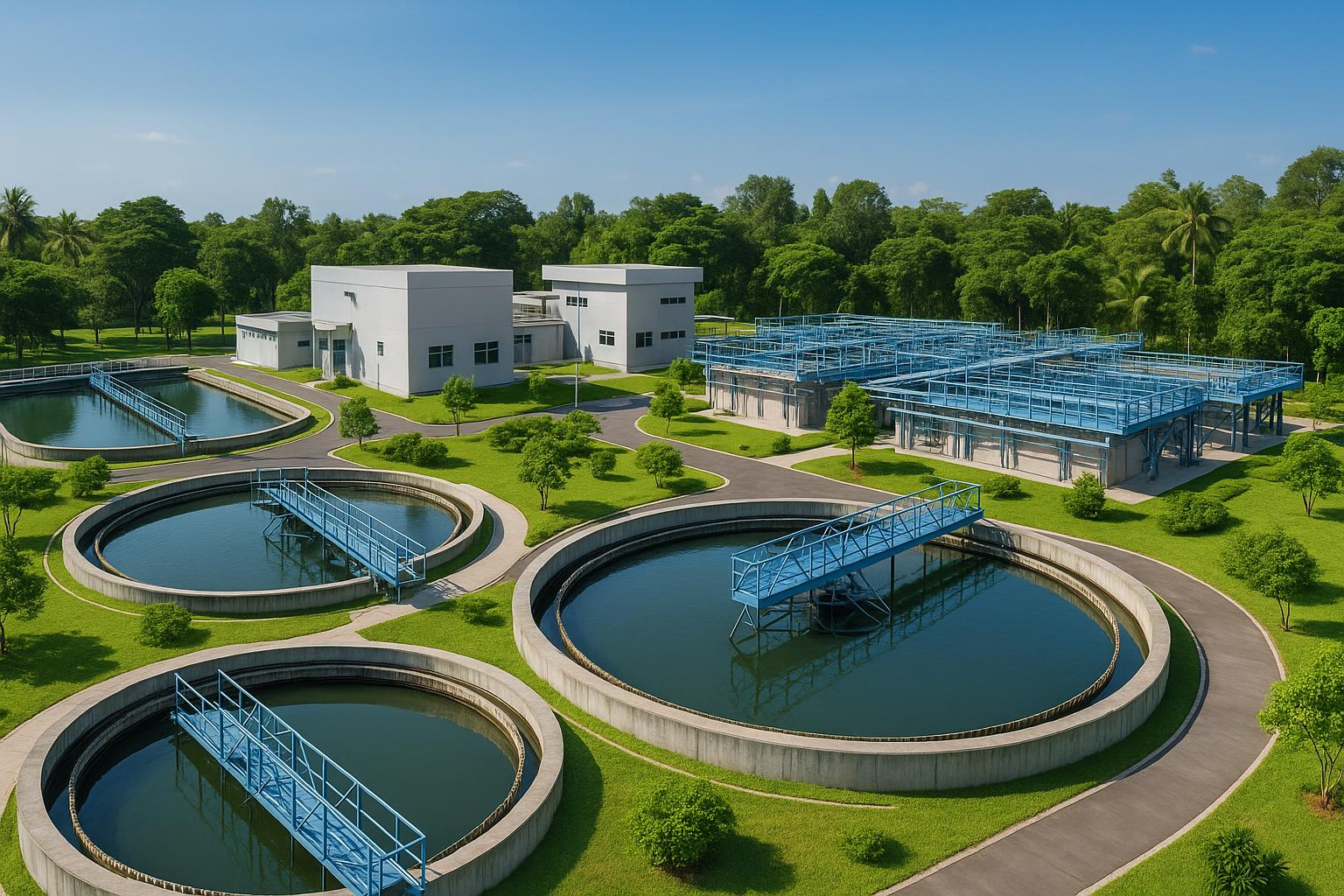
1. Overview and legal requirements for domestic wastewater in schools
Wastewater from schools is classified as domestic, but it is more specific in that it contains additional loads of grease and detergents from kitchens, pathogenic microorganisms from restrooms, and nutrients (Nitrogen, Phosphorus) from various sources. If not treated correctly, the system is prone to odors, microbial overload, and reduced settling and disinfection efficiency. From kindergartens to universities, the flow can range from several m³/day to hundreds of m³/day depending on the scale. In the context of expanding boarding, canteens, and dormitories, the challenge of achieving standards, flexible expansion, and cost-saving space becomes increasingly critical right from the design phase and during renovations.
In terms of compliance, the system must meet current domestic wastewater standards. Project reality shows that many facilities are assessed according to QCVN 14:2008/BTNMT, including cases applying column B with K=1 after increasing capacity and optimizing technology. In the new phase, investors should also review to comply with QCVN 14:2025/BTNMT if applicable; for on-site treatment facilities, the selection and installation must also consider compatibility with QCVN 98:2025. An important note is that the acceptance and monitoring documents must align with the target standards right from the proposal stage to avoid the situation of "meeting technical standards but lacking legal basis" during inspections.
The characteristics of school wastewater are similar to typical domestic wastewater, so AAO, MBBR, MBR diagrams, or modular systems can all be applied. However, accurately determining the load and pollution composition is fundamental to selecting appropriate solutions: where kitchen wastewater requires grease separation before biological treatment; the overall system needs to combine mechanical – biological – disinfection treatment to achieve stable output. If the initial technology lacks anoxic conditions or a balancing tank, common shock load incidents/difficulties in nitrogen removal will recur after renovation if not thoroughly addressed.
2. Signs that the treatment system in schools needs renovation
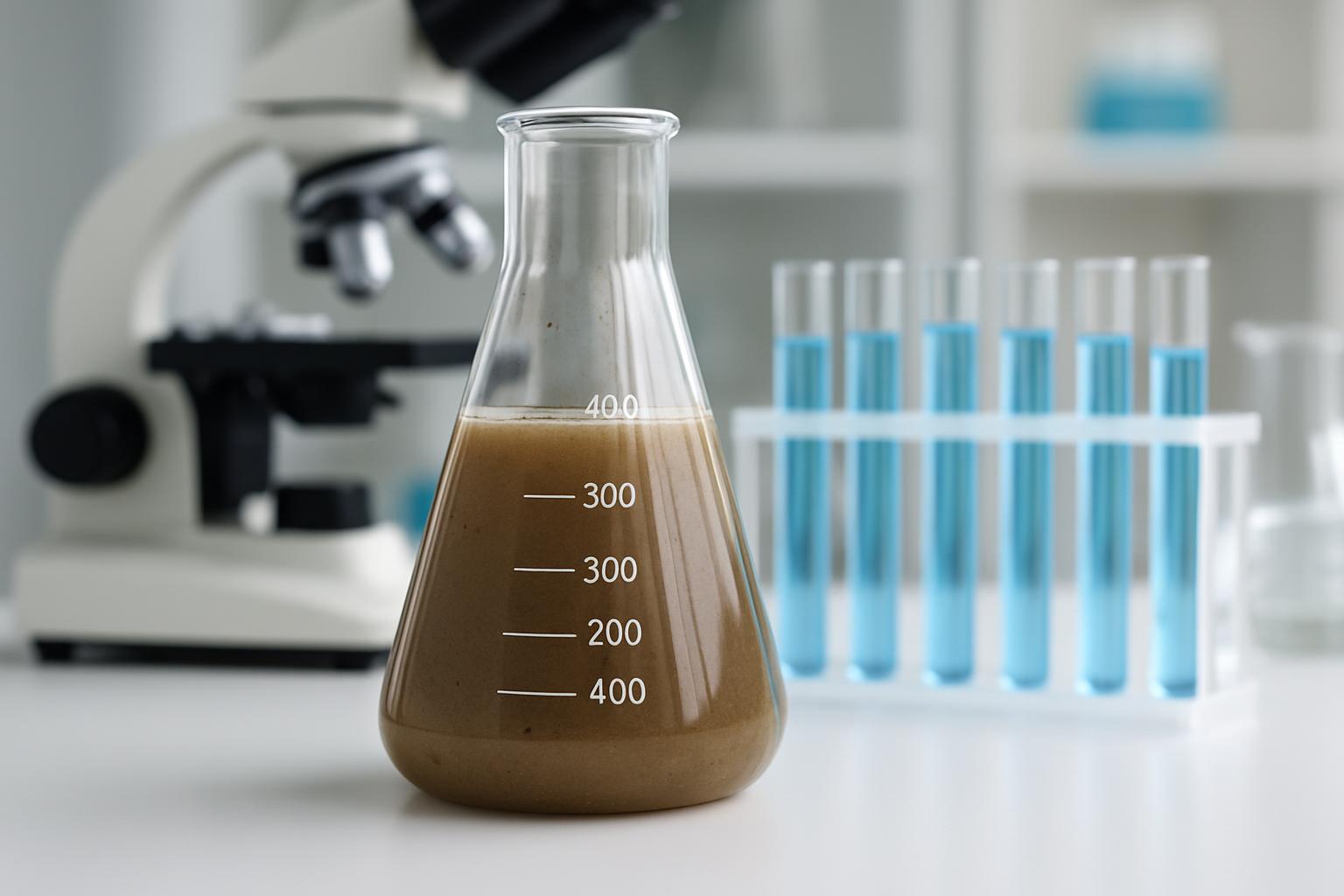
The clearest sign is that the output water does not meet the applicable standards, or the system becomes unstable after a period of operation, especially when increasing the number of students or adding boarding kitchens. Poor efficiency is often reflected in high SS and turbidity at the output, foul odors in the settling tank or discharge area, and the phenomenon of floating sludge and persistent white foam in the aeration tank. This situation is associated with causes such as increased organic load, lack of microbial nutrients, or initial design neglecting the anoxic zone – leading to incomplete nitrogen removal processes and re-emergence of NOx at the output.
From a microbiological perspective, black activated sludge, foul odors, and poor settling are typical indicators of dead or oxygen-deprived microorganisms, or lack of suitable substrate load. Low microbial density in the aeration tank (often reflected in low sludge concentration) reduces the ability to form settling flocs; when flocs are small and weak, suspended solids will carry over to the settling tank, causing increased output SS and leading to greater disinfection needs. Many systems also experience mechanical and electrical degradation – aeration blowers, pumps, screens, and air distribution pipes deteriorate – leading to increased electricity costs, poor air supply quality, and unreasonable flow distribution, resulting in a chain of operational failures.
Another group of signs is that the actual capacity exceeds the design capacity. When schools add boarding classes, increase meal shifts, or expand dormitories, the flow and organic load increase but the volume/sludge recirculation ratio remains the same, leading to a "bottleneck" in the aeration – settling tank. Similarly, changes in hygiene habits (increased detergent use) or additional kitchen flows not fully separated from grease will create different pressures on the old technology. Long-standing systems that are not regularly maintained or lack a cultivation – recovery plan for microorganisms are also prone to a state of "sufficient tanks but lacking processing power."
3. Survey – Diagnosis: from flow to quality
3.1. Estimating flow based on school scale
For projects that are currently expanding or about to expand, it is necessary to estimate the flow to check for overload and determine upgrade targets. The practical formula for educational institutions is Q = N × q × K / 1000 (m³/day), where N is the total number of students – teachers, q is the water supply standard (liters/person/day), and K is the drainage coefficient. The K coefficient typically ranges from 0.8 to 1.0, reflecting the ratio of water used that becomes wastewater entering the system. Reference values for q vary by education level: kindergarten 50–80 l/student/day; primary and secondary school 40–50 l/student/day, if there is boarding/canteen: 80–100 l/student/day; high school 50–70 l/student/day; university, college, boarding 100–150 l/student/day. These ranges allow for preliminary load estimation even without complete meter data.
When comparing calculated Q with design capacity, if the ratio exceeds significantly or frequently hits the ceiling during peak hours, consider solutions for "expansion within the existing tank" such as adding MBBR media, or replacing the settling tank with MBR to both increase load capacity and save space. Conversely, if Q does not increase but output remains poor, focus on assessing the quality of incoming wastewater and the condition of microorganisms – equipment to optimize reaction conditions rather than expanding mechanical capacity.
3.2. Sampling and key analysis indicators
For projects in operation, the fundamental indicators to sample include COD, BOD, SS, Nitrogen, Phosphorus, Coliform. This is the direct basis for selecting, configuring technology, and identifying bottlenecks. In cases using classical activated sludge, practical documents show that this option is suitable when incoming BOD is below approximately 1000 mg/L; above this threshold, pre-treatment or technology combinations should be considered to avoid shock loading. On the other hand, when evaluating sludge, the concentration of suspended solids in the mixed sludge (MLSS) in large volume activated sludge systems is typically around 1500–2500 mg/L; if significantly lower, review sludge retention time, nutrient sources, and aeration conditions.
For systems lacking anoxic zones, nitrogen removal often does not occur fully, leading to residual NOx at the output; this is a common reason why facilities are "mechanically compliant" but do not meet standards. Concurrently, phenomena such as black sludge, foul odors, and poor settling indicate weak or dead microorganisms due to shock loading, uneven aeration, or poor maintenance. If the project is preparing to upgrade for water reuse for irrigation – toilet flushing, consider MBR solutions with uniformly sized pores of about 0.2 µm to enhance solid – microorganism separation while reducing dependence on secondary settling tanks.
4. Technology upgrade options based on current status
4.1. Optimize/convert activated sludge – AAO
For existing activated sludge "backbone" systems, a classic upgrade approach is to reconfigure to AAO: adding/improving anaerobic – anoxic – aerobic zones to both treat organics and remove N, P. When incoming BOD is at a suitable level (below approximately 1000 mg/L), activated sludge remains a cost-effective and easy-to-implement option. Rearranging tank order, increasing retention time in anoxic zones, and improving internal mixing – circulation can significantly enhance nitrogen removal efficiency without needing to expand the area. Settling conditions are also improved when flocs develop fully in the reaction chain.
A key point to note is sludge density: for large volume systems, MLSS typically ranges from 1500–2500 mg/L. If the concentration is low for an extended period, microorganisms struggle to form flocs, resulting in high output SS; solutions include increasing sludge recirculation, controlling sludge retention time, and optimizing aeration to enhance active biomass. If operating costs are high due to old machinery, consider replacing with high-performance air distribution equipment, installing uniform aeration pipes – discs, and balancing hydraulics between compartments to reduce dead zones – flow channels.
4.2. Adding MBBR to “expand within the existing tank”
Moving bed biofilm reactor (MBBR) is the optimal choice when needing to increase capacity but are limited by space. Renovation experience shows that adding MBBR (along with media screening and appropriate air distribution systems) can increase the treatment plant's capacity by at least about 30% without having to build entirely new facilities. The media helps increase the surface area for microbial attachment, increases the density of biological reactions according to the existing tank volume, limits dependence on MLSS concentration in the suspended solution, and is particularly more stable before load fluctuations.
MBBR also reduces the need for sludge recirculation control and F/M ratio as in traditional activated sludge, thanks to attached microorganisms self-balancing somewhat before input concentration fluctuations. However, this solution is recommended for systems below approximately 10,000 m³/day; for larger scales, careful evaluation is needed to avoid media costs and mechanical renovation exceeding the benefits gained. Typical upgrades include adding media, water collection screens, and optimizing aeration to ensure uniform movement – avoiding local accumulation that causes wear or blockages.
4.3. Upgrading to MBR when high water quality and space-saving are needed
MBR is an effective direction when the facility requires space-saving, increased output stability, and readiness for reuse goals. MBR membranes are constructed with uniformly sized pores of about 0.2 µm, combined with aeration under the module to both supply oxygen for biology and clean the membrane surface, preventing clogging. When MBR replaces the secondary settling tank, the system eliminates the need for traditional biological settling, increases solid – microorganism separation efficiency, and reduces the risk of sludge carryover at the discharge end.
In conditions of sudden changes, MBR can operate in a "non-aeration – aeration – non-aeration" mode to adjust fluctuations, and record an increase in biological treatment efficiency of about 10–30% compared to the old configuration. Many MBR lines also allow for significant coliform reduction, thus in some cases, almost no additional disinfection is needed; however, when accepting according to standards and local requirements, disinfection steps should still be maintained to ensure legal safety and operation. In terms of mechanics, MBR renovations typically include installing membrane frames, changing air distribution, and suction pumps through the membrane.
4.4. Adding anaerobic or USBF for specific cases
For schools with large kitchens, high grease and organic loads, adding an anaerobic step upfront can help reduce the load on aerobic treatment while lowering energy costs. Anaerobic systems consume very little energy, typically around 0.05–0.1 kWh/m³ when operating at 25–35°C (mainly energy for pumps and circulation), and can produce methane gas in proportion to the amount of COD decomposed. Another advantage is that anaerobic sludge can be stored for long periods at low temperatures while maintaining activity, facilitating the work of seeding – recovering other systems.
If prioritizing compact integration and improving settling, USBF (Upflow Sludge Blanket Filtration) – an improved variant of activated sludge combining anoxic and settling zones within the same facility – is also an option to consider. This process aims to remove BOD, nitrification/denitrification, and phosphorus removal in limited space, especially when tank expansion is not possible. However, the choice between USBF or anaerobic treatment needs to be linked to the specific characteristics of kitchen – canteen wastewater and the goal of energy/space savings.
4.5. Upgrading equipment, control, and disinfection
In addition to changing technology, upgrading equipment – control often brings significant benefits in operational stability and costs. Replacing old aeration blowers with high-performance models, adding sensors, improving air distribution, and recirculation pumps are core items. In terms of control, updating electrical cabinets, integrating PLC/SCADA helps monitor remotely, record early warnings (tank levels, pump status, membrane pressure), reduce dependence on labor and operational errors – particularly important in schools where operational staff are multitasking.
The disinfection stage also needs to be evaluated: with MBR systems having high solid – microorganism separation, disinfection needs can be significantly reduced; however, to comply and respond to fluctuations, a disinfection tank and chemical dosing pump such as Javel should still be maintained. The choice of chemicals, dosing locations, and contact time need to be calculated synchronously with peak flow rates to avoid underdosing causing output violations or overdosing increasing unnecessary costs.
5. Quick comparison of upgrade options for schools
The table below summarizes typical practical information when considering upgrades. The quantitative indicators mentioned are data recorded in actual operations and professional documents, helping investors have a quick reference basis before delving into detailed designs based on the current status.
| Solution | Application Notes | Typical Actual Data |
|---|---|---|
| Activated Sludge/AAO | Suitable for typical domestic wastewater, can add anoxic to remove N | Incoming BOD is suitable when below ~1000 mg/L; MLSS in large volume systems is typically ~1500–2500 mg/L |
| MBBR (Moving Bed Biofilm Reactor) | Increase load in existing tanks, stabilize before fluctuations | Can increase capacity by at least ~30% during renovation; recommended for systems below ~10,000 m³/day |
| MBR (Membrane Bioreactor) | Space-saving, eliminates settling tank, ready for reuse | Membrane pore size is about 0.2 µm; increases biological treatment efficiency by about 10–30% compared to the old configuration |
| Anaerobic (Pre-treatment) | Useful for high-load kitchen/canteen flows, reduces energy costs | Typical operating energy is around 0.05–0.1 kWh/m³ at 25–35°C |
| USBF (Integrated Aerobic) | Combines aerobic – anoxic – settling in one facility to save space | Optimized for BOD removal, nitrification/denitrification, and phosphorus removal in limited space (quantitative data depends on specific design) |
6. Implementation roadmap and investment – operating costs
Renovation costs depend directly on target capacity, selected technology, equipment quality, site conditions – construction, and the level of automation. In practice, facilities of 10–30 m³/day often have lower investment costs and are suitable for kindergartens – primary schools; around 30–100 m³/day is the average investment frame for most secondary schools; while over 100 m³/day requires separate design, balancing between AAO + MBBR and MBR to achieve desired efficiency. At each scale, utilizing existing tank structures and "expanding within the tank" will help save significantly compared to building entirely new facilities.
In operating costs, energy is the largest item in aerobic systems; in high-load kitchen areas, anaerobic pre-treatment can significantly cut electricity costs due to typical demand levels of only about 0.05–0.1 kWh/m³ in the range of 25–35°C. With MBBR, operational benefits come from reduced sludge recirculation control requirements and stability when loads fluctuate; with MBR, the advantage is eliminating the secondary settling tank, increasing output quality but requiring additional membrane cleaning – periodic replacement.
The implementation roadmap should begin with surveying – measuring the current status, sampling to analyze the fundamental indicators, checking legal documents – target standards, and simulating the technology diagram after renovation on the existing site. After agreeing on the plan, installation should proceed in clusters to minimize disruption (especially with schools in session), along with a cultivation – recovery plan for microorganisms and supervised trial runs. The handover process should include operational procedures, maintenance – periodic cleaning instructions, and monitoring plans to be ready for acceptance.
7. Common operational errors and remedies after renovation
Organic – hydraulic shock is a common error when schools increase boarding scale or when activity schedules concentrate during peak hours. Microorganisms lacking adaptation time will weaken or die, resulting in black sludge – foul odors and poor settling; remedies include increasing the volume/effectiveness of the balancing tank, adding MBBR to cushion the load, or reconfiguring AAO to increase the anoxic zone – limiting direct "shock" to aerobic treatment. At the same time, it is necessary to assess MLSS concentration: if below approximately 1500–2500 mg/L in large volume systems, consider increasing recirculation – adjusting sludge age, and supplementing balanced nutrients.
The nitrification – denitrification process does not occur due to a lack of anoxic zones or poor internal mixing – circulation is a common reason why nitrogen indicators do not meet requirements. Solutions include adding – expanding anoxic zones, optimizing mixing systems, and controlling recirculation ratios from aerobic to anoxic to ensure a closed nitrogen removal cycle. When high output suspended solids are due to small flocs, review aeration modes (avoid excessive aeration causing "floc breakage"), adjust coagulant additives if any, or switch to MBR when the settling tank can no longer meet requirements.
Lack of regular maintenance of equipment also reduces performance and increases costs. Aeration blowers, pumps, air distribution discs, and screens accumulate debris, wear out, and create pressure differentials, leading to uneven oxygen supply, channeling flow, and electricity waste. A periodic maintenance – cleaning plan, along with a monitoring system (level sensors, pressure, equipment status) helps detect early – repair promptly, avoiding "firefighting" when issues spread. For MBR systems, maintaining membrane cleaning procedures and monitoring pressure differentials across the membrane is essential to extend lifespan and maintain stable suction flow.
8. Lessons learned from capacity upgrades while maintaining the existing footprint
A municipal service project upgraded the wastewater treatment system capacity from 60 to 80 m³/day at the existing basement space by installing additional air distribution discs, MBR membrane modules, and related accessories, while keeping the original technology diagram intact. After renovation, the output wastewater was connected to the local common sewer system and met the requirements according to QCVN 14:2008/BTNMT, column B, K=1. Schools with limited space can completely learn from this experience: instead of building additional settling tanks – expanding old tanks, prioritize MBR to maximize existing volume, shorten construction time, and limit impacts on educational activities.
The key point of this case study is "focused upgrades": enhancing air distribution to promote biological treatment, using MBR membranes to ensure solid – microorganism separation, and maintaining core piping – flow paths. For schools, if the current system already has collection – balancing – aerobic tanks, converting the settling tank to an MBR cluster and adding suitable equipment allows for moderate capacity upgrades, increasing output quality with minimal intervention time. The result is overall lower costs compared to new construction, while the acceptance documents are "locked" according to the target standards.
9. Acceptance notes and compliance with standards
In all renovation options, the goal of compliance with standards needs to be "anchored" from the beginning. For domestic wastewater from schools, QCVN 14:2008/BTNMT is widely applied; in new or adjusted projects, investors should review the application of QCVN 14:2025/BTNMT when required. In cases of using on-site treatment facilities – equipment (especially modular systems for small schools), ensure that the design – installation complies with QCVN 98:2025. When connecting to common infrastructure, clearly stating the applicable column (e.g., column B) and K coefficient in the documentation is necessary to avoid disputes during monitoring and verification.
The trial operation – acceptance process should closely follow the school's peak hour scenario, rather than just measuring at average flow. The sampling indicator set needs to include COD, BOD, SS, N, P, Coliform as mentioned; simultaneously, the completion records should clearly document the configuration after renovation (where MBBR media is installed, basic parameters of MBR membrane modules, changes in air distribution…), serving as a basis for warranty – maintenance later. This helps schools feel secure throughout the lifecycle of the facility and prepare well for periodic inspections.
10. Frequently Asked Questions (FAQ)
1) Are schools required to install wastewater treatment systems?
Most educational facilities generate wastewater at levels that need to be treated to meet standards before discharge. When developing projects or renovations, clearly identify target standards such as QCVN 14:2008/BTNMT or QCVN 14:2025/BTNMT for consistent design – acceptance.
2) How to quickly estimate flow when expanding scale?
Use the formula Q = N × q × K / 1000 with K around 0.8–1.0 and reference q according to education level: 50–80 l/student/day (kindergarten), 40–50 l/student/day (primary – secondary), 50–70 l/student/day (high school), 100–150 l/student/day (university/boarding). Add the increase from the boarding canteen (which can go up to 80–100 l/student/day in primary – secondary) to avoid underestimating the load.
3) How much can MBBR increase capacity during renovation?
Practical records show that MBBR can increase capacity by at least around 30% in many renovation projects, thanks to the addition of microbial attachment area in existing tanks. This is a suitable option when space is limited and loads fluctuate during peak hours.
4) Is disinfection still needed after using MBR?
MBR with pore sizes of about 0.2 µm shows a strong ability to reduce pathogenic microorganisms, and many practical systems "almost" do not require additional disinfection. However, to ensure compliance and prepare for fluctuations, a disinfection tank – dosing pump should still be maintained in the system.
5) Should anaerobic treatment be added before aerobic treatment for school wastewater?
If the kitchen/canteen flow has a high organic load, anaerobic pre-treatment helps reduce the load on aerobic treatment and save energy, with typical operating levels of only about 0.05–0.1 kWh/m³ at 25–35°C. Depending on the school's specifics, combining grease separation – anaerobic – AAO/MBBR/MBR can optimize total costs.
6) What causes black sludge, foul odors, and poor settling?
These are signs of weak or dead microorganisms, often due to shock loading, lack of oxygen, lack of nutrients, or poor maintenance. It is necessary to check the air distribution, enhance load balancing, recover – cultivate microorganisms, and if necessary, add MBBR or switch to MBR to stabilize solid separation.
Nanoen
NANO THANG LONG ENVIRONMENTAL COMPANY LIMITED
Hanoi Office: No. 15 TT18 Van Phu Urban Area, Ha Dong, Hanoi
Can Tho Office: 661E/29, Vo Van Kiet Street, Binh Yen A Area, Long Hoa Ward, Binh Thuy District, Can Tho City
Ho Chi Minh City Office: 533/12/7, Pham Van Bach Street, Ward 15, Tan Binh District, Ho Chi Minh City
Hotline: 0986.689.781 - 0969.054.226
Email: thanglongnanoen@gmail.com
Facebook: www.facebook.com/thanglongnanoen