1. Why is optimizing chemical costs through pH adjustment an important "lever"?
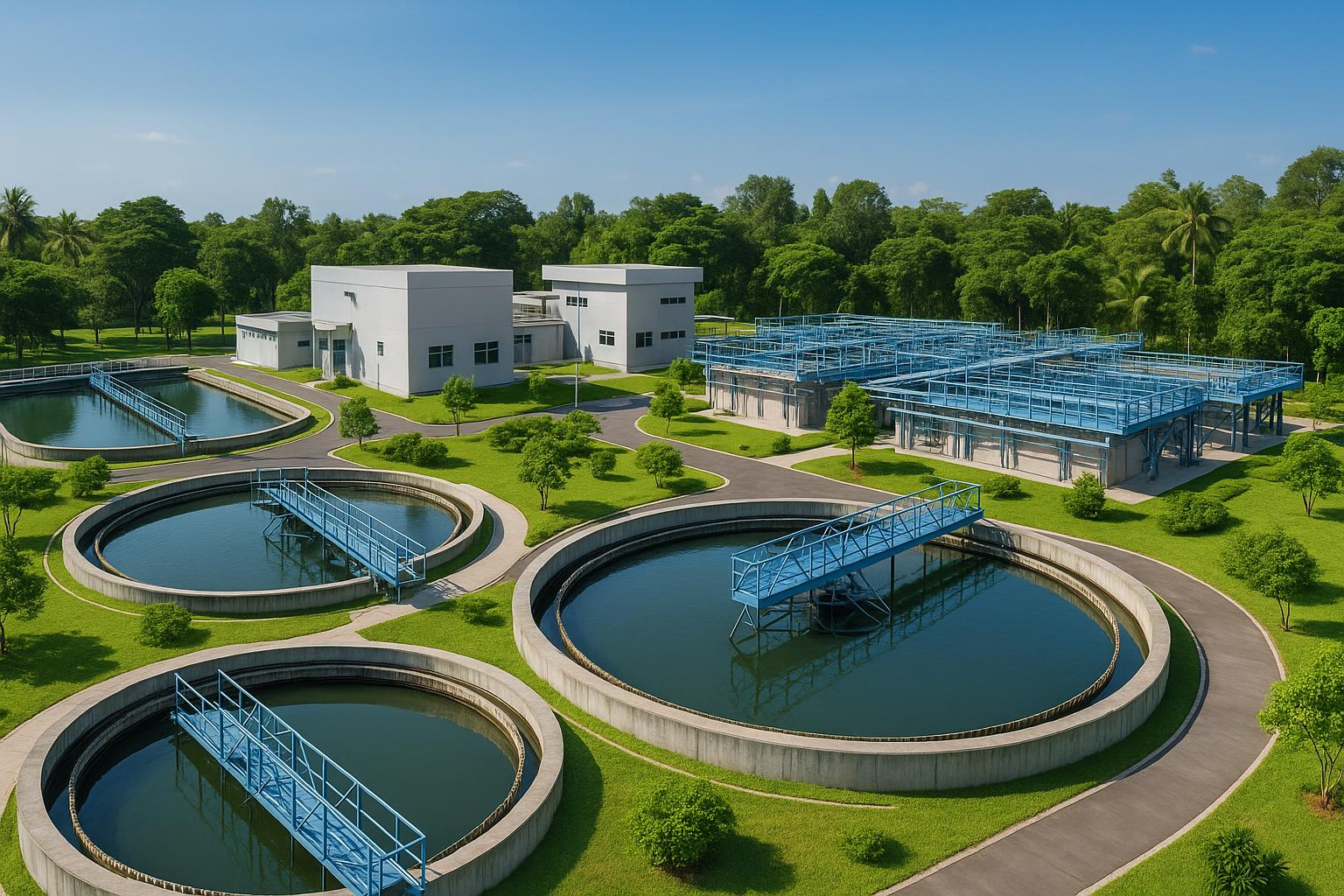
In the wastewater treatment systems of food processing and dyeing factories, the chemical costs for neutralizing/adjusting pH often account for a significant proportion of operational expenses. The core reason lies in the large pH fluctuations of the incoming wastewater, the sensitivity of the physicochemical and biological processes to pH, and the phenomenon of overdosing due to unrefined control. By reorganizing the pH adjustment strategy (from chemical selection to dosing pump operation algorithms and alkalinity balance in the biological system), companies can reduce chemical consumption while ensuring treatment efficiency and equipment longevity.
Regarding legal requirements, production facilities discharging into the environment must comply with national technical standards applicable to industrial wastewater. Companies should monitor and report compliance according to QCVN 40:2011/BTNMT and its updates such as QCVN 40:2025/BTNMT, as pH is a mandatory parameter to monitor before discharge. Although the specific standards depend on the receiving entity and the pathway, automating the pH adjustment process and maintaining stability is fundamental to sustainably meet the standards.
From a technical perspective, pH is a process variable that determines microbial activity: most biological systems work well when pH is maintained around 6.5–8.5; most bacteria thrive in a near-neutral range of 7–8. When pH deviates far from the optimal range, the biological system experiences sedimentation issues, sludge floatation, microbial death, and increased risk of violating output standards, necessitating more chemical compensation to "rescue" the system. Therefore, effective pH management is not just about "pumping acid/base at the right time" but also coordinating DO, F/M, nutrient balance, and related nitrification/denitrification reactions involving alkalinity.
2. Background Knowledge: pH Behavior and Its Relation to Biology and Chemistry in the System
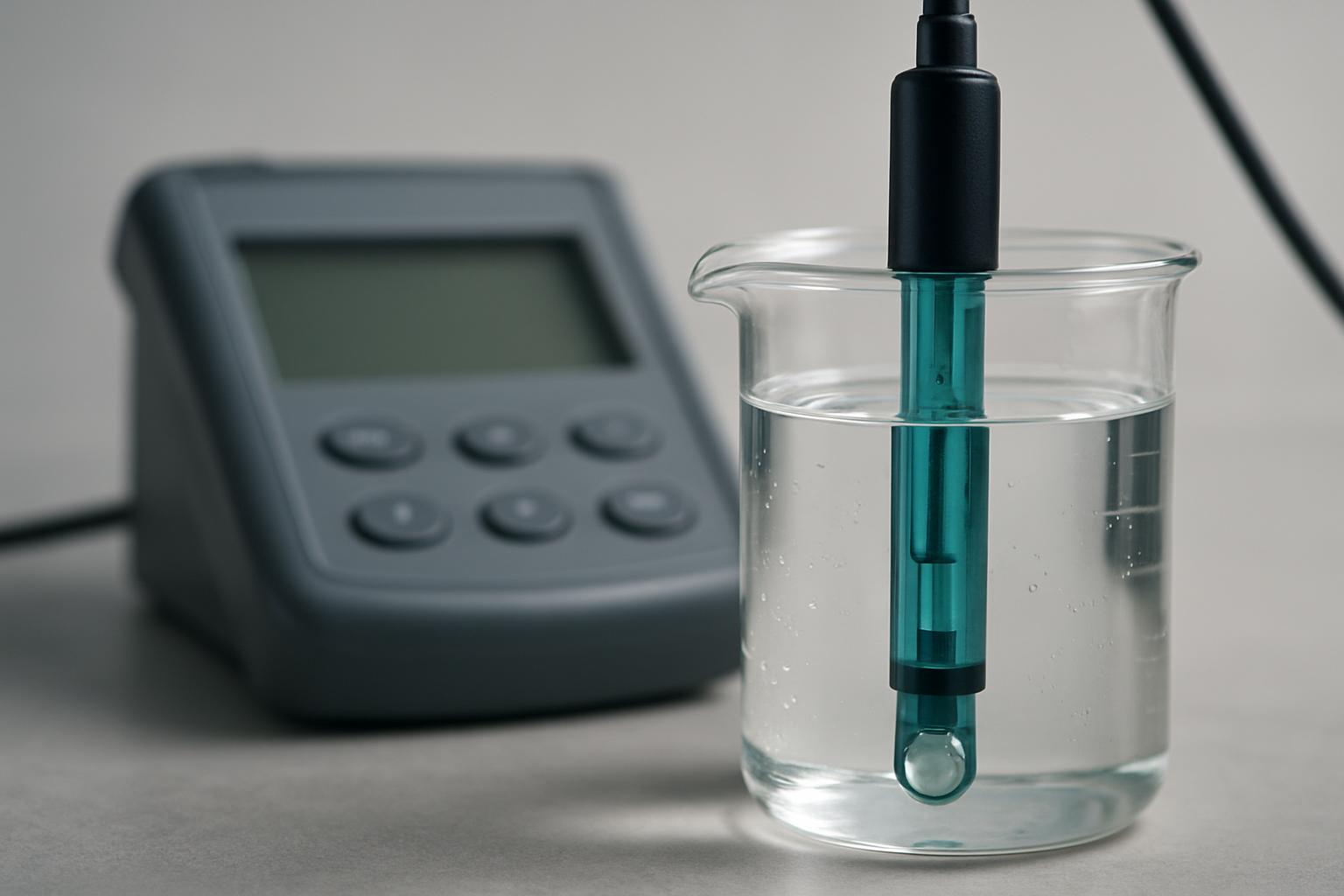
pH indicates the level of acidity – alkalinity; when pH is less than 7, the solution is acidic, and when greater than 7, it is alkaline. In industrial wastewater, pH can vary widely, especially in dyeing (strong alkalinity due to the use of caustic soda and alkaline aids) and food (organic acids, alkaline detergents). Physicochemical processes (coagulation, flocculation, oil separation) and aerobic biological processes depend on the target pH range. Many microbial groups have different tolerance ranges: nitrite bacteria thrive in a wide range of 4.8–8.8, while nitrate bacteria prefer 6.5–9.3. Therefore, a reasonable operational pH range helps limit load fluctuations and reduce chemical dosing.
In aerobic tanks, DO and pH are two "coupled" variables that affect each other. Too low DO causes oxygen deficiency, reducing treatment efficiency and sedimentation; too high DO can lead to alkalinity-related CO2 stripping from the water, lowering pH. Operational practice recommends maintaining DO at an appropriate level to ensure organic oxidation while avoiding alkalinity loss due to excessive aeration. Operating documents reflect two commonly used reference thresholds: 1–2 mgO2/l is the appropriate DO level for organic biological treatment; simultaneously, DO should be kept below 3 mg/l for extended periods to limit alkalinity loss due to CO2 stripping from the water.
Alkalinity balance in the nitrification – denitrification chain is the "golden point" for optimizing chemicals. In nitrification, each gram of N oxidized consumes about 7.14 g of CaCO3 equivalent alkalinity; in the denitrification stage, 1 g of NO3− reduced can "return" about 3.57 g of CaCO3 equivalent. If the anoxic flow and denitrification conditions are optimized, the system will self-compensate for some alkalinity, significantly reducing the need for external alkalinity supplementation such as NaOH or Na2CO3.
3. Choosing pH Adjustment Chemicals: Advantages and Disadvantages Related to Cost Issues
There is no "one-size-fits-all" chemical for every factory. The choice depends on: the characteristics of the wastewater (acid/alkaline, heavy metals, buffering capacity), technological goals (maintaining hardness, supporting coagulation, softening), safety risks, and infrastructure for dosing – feeding – storage. In the alkaline group, NaOH is a strong base, highly effective in raising pH, and easy to automate with dosing pumps; Na2CO3 has a "gentle" effect on raising pH, helping to limit hardness increase and can assist in softening. Calcium hydroxide (Ca(OH)2) raises pH while aiding in coagulation – precipitation of metals, but requires sedimentation/filtration steps to manage sludge, suitable for systems with large settling tanks and active sludge. In the acid group, HCl and H2SO4 are common choices for lowering pH; the mandatory safety operation is to dilute according to the principle of adding acid to water slowly, not the reverse.
Since chemical costs are greatly influenced by dosage and corrosion risks, companies should evaluate the total lifecycle costs (chemicals + safety + dosing pump + sludge treatment). With NaOH, ventilation, protective gear, and adherence to dilution techniques are required; with Na2CO3, the operation is friendlier, with less risk of increasing hardness, suitable for fine-tuning pH towards neutrality. In some scenarios like swimming pools or low-buffer water, a dose of Na2CO3 around 100 g for 10 m³ can raise pH by about 0.2–0.3; however, in industrial applications, jar tests and adjustments based on actual loads are mandatory.
| Chemical | pH Impact | Technical/Safety Notes | Hardness Impact/Additional Benefits | Examples/Applications |
|---|---|---|---|---|
| NaOH (soda) | Rapidly raises pH, strong base | Dilute correctly; prioritize adding soda to water; requires ventilation, protective gear | Does not increase water hardness | Adjusting pH in industrial wastewater; suitable for dosing pumps |
| Na2CO3 (soda ash) | Gently raises pH, increases alkalinity | Easily soluble, dispersed by stirring; check pH after 2–4 hours in small-scale applications | Does not increase hardness; can assist in softening through Ca, Mg precipitation | Example for swimming pools: ~100 g/10 m³ can raise pH ~0.2–0.3 (needs testing with industrial wastewater) |
| Ca(OH)2 (lime) | Raises pH, adds alkalinity | Creates clear lime water; requires sedimentation – filtration to remove sludge; manage sludge | Supports heavy metal precipitation, clarifies water | Systems requiring simultaneous coagulation/precipitation with pH increase |
| HCl | Rapidly lowers pH, strong acid | Safety principle: always add acid to water slowly; highly corrosive | — | Neutralizing alkaline wastewater (dyeing, alkaline CIP) |
| H2SO4 | Strongly lowers pH, thermally stable | Similar to HCl; must dilute correctly; manage corrosion | — | Lowering pH before coagulation, controlling physicochemical reactions |
| H2CO3 (CO2) | Gently lowers pH, increases buffering capacity | Requires aeration equipment; control gas escape | — | Soft adjustment when corrosion needs to be limited |
4. Designing and Controlling pH Dosing Systems to Reduce Chemical Consumption
4.1. Equipment Components: pH Measurement, Dosing Pumps, and Mixing
The foundation of a cost-effective pH adjustment system is an efficient measurement – control – mixing chain. pH sensors need to be regularly checked to ensure accurate feedback values, as pH is a "sensitive" variable to electrode drift. The dosing source uses corrosion-resistant dosing pumps with precise flow rates, which can be controlled based on three parameters: pump flow rate (stroke), measured pH signal (feedback), and chemical solution concentration. Before the pH measurement point, a mixing/turbulence zone should be arranged to ensure even chemical dispersion, limiting the phenomenon of "local overdosing" that causes the controller to receive incorrect values and unnecessary compensation pumping.
In industrial scale, chemical dosing should be performed at points with strong turbulence such as pressure pipes, bypass pipes with static mixers, or tanks with agitators. These solutions help quickly stabilize pH to the target level, reducing amplitude fluctuations (overshoot/undershoot) – which is the source of increased acid/base consumption when the controller has to alternate pumping oppositely to pull pH back to the setpoint.
4.2. Control Algorithm: Combining "Flow-Paced + Feedback"
A common mistake is to use only on/off control based on pH thresholds, leading to jerky dosing and overdosing. Instead, chemical dosing should be combined with flow pacing to ensure a "baseline" proportional to the instantaneous load, then fine-tuned using feedback from online pH. Adjusting the pump flow rate based on pump flow parameters, measured pH, and solution concentration helps pH increase/decrease "just enough", limiting waste.
Adding a deadband around the setpoint helps avoid continuous on/off switching when pH fluctuates very slightly due to measurement noise or mixing. For systems with large fluctuations, dosing can be tiered: using Na2CO3 to "support" baseline alkalinity and NaOH for quick adjustments to the target; or vice versa on the acid side with H2CO3 and HCl/H2SO4. This combination allows for optimizing both chemical costs and process stability.
5. Cost Optimization Based on Alkalinity Balance and Biological Conditions
5.1. Exploiting "Intrinsic Alkalinity" from Nitrogen Reactions
In the nitrification – denitrification chain, alkalinity is consumed and partially returned. Specifically, nitrification consumes about 7.14 g of CaCO3 for each gram of N oxidized; in denitrification, about 3.57 g of CaCO3 is produced for each gram of NO3− reduced. If the anoxic – aerobic recycling ratio is well coordinated, the system will receive a significant portion of alkalinity back, thereby reducing the need for NaOH dosing. This is a "silent saving" method because chemicals do not necessarily reduce immediately, but pH fluctuations will be smaller, helping external alkalinity compensation to rise less dramatically with load shocks.
In practice, many factories have an input pH ≥ 7 but a lower output pH after the biological settling tank. The cause often stems from nitrification using alkalinity while the denitrification process has not been fully exploited. At this point, it is necessary to review the operational configuration (organic load, retention time in the anoxic zone, internal recycling) to enhance denitrification, thereby "compensating" for alkalinity and reducing chemicals. If optimized and pH still falls below the required threshold, then increase external alkalinity dosing; this approach allows for cost reduction compared to relying solely on NaOH/Na2CO3.
5.2. Controlling DO to Avoid Alkalinity Loss and pH Fluctuations
DO is an equally important control variable as pH. In terms of biological efficiency, an appropriate DO level around 1–2 mgO2/l will support organic degradation, limit filamentous bacteria, and improve sedimentation. However, if DO is pushed too high (above 3 mg/l) for extended periods, CO2 and dissolved alkaline forms (HCO3−, CO3²−) may escape into the atmosphere, causing pH to gradually decrease – necessitating additional alkalinity dosing to raise pH. Therefore, DO should be controlled to be "sufficient", avoiding excessive aeration, thus saving energy and reducing alkalinity consumption.
Simultaneously, it is necessary to identify the root causes of low pH: if the input pH is already low, spreading the flow and isolating/pre-treating strong acid streams will be cheaper than adding a lot of NaOH at the end of the line. If pH decreases due to alkalinity loss from nitrification, adjusting the anoxic recycling loop is the core measure. Once the systemic causes have been addressed, adjusting pH with NaOH/Na2CO3 in the aerobic tank (Aerotank) will be more effective and less costly.
6. Common Operational Errors and Solutions to "Lock" Chemical Costs
Fluctuating pH leads to floating sludge, microbial death, and poor sedimentation – resulting in increased costs for deodorizing, disinfection, and neutralization chemicals. When encountering this phenomenon, first check the fundamental parameters: the F/M ratio should be around 0.2–0.6; if F/M is too low, it tends to favor fungi, making sludge difficult to settle; too high F/M leads to low DO, black sludge, fishy odors, and poor treatment efficiency. These are signs that the biological system requires load adjustment or aeration, not just increasing alkalinity/acid dosing.
At the same time, review the BOD:N:P ratio around 100:5:1 to ensure sufficient nutrients for microorganisms, especially when there are wastewater streams rich in detergents that disrupt nutrient balance. If the biodegradable organic source is too low (BOD/COD ≤ 0.5), the system lacks "fuel" for denitrification, making it difficult to return alkalinity, leading to increased external alkalinity consumption. Control DO at an appropriate level (1–2 mgO2/l) to optimize organic degradation and avoid inhibiting nitrification; simultaneously, do not maintain DO too high as it will lead to alkalinity loss due to CO2 stripping, causing pH to drop and requiring additional NaOH for compensation.
After optimizing the above parameters, only then should pH be fine-tuned with chemicals. In aerobic tanks, NaOH can be diluted and gradually dosed to bring pH to the target area, avoiding sudden increases that could shock microorganisms. For systems with strong alkaline wastewater (dyeing), consider using inorganic acids like HCl or H2SO4 to pull pH back to the working range before coagulation/flocculation; always adhere to the principle of adding acid to water slowly to ensure safety and tightly control localized corrosion at the dosing point.
| Parameter | Range/Reference Value | Significance for pH and Chemical Costs | Recommended Actions |
|---|---|---|---|
| Biological pH | ~6.5–8.5 | Exceeding the range reduces microbial efficiency, increasing the need for chemical dosing to "rescue" the system | Stabilize with reasonable alkalinity/acid dosing; prioritize addressing systemic causes |
| Aerobic DO | ~1–2 mgO2/l; avoid >3 mg/l for extended periods | Low DO: poor treatment; high DO: loss of alkalinity due to CO2 escape, pH decrease, increased NaOH consumption | Control aeration to be "sufficient", based on load; monitor pH – DO in parallel |
| F/M | ~0.2–0.6 | F/M deviation causes sludge floatation/poor settling → pH fluctuations, increased chemical dosing | Adjust sludge recycling, loading, and aeration |
| BOD:N:P | ~100:5:1 | Nutrient deficiency reduces microbial stability and denitrification → decreases alkalinity return | Supplement nutrients as needed; control loading |
| BOD/COD | > 0.5 is beneficial for biology | Low BOD/COD: difficult denitrification, increased external alkalinity consumption | Blend streams, optimize pre-treatment, support substrates if needed |
| Alkalinity in the N chain | Nitrification: −7.14 g CaCO3/g N; Denitrification: +3.57 g CaCO3/g NO3− | Optimizing denitrification helps "compensate" alkalinity, reducing NaOH/Na2CO3 dosing | Increase anoxic recycling, ensure substrates for denitrification |
7. Operational Suggestions for the Food Processing and Dyeing Industries
7.1. Food Factory: Controlling Acid Shock and Nutrient Balance
Food wastewater often contains organic acids, detergents, and fluctuating loads according to production shifts. When the input pH is low, the most expensive solution is to "spread" NaOH at the end of the line. A more economical approach is to balance flow (equalization), isolate heavy acid streams for separate pre-treatment, and use Na2CO3 as a buffering alkalinity to gently raise pH without increasing hardness. If the system has strong nitrification, it is necessary to proactively manage denitrification conditions to compensate for alkalinity; at that point, the NaOH adjustment dose will only be to "lock" pH to the target.
Since biological efficiency is closely dependent on nutrients, regularly check BOD/COD and BOD:N:P ratios. With BOD/COD > 0.5 and BOD:N:P ~100:5:1, microorganisms operate more stably, pH fluctuates less, and the aerobic tank requires less "fire-fighting" alkalinity dosing. On the DO side, maintain an appropriate level (around 1–2 mgO2/l) to optimize efficiency and avoid losing alkalinity due to excessive aeration.
7.2. Dyeing Factory: Neutralizing Alkalinity and Coordinating Coagulation
Dyeing wastewater often has high alkaline pH due to the use of caustic soda and alkaline aids in cooking and bleaching. Before coagulation – flocculation processes, pH should be brought back to the optimal range using inorganic acids like HCl or H2SO4; strictly adhere to the safety principle of adding acid to water slowly to control exothermic reactions and corrosion. After neutralization, coagulation and color separation will be more stable, reducing the doses of coagulants and polymers – indirectly reducing overall chemical costs.
In the pH raising phase (when needed for biological tanks), Na2CO3 is the "gentle" choice to increase alkalinity without increasing hardness; it can also assist in softening and improving flocculation. With high color and COD loads, check F/M and DO ratios, as old sludge/poor settling will cause unpredictable pH fluctuations. After stabilizing the technological variables, fine-tuning pH with chemicals will be significantly more cost-effective.
8. Field Implementation Process: From Quick Assessment to Long-Term Fine-Tuning
Initially, map pH over time at the inlet, after neutralization, after the aerobic tank, and before discharge; compare with DO, F/M, BOD/COD, and nutrients. When observing low pH after the settling tank despite an input pH ≥ 7, prioritize reviewing alkalinity balance: increase recycling from the anoxic zone, ensuring substrates for denitrification. Simultaneously, adjust aeration to keep DO from being too high, avoiding the situation where pH gradually drops due to alkalinity loss.
Next, conduct small-scale tests to determine the "pH sensitivity" with each chemical: NaOH provides rapid effectiveness, suitable as the main impact in automatic control; Na2CO3 is used for baseline adjustments, reducing amplitude fluctuations; HCl/H2SO4 to pull pH back to the coagulation range and neutralize alkaline wastewater. In similar cases to swimming pools or low-buffer water, a reference of 100 g Na2CO3/10 m³ can raise pH by about 0.2–0.3 as a qualitative benchmark, but in industrial wastewater, it must be confirmed through practical testing and specific operational conditions.
Finally, configure the controller towards flow-paced + feedback, add deadband to prevent fluctuations, and arrange dosing points with effective mixing. Chemical safety practices are mandatory: with acids, always dilute by adding acid to water; with strong bases like NaOH, ensure ventilation, personal protection, and control temperature during dilution. Once the system stabilizes according to these principles, chemical costs typically decrease naturally as the system requires less "fire-fighting adjustments".
9. FAQ – Frequently Asked Questions
-
What pH is suitable for biological tanks to limit alkalinity consumption?
Most biological systems work well when pH is maintained around 6.5–8.5. Keeping pH stable in this range helps microorganisms thrive, with fewer fluctuations and reduced needs for sudden alkalinity/acid dosing.
-
What DO level should be set to save energy while preventing pH drop?
The appropriate DO level for organic treatment is usually around 1–2 mgO2/l. Avoid maintaining DO too high (above 3 mg/l) for extended periods as it may lead to alkalinity loss due to CO2 escape, lowering pH and increasing alkalinity compensation costs.
-
Why is the output pH low even though the input pH is normal?
Nitrification consumes alkalinity (about 7.14 g CaCO3 for each gram of N oxidized), while denitrification only partially returns it (~3.57 g CaCO3 for each gram of NO3− reduced). If the denitrification process is not optimized, the final pH may drop, necessitating external alkalinity compensation.
-
Is using NaOH or Na2CO3 more cost-effective?
NaOH has rapid pH-raising effectiveness, suitable for automatic control; Na2CO3 raises pH "gently", does not increase hardness, and can assist in softening. A combined scenario: using Na2CO3 to create baseline alkalinity, NaOH to "lock" the setpoint will help reduce total dosing.
-
How can Na2CO3 dosing be referenced?
In swimming pool applications, about 100 g of Na2CO3 per 10 m³ of water can raise pH by approximately 0.2–0.3. However, for industrial wastewater, practical testing is necessary to determine appropriate dosing due to buffering capacity and pollution load.
-
How to reduce high alkaline pH before coagulation in dyeing?
Using HCl or H2SO4 can pull pH back to the target range; always adhere to the safety principle of adding acid to water slowly. Correctly adjusting pH helps reduce coagulant – polymer doses, indirectly saving overall chemical costs.
Nanoen
NANO THANG LONG ENVIRONMENTAL COMPANY LIMITED
Hanoi Office: No. 15 TT18 Van Phu Urban Area, Ha Dong, Hanoi
Can Tho Office: 661E/29, Vo Van Kiet Street, Binh Yen A Area, Long Hoa Ward, Binh Thuy District, Can Tho City
Ho Chi Minh City Office: 533/12/7, Pham Van Bach Street, Ward 15, Tan Binh District, Ho Chi Minh City
Hotline: 0986.689.781 - 0969.054.226
Email: thanglongnanoen@gmail.com
Facebook: www.facebook.com/thanglongnanoen