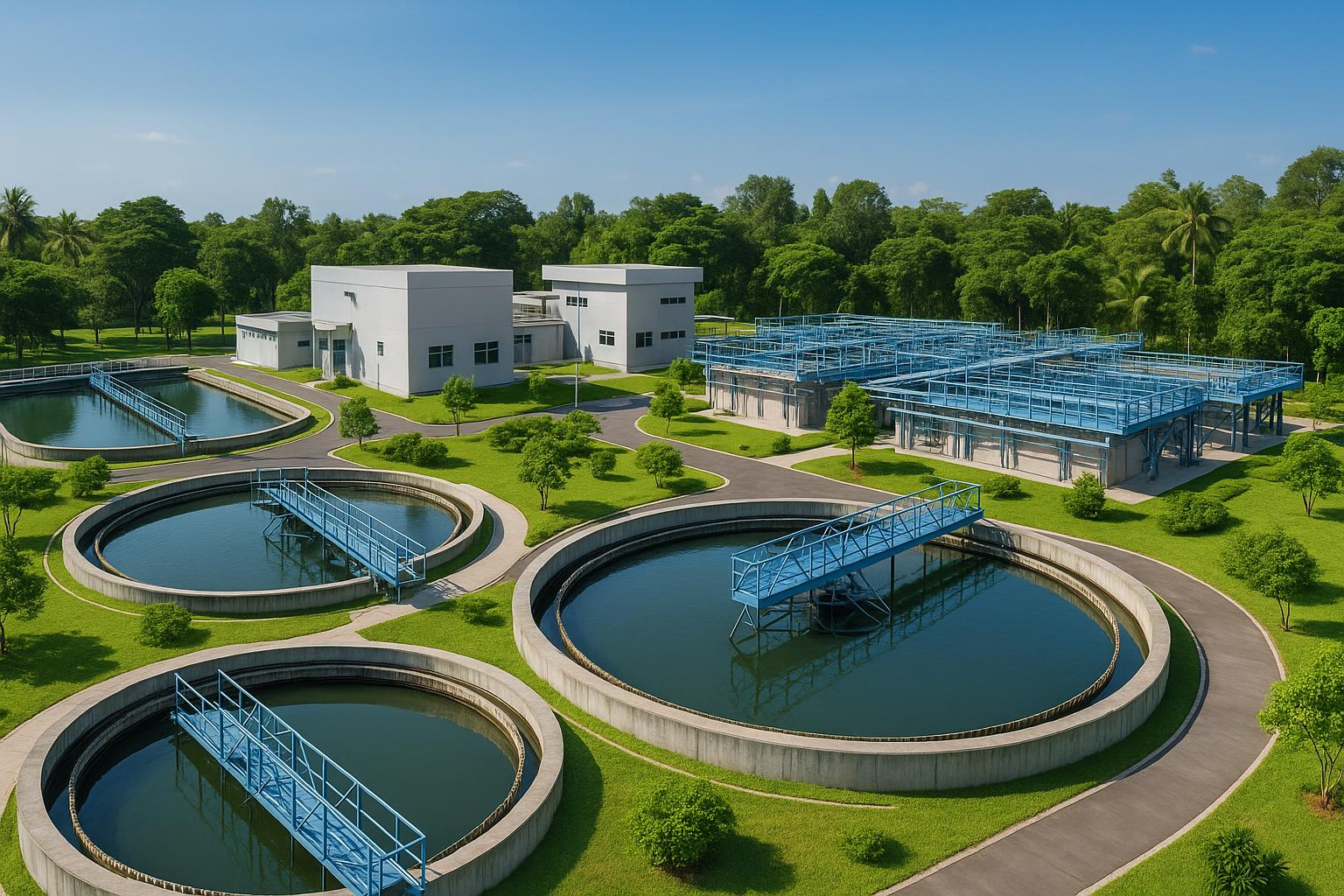
1. Objectives of Periodic Maintenance of Filtration Equipment in Wastewater Treatment Plants
In every industrial wastewater treatment process, filtration equipment is the "bottleneck" that determines the stability of flow, the quality of treated water, and energy consumption levels. Clogged filters increase pressure differentials, causing pumps to work under heavy loads; debris infiltration can overload biological, disinfection, or membrane systems; and damage to the fine screen's drive can cause debris blockage at the inlet. Properly organized periodic maintenance will maintain safe operational margins, allowing the system to respond "smoothly" to fluctuations in incoming water composition and reduce the risk of unplanned shutdowns.
For industrial plants, the pressure to comply with legal regulations is continuous, as the quality of discharged wastewater must meet current standards. Controlling, maintaining, and calibrating filtration equipment is a crucial line of defense to keep the quality of outgoing water stable. In this context, companies need to view maintenance as part of compliance control: maintenance schedules, post-maintenance acceptance records, calibration reports for measuring devices, and electrical safety checks must be thoroughly documented. When maintenance is performed correctly and adequately, the ability to maintain wastewater quality meeting QCVN 40:2025/BTNMT requirements will be higher, even when flow rates and pollutant loads vary with production.
On the other hand, operational costs are directly related to the health of filtration equipment. Clean and properly maintained filters will reduce pressure loss, helping pumps operate in high-efficiency zones. When backwashing and cleaning cycles are executed based on actual conditions rather than on a rigid schedule, the total amount of wash water, cleaning chemicals, and filter downtime can all be optimized. This article delves into maintenance practices with organized processes, checklists for each group of filtration equipment, and common fault scenarios, along with specific thresholds and checkpoints that have been validated in actual operations.
Last but not least is the safety of operators. The filtration area often combines electrical, mechanical, and chemical elements simultaneously: control panels for backwashing, dosing pumps, aeration blowers for gas washing or membrane aeration, and chemical dosing lines for glue, alkaline, and acid. Establishing energy isolation procedures, checking insulation, noise, and leaks before, during, and after maintenance is a prerequisite for effective yet safe maintenance.
2. Identifying Groups of Filtration Equipment and Operational Constraints
The filtration system in industrial wastewater treatment plants often consists of multiple layers, each handling a specific "particle size." At the inlet are coarse/fine screens (which can be rotary drums or conveyor screens) designed to remove fibrous waste, nylon, wood, rubber, etc. This is the first link in protecting the downstream equipment. When the fine screen is not properly maintained, debris accumulates, creating a barrier, causing the flow to rise and overflow, while the debris that passes through can move deeper into the system, adhering to impellers, wearing out pumps, and clogging wash pipes.
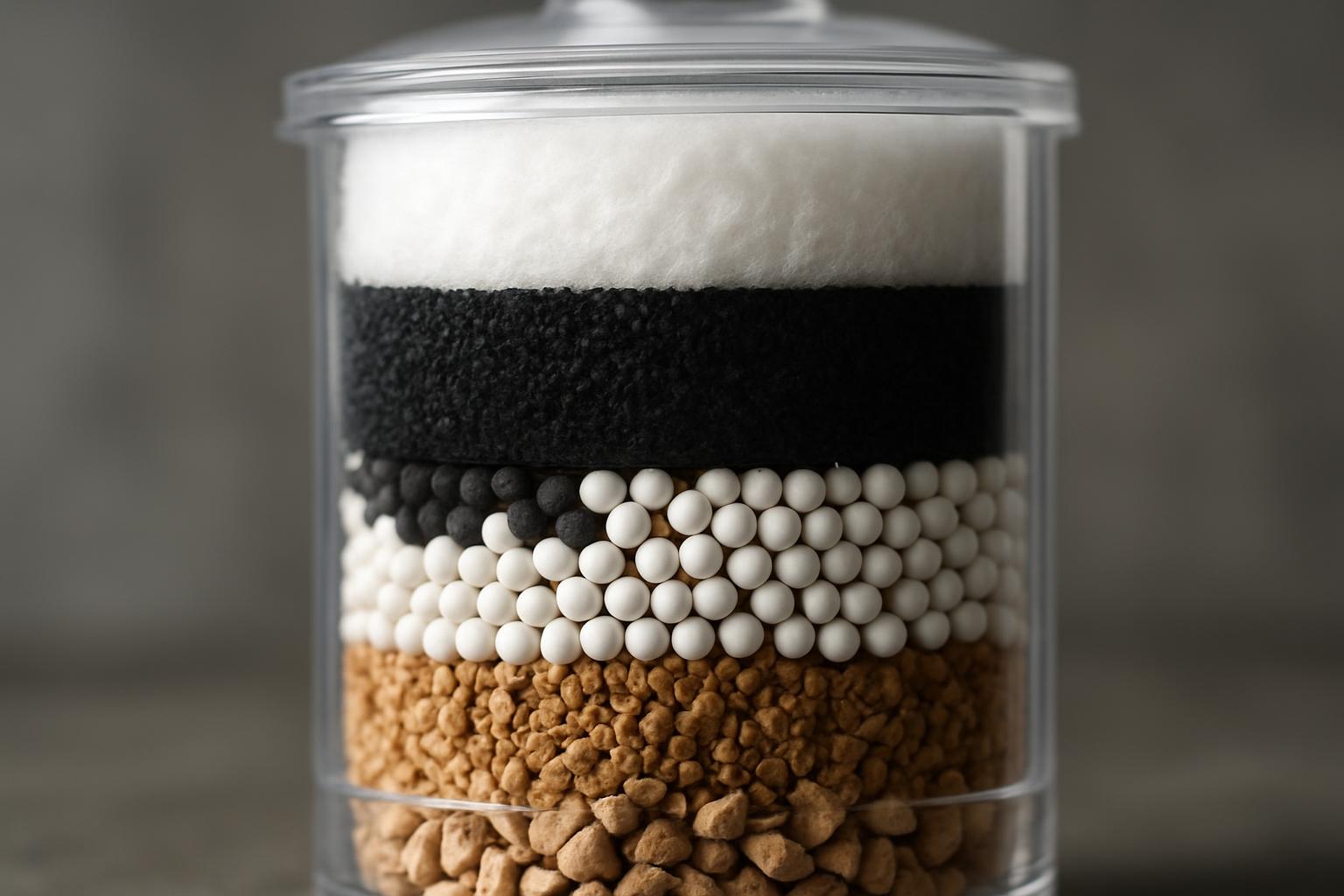
After the screens, common types of fine filtration include: multi-media pressure filters (sand – anthracite – gravel) used to reduce SS and turbidity before coagulation/flotation or before disinfection; bag/cartridge filters placed before sensitive devices such as ion exchange, UV, RO; disc/cloth filters used for secondary treatment to collect fine sludge; membrane modules (UF/MBR) for very low suspended solids requirements. Each technology requires different cleaning and maintenance styles: media needs backwashing and mixing; bags/cartridges need periodic replacement; cloth/discs need surface rinsing; membranes need aeration, water washing, and chemical cleaning when pressure differentials increase.
The relationship between filtration layers requires maintenance thinking "from upstream to downstream." Keeping the fine screen operating smoothly will extend the backwashing cycle of the media filter. Maintaining the wash pump and related piping will ensure stable washing intensity, preventing structural damage to the media layer. In membrane lines, any changes in aeration (weak aeration blower, poorly sealed check valves) or chemical lines (clogged dosing pump at the suction or discharge end) directly affect cleaning cycles and membrane lifespan. Therefore, the maintenance checklist must "interweave" between electrical, mechanical, and chemical aspects, not just focus on individual pieces of equipment.
Finally, there are auxiliary devices that determine the readiness of filtration: control panels for washing – regeneration cycles, piping and valves for backwash flow, and backup generators to ensure the washing process is not interrupted during power outages. An interrupted backwash due to electrical issues often leaves the media layer unevenly mixed, which can lead to "channeling" phenomena later. Maintenance must take a holistic view to address root causes rather than just "putting out fires" for each emerging fault.
3. Periodic Maintenance Process by Area and Equipment
3.1. Safety Preparation, Energy Isolation, and Route Cleaning
Before intervening in any filter, energy must be isolated according to the lockout-tagout procedure and pressure released from backwash lines. This is particularly important for pressure filters and cloth/disc filters with rotating mechanisms. The maintenance area must be well-ventilated, with dry working platforms, and catch trays placed to prevent sludge from spilling into the common drainage. Chemicals used (if any for membrane cleaning) must be labeled, spill trays prepared, and neutralizing materials ready to handle any spill situations.
Simultaneously, review the most recent operational records: pressure differentials of each filter, number of wash cycles/day, and alerts from the control panel. This data helps determine the necessary cleaning level and detect abnormalities before opening the equipment. When planning to replace materials or bags/cartridges, organize an inventory check at the beginning of the shift to avoid the situation of "opening up only to find materials missing," which could lead to prolonged equipment downtime.
3.2. Control Panel – Control Board of Filtration Units
The control panel is the "brain" that controls washing cycles and protects the drive. During each maintenance period, it is necessary to measure and record source and load parameters. According to actual operational data, the ambient noise level should not exceed 80 dB; the insulation resistance of electrical equipment should be at least 0.1M; voltage should not exceed 10% of the specified level on the machine, and pressure drop should not exceed 2%/100V. These thresholds are not only safety criteria but also reflect the health of cables, terminals, and switching devices. Exceeding these thresholds can cause program hangs, tripping protections during washing cycles, and reduce the cleaning efficiency of the filters.
Along with measurements, it is necessary to clean the inside of the panel to ensure good heat dissipation. Fine dust and fiber debris can accumulate on fans and heat dissipation slots, increasing the temperature inside the panel. Check the display of voltage and current meters; the condition of switches, indicator lights; the switching ability of the main circuit breaker and individual equipment circuit breakers. Finally, review contact points, tighten all terminals, and manually test the operation/wash modes to confirm that the control software responds correctly. Any abnormalities need to be noted and monitored in the next operational shift after maintenance.
3.3. Piping, Valves, Fittings, and Check Valves
Piping related to the filtration unit typically includes: supply pipes, discharge pipes, backwash pipes, wash discharge pipes, and air branches if air washing is present. Leaks at flanges, local blockages at bends, and "dead spots" are the main causes of pressure drops, leading to incorrect wash flow rates. Maintenance should open and inspect easily clogged points, clean scale deposits, sludge/algae, and replace old gaskets. Check valves at the inlet pump pit and on the wash line must be tight; if leaking, it will lead to unwanted back pressure, reducing the effectiveness or causing failure of the backwash cycle.
Additionally, check the condition of shut-off valves, handwheels, pneumatic cylinders (if they are pneumatic control valves), and ensure signal lines to the control panel are unobstructed. In systems with aeration blowers supporting washing, the air intake and silencer pipes need to be disassembled and cleaned to remove debris, limiting abnormal noise increases. Maintaining "clean" piping is essential for the initially designed wash timings to be effective in the field.
3.4. Supply/Wash Pumps and Chemical Dosing Pumps
Wastewater pumps and wash pumps operate under variable loads, making them prone to vibration and noise. If the motor makes loud noises, in many cases, the cause is worn bearings; it is necessary to stop to replace the bearings. When leaks occur at seals due to wear or cracks, replacing the seals should be done promptly to avoid air intake and flow drops. According to operational reality, the current of the pump motor should be measured periodically every month to detect early phase load imbalances, increased friction due to damaged bearings, or worn impellers.
For chemical dosing pumps, the suction and discharge lines need to be cleaned monthly to avoid the accumulation of residues and air, which can cause "lost doses" or fluctuations in actual flow compared to set points. Adjusting the flow rate after cleaning helps ensure that chemicals are dosed correctly for coagulation, pH adjustment, or chemical washing. Check the condition of membranes and check valves in the dosing pump head and replace them when deterioration is detected to avoid pressure drops and backflow in the pump head.
3.5. Aeration Blowers for Filtration (Gas Washing, Membrane Aeration, Tank Aeration)
Aeration blowers provide energy for many filtration operations, from aerated backwashing to MBR membrane aeration. According to practical guidelines, approximately 50 g of grease rated for 125°C should be pumped into each blower every 10 days to maintain bearing lubrication. Additionally, oil (P140 type) should be added monthly, ensuring it reaches the red mark on the oil sight glass. These are the minimum thresholds to keep blowers operating smoothly, limiting sudden increases in noise/vibration and early reductions in air flow to the filtration unit.
During maintenance shifts, check for unusual noise and vibration; the condition of the drive belt; clean check valves, safety valves, and pressure gauges; and clean the intake and silencer pipes. In terms of electricity, monitor operating current to ensure it does not exceed rated current (≤ Idm). When worn bearings or gears show signs of overheating, periodic replacement helps prevent cascading failures in the filtration assembly. A "strong" blower will ensure that backwashing and aeration occur at the designed intensity.
3.6. Periodic Cleaning of Tanks, Manholes, Grease Separators, and General Cleaning
The filtration system cannot operate effectively if the inlet area is full of debris and deposits. Therefore, checking and cleaning the trash baskets at the water pump manhole and the collection pit of the treatment tank is a recurring task in each maintenance cycle. This cuts off the source of coarse waste right from the start, reducing blockages in conveyor/screen mechanisms and preventing odor buildup. Specifically, for grease separators, they should be cleaned monthly to avoid grease accumulation that can block conditioning pipes and reduce the risk of oil films forming on the filter material surface.
At the system level, total cleaning should be performed every three months for treatment tanks and operational areas. This is the time to clean algae and deposits, check the anti-corrosion paint layer, and assess the overall condition of the infrastructure in the station room, thus leading to the next major maintenance plan. A clean system will always make it easier to detect small leaks and abnormal hot spots compared to a "dirty" system, helping to reduce response times when unusual symptoms arise.
4. Key Maintenance Checklist for Each Type of Filtration Equipment
4.1. Coarse – Fine Screens (Rotary Drums, Conveyor Screens)
For mechanical screens, first check the normal operation of the drive components: gearboxes, bearings, chains/shafts. Listen and record vibration and noise levels; wear on gears/chains often signals impending failure if not addressed in time. Check the condition of the rake and clean the surface of the mesh to avoid "masking" effects that cause abnormal water levels to rise at the collection pit. If there is a pressure washing device included, confirm that the spray nozzle is not clogged and that the wash pump has sufficient pressure.
Regarding gearbox oil changes, operational experience suggests changing oil for the first time after 2,000 hours of operation, and subsequent changes every 10,000 hours or 5 years. This change schedule helps stabilize viscosity and lubrication capacity, reduce operating temperatures, and extend the lifespan of bearings and gears. Additionally, replace seals periodically and lubricate bearings; check the insulation resistance of the drive motor and confirm that the running current does not exceed the rated current. For rotary screens, adjust the tension of the belts/conveyor according to recommendations to avoid slippage during high debris loads.
4.2. Multi-Media Pressure Filters (Sand – Anthracite – Gravel)
This equipment heavily relies on the quality of backwashing. Maintenance should focus on pressure differential gauges (to detect rapid increases after each cycle), wash timers, diversion valves, and wash pumps. When opening the inspection cover, observe whether the surface material has formed "cakes" or if channeling has occurred; these are signs that the media layer has lost uniformity due to insufficient backwashing or inadequate wash rates. Check the support layer (gravel/balls) and the water distribution and collection system for cracks or misalignments that could allow media to escape.
If there are signs of inorganic deposits (rust, carbonate deposits) on the media, plans can be made for cleaning with water or suitable chemicals during major maintenance; also consider adjusting the dosing points for coagulants/supporting agents to reduce the load on the filter. In periodic maintenance, check wash valves, flanges, wash discharge pipes, and wash pumps to ensure there are no leaks and that the load is adequate throughout the entire cycle. After maintenance, run a simulation of the wash – filter cycle to confirm smooth switching and no leaks of air/water at the valves.
4.3. Bag – Cartridge Filters
These are the "final barrier" before sensitive units such as UV disinfection, ion exchange, or membranes. Maintenance should closely monitor the pressure differential at the inlet and outlet of the housing to determine the timing for replacing bags/cartridges based on condition, avoiding "squeezing" the flow of the supply pump downstream. When opening the housing, observe and clean the surface of the support base, lid seals, and grooves holding the bags/cartridges to avoid short-circuiting due to open seals. Bags/cartridges should be marked with installation dates and converted based on operating time to compare between maintenance intervals – if the lifespan drops unusually fast, review upstream filtration and coagulant dosing.
During reassembly, evenly tighten the housing lid bolts to avoid warping; check the tightening of the support base screws, crossbars, and air vent holes. For systems with multiple levels of bags/cartridges, it is advisable to shuffle the order/swap positions between levels after each maintenance interval (if permitted by the manufacturer) to balance the load of deposits between the housings. Finally, record stable flow rates after replacement to evaluate the effectiveness of the maintenance intervention in the subsequent operational shift.
4.4. Cloth – Disk Filters
The rotating mechanism, wash pump, and spray nozzles are three focal points. First, check the tension of the rotating ring, bearings, roundness of the disks, and concentricity to minimize vibration; increased vibration will lead to noise and premature wear of the shaft. The wash spray nozzles must be unobstructed; during maintenance, they should be disassembled and soaked to remove accumulated debris, while also checking that the wash pump pressure is sufficient to "strip" the thin layer of sludge adhering to the cloth. Seals and edge barriers must be tight; if loose, they will create shortcuts, allowing dirty water to bypass the filtration surface.
If stubbornly dirty cloths are detected, consider replacing them in batches to ensure uniformity; patching individual pieces often does not provide long-term effectiveness due to differences in permeability. After completion, check the instantaneous pressure differential before and after filtration at standard flow rates and run a test of the automatic wash cycle. Finally, review the control panel to ensure that the number of washes/hour returns to the stable level as before.
4.5. UF/MBR Membranes in Wastewater Treatment
In membrane lines, stability heavily depends on pre-treatment. Fine screens and upstream media filters must be clean to prevent long fibers/soft debris from adhering to the membrane surface. The aeration block for the membrane needs to be maintained according to the maintenance thresholds for the aeration blower mentioned (50 g grease/10 days, P140 oil monthly to the red mark) to ensure cutting intensity on the membrane surface. When rapid increases in pressure differentials or flow reductions are observed – typical signs of deterioration – the aeration, water washing, and the condition of chemical dosing pumps for cleaning/regeneration should be reviewed.
The maintenance checklist should include checking the tightness of module connectors, the condition of seals, frames, and the return water line for washing. When chemical cleaning is necessary, prepare adequate personal safety equipment and spill trays, and closely monitor the system's response after cleaning. Recording trends in pressure differentials and the number of washes/day after maintenance is a measure of intervention effectiveness, helping to adjust internal maintenance schedules based on actual conditions rather than fixed time intervals.
5. Comparison Table of Maintenance Milestones and Key Check Thresholds (Based on Operational Data)
| Item | Inspection/Maintenance Content | Specific Milestones/Thresholds | Operational Notes |
|---|---|---|---|
| Control Panel | Measure voltage, current; check insulation; clean heat dissipation; confirm display and switching | Noise ≤ 80 dB; insulation resistance ≥ 0.1M; voltage not exceeding 10% of specified level; pressure drop ≤ 2%/100V | Reduce the risk of tripping protections during washing cycles; maintain stable control logic |
| Aeration Blower (Gas Washing/Membrane Aeration) | Lubricate bearings; add oil; clean intake/silencer pipes; check check valves, drive belts | Pump ~50 g grease rated for 125°C every 10 days; add P140 oil every month to the red mark | Maintain stable air flow; operating current ≤ Idm; stable vibration/noise |
| Wastewater Pump/Wash Pump | Listen for noise; measure current; check seal leaks; clean cooling chamber/piping | Measure motor current periodically every month; replace seals when leaking; replace bearings when loud noise occurs | Operating current does not exceed Idm; stable actual flow rate |
| Chemical Dosing Pump | Clean suction/discharge heads; check membranes and check valves; adjust flow rate | Monthly cleaning | Ensure stable chemical dosing for coagulation/pH adjustment/washing |
| Screens – Drive Units | Check gearboxes, bearings, chains/shafts; change oil; periodically replace seals | Change oil for the first time after 2,000 hours; next change after 10,000 hours or 5 years | Reduce gear wear; smooth operation, limit debris blockages |
| Cleaning Manholes/Grease Separators/General Cleaning | Clean trash baskets at manholes; wash grease separators; general cleaning of treatment areas and station rooms | Grease separator: once a month; total system cleaning: every 3 months | Reduce odors and blockages; early detection of small leaks |
6. Diagnosis and Troubleshooting Common Issues in Filtration Equipment
6.1. Rapid Increase in Filter Pressure Differential After Backwashing
This symptom often indicates that the backwashing process is insufficient in intensity/uniformity, or high organic – grease adhesion causing the deposit layer to "stick" to the media. Recheck the wash pump (is the current unusually high compared to last month?), the switching valve, and the wash piping for local blockages. Clean the screen line – manhole, and regularly wash the grease separator monthly to reduce grease load on the filter; if issues persist, plan for enhanced washing or deep cleaning with water/suitable chemicals during major maintenance.
For cloth/disk filters, remove and clean the spray nozzles, ensuring that the spray is evenly distributed across the surface. If the cloth is stiff, consider replacing it in batches. After remediation, monitor the number of wash cycles/day and the pressure differential slope to assess improvement levels, thus adjusting the maintenance schedule "based on condition" better.
6.2. Channeling Phenomenon in Media Filtration
When water "channels" through the media layer, the efficiency of particle retention decreases significantly, and the post-filter water will fluctuate erratically. Common causes include insufficient backwashing, uneven washing water distribution due to clogged holes/pipes, or a media layer that has lost gradation/volume. The solution is to enhance backwashing with practical verification, open the inspection cover to assess the surface, and check the water distribution and collection system.
If significant media loss or mixing is detected, it is necessary to restore the gradation according to design and add new material. In systems with aeration support, ensure that the aeration blower is lubricated on schedule (50 g grease/10 days; P140 oil monthly) to maintain surface cutting intensity, helping to break adhesion and prevent channeling from forming again.
6.3. Bags/Cartridges Need to Be Replaced Too Frequently
If bags/cartridges fill up faster than normal, check the quality of pre-treatment: is the fine screen allowing fibrous waste to "pass through," is the upstream media filter showing channeling or rapid pressure increases? Also, review the coagulant – supporting agent dosing to see if it is causing fine sludge to be difficult to settle and adhere to the surface of the bags/cartridges. During maintenance, pay attention to thoroughly cleaning the support base and seals to avoid leaks that allow debris to pass through and contaminate downstream.
Finally, standardize the bag/cartridge replacement process: mark the replacement date, record the pressure differential at the time of replacement, and the flow rate immediately after replacement. Comparing data between intervals will help trace back early when unusual fluctuations occur, rather than only reacting after the issue is clear.
6.4. Wash Pump Flow Rate Drops, Increased Vibration – Noise
This phenomenon is often associated with worn impellers, dry/worn bearings, or blocked suction heads causing the pump to draw in air. Measure the motor current (monthly) to compare it with normal operating values; if the current increases, check for mechanical friction (bearings, seals), and if the current decreases with vibration, review for cavitation/air intake issues. Clean the suction – discharge piping and cooling chamber if present, and replace seals when leaks are detected.
In many cases, simply replacing bearings when loud noises are detected can restore smooth operation for the pump. Maintain checks on tightening bolts – flanges to limit vibration propagation, which is a "silent killer" for all pump assemblies.
6.5. MBR/UF Losing Flow, Membrane Getting Dirty Quickly
If previously the cleaning cycle was long, but now it has shortened significantly, review the pre-treatment line: is the fine screen clean, is the media filter showing channeling, is the grease separator being cleaned monthly? Check the aeration blower according to the lubrication schedule of 10 days – 1 month to ensure that aeration intensity is maintained correctly; weak air flow will cause the membrane to get dirty quickly. Additionally, confirm that the dosing pump for washing/regeneration is not clogged at the suction/discharge ends; monthly cleaning is a basic requirement to maintain stable washing doses.
After interventions, monitor pressure differential and flow trends daily; when the trend stabilizes again, washing cycles can be extended to save water and chemicals. If the trend does not improve, plan for deep cleaning and review the entire pre-treatment line.
6.6. Interrupted Backwashing Cycle Due to Electrical Issues
When backwashing stops midway, it is often due to over/under pressure from the source, voltage drops on the cable, or loose contacts. According to control panel check thresholds, voltage should not exceed 10% of the specified level and pressure drop should not exceed 2%/100V; exceeding these thresholds can trigger protections, causing program hangs. Maintenance should clean the panel, tighten terminals, check circuit breakers and contacts, measure insulation (≥ 0.1M), and run a manual wash mode test to confirm stability.
After remediation, continue to monitor the number of wash cycles/day to ensure there are no further interruptions. If issues recur, consider backup power sources and the quality of grounding for the control panel.
6.7. Noise in the Filtration Area Exceeds Comfortable Levels
When the filtration – washing area becomes unusually loud, it is necessary to pinpoint the source: noise from pumps, aeration blowers, or rotating cloth/disk mechanisms. According to reference thresholds, the working noise level should not exceed 80 dB; if it does, check the grease/oil in the blower (50 g grease/10 days; P140 oil monthly), pump bearings, and realign the shaft for concentricity. Clean the silencer pipes of the aeration blower and replace bearings when there are signs of excessive noise to stabilize the noise level.
At the same time, eliminate vibrations caused by misaligned machine bases or loose base bolts; vibration and noise always go hand in hand, and if left unchecked, will lead to widespread damage. Record before and after interventions to assess effectiveness and decide whether major replacements are needed.
7. Organizing Maintenance Schedules and Optimizing Operating Costs
An effective maintenance schedule should combine "hard milestones" and "flexible milestones based on condition." Hard milestones are derived from operational realities, such as pumping 50 g of grease rated for 125°C for aeration blowers every 10 days, adding P140 oil monthly, measuring pump motor current monthly, washing grease separators monthly, total cleaning every 3 months, and changing gearbox oil for the first time after 2,000 hours, with subsequent changes after 10,000 hours or 5 years. Flexible milestones are based on pressure differential/flow data and the number of wash cycles/day for each filter: when the trend "worsens," enhance washing or perform deep maintenance; when stable, cycles can be extended to save resources.
A significant cost-saving strategy is to "bundle tasks" for interventions that require equipment shutdown: for example, checking – tightening the control panel, cleaning spray nozzles, replacing bags/cartridges, and checking diversion valves can all be done during the same downtime. Preparing consumables (gaskets, seals, grease/oil, bags/cartridges, filter materials) at minimum stock levels based on hard milestone schedules helps avoid costs incurred from urgent orders. Keeping detailed records before and after maintenance, along with photos and data, is the foundation for negotiating equipment warranties and optimizing internal standards.
8. Compliance Contacts and Maintenance Records
For industrial plants, maintaining filtration equipment is inseparable from the goal of complying with environmental protection laws. Stable quality of discharged wastewater is a prerequisite for meeting QCVN 40:2025/BTNMT, and this can only be sustainable when the filtration chain – from mechanical to fine – operates smoothly. Maintenance logs, calibration reports for measuring devices, incident handling reports, and action plans for remediation are documents that should be readily available when requested by regulatory authorities.
Internally, standardizing inspection forms, detailed checklists for each filtration device, and periodic training helps operational teams identify abnormalities early. Connecting data from the control panel (current, pressure, number of washes), pressure differential gauges, and maintenance schedules will create a "real-time status picture," allowing decisions to be made based on evidence rather than intuition. This is the best way to operate safely – efficiently – and sustainably compliant.
9. Frequently Asked Questions (FAQ)
1) How often should the motor current of the supply/wash pump be measured?
Based on operational experience, it is advisable to measure and record the current intensity of the pump motor monthly. This helps detect early load imbalances, worn bearings, or damaged impellers before they become major issues.
2) How should the aeration blower for washing be lubricated?
Approximately 50 g of grease rated for 125°C should be pumped into each blower every 10 days, and P140 oil should be added monthly to the red mark on the oil sight glass. Maintaining these thresholds helps keep air flow stable and limits abnormal increases in noise/vibration.
3) When should the seals of the wash pump be replaced?
When leaks appear at the seal area or the pump draws in air/loses flow, the machine should be stopped to replace the seals. Checking bearings is also important, as loud noises often accompany bearing wear.
4) What signs indicate that media filtration is experiencing channeling?
Fluctuating post-filter water, abnormal low pressure differentials despite increased dirty loads, and visible channels forming on the media surface are indicators. It is necessary to recheck the effectiveness of backwashing, the water distribution/collection system, and restore the media gradation if needed.
5) How often should the grease separator be cleaned and the treatment area undergo total cleaning?
The grease separator should be cleaned monthly to avoid blocking conditioning pipes and reduce the risk of grease adhering to filter materials. The entire system should undergo total cleaning every three months to maintain a clean field and facilitate easy detection of small leaks.
6) What electrical and noise thresholds should be noted in the control panel area?
Working noise should not exceed 80 dB; insulation resistance should be at least 0.1M; voltage should not exceed 10% of the specified level, and pressure drop should not exceed 2%/100V. These thresholds help the control system operate stably, avoiding interruptions during backwashing cycles.
Nanoen
NANO THANG LONG ENVIRONMENTAL COMPANY LIMITED
Hanoi Office: No. 15 TT18 Van Phu Urban Area, Ha Dong, Hanoi
Can Tho Office: 661E/29, Vo Van Kiet Street, Binh Yen A Area, Long Hoa Ward, Binh Thuy District, Can Tho City
Ho Chi Minh City Office: 533/12/7, Pham Van Bach Street, Ward 15, Tan Binh District, Ho Chi Minh City
Hotline: 0986.689.781 - 0969.054.226
Email: thanglongnanoen@gmail.com
Facebook: www.facebook.com/thanglongnanoen