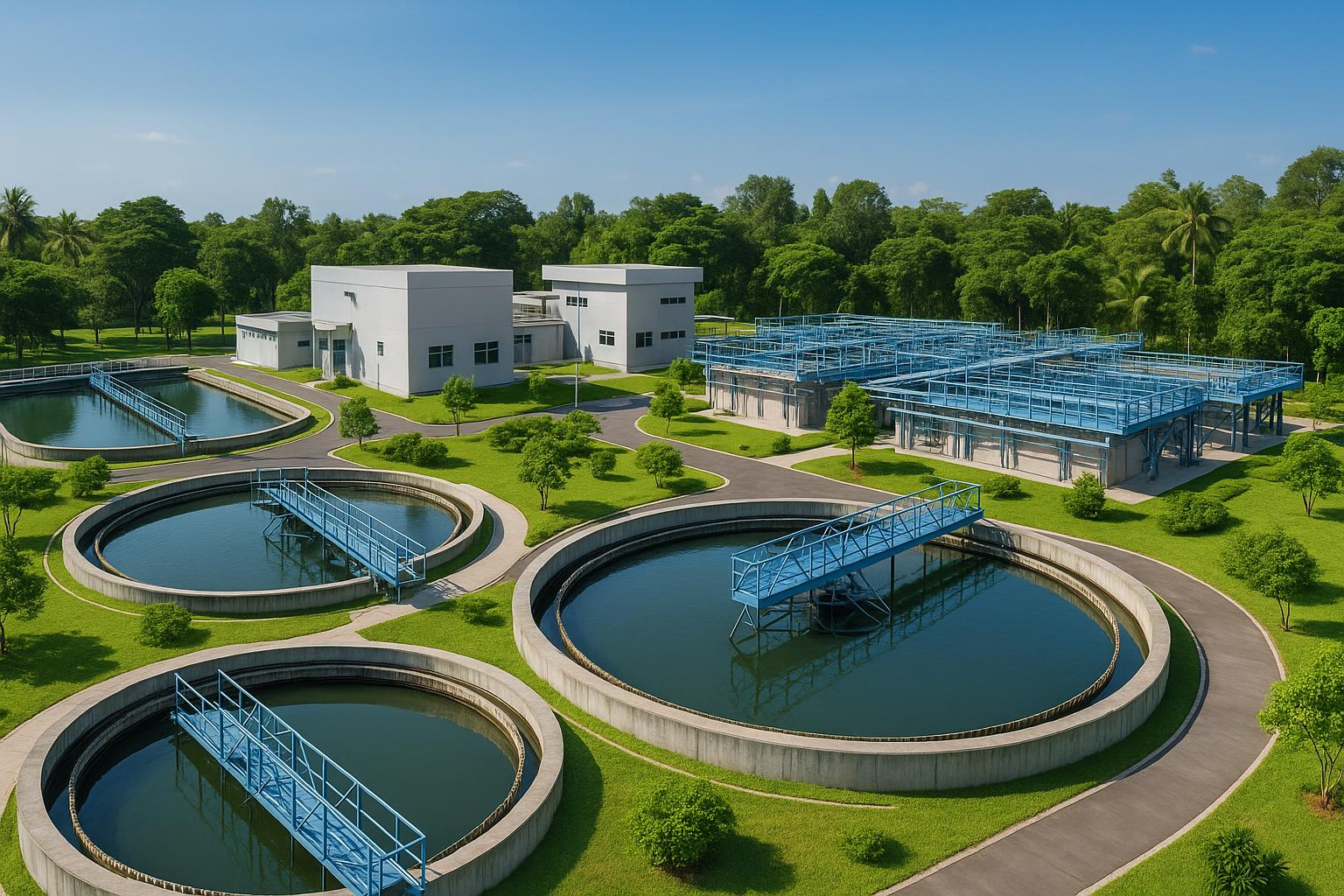
1. Goals of renovation and technology orientation
Renovating the dyeing wastewater treatment system using improved biotechnology aims to significantly reduce color and organic compounds that are difficult to decompose, while also effectively controlling flow and load fluctuations by hour and batch. The practical problem is that the wastewater has high pH and temperature, containing chemically stable dyes, surfactants, electrolytes, and metals, making the pure biological line easily overloaded. Therefore, a hybrid configuration combining selective chemical-physical pretreatment with an optimal biological mass and advanced treatment steps is an effective direction, ensuring stable operation while ensuring the quality of treated water.
From a legal perspective, the discharge goals need to meet the national technical standards applicable to the industry. For dyeing facilities, businesses can design and operate to meet the requirements according to QCVN 13-MT:2015/BTNMT, including controlling specific pollution parameters such as color, COD, BOD, TSS, and the characteristic indicators of the dyeing – finishing process. The selection and combination of technology will revolve around the ability to reduce color and reduce difficult-to-decompose COD before the biological mass, optimize nutrition and microbiological conditions within the biological mass, and then polishing to reinforce color, odor, and prepare for reuse if necessary.
“Improved biotechnology” in this context does not only mean replacing traditional activated sludge tanks with new forms, but reconfiguring the entire line according to biological thinking as the “backbone”: pretreatment to protect microorganisms, anaerobic – aerobic mass operating optimally, reasonable sludge separation – circulation, and connecting advanced modules such as activated carbon, ozone, Fenton, UF/RO/NF membranes to target difficult-to-decompose pollutants. This approach helps the system withstand load fluctuations, avoid toxic shocks, and create room to deeply reduce color – COD, moving towards sustainable operation.
2. Characteristics of dyeing wastewater and operational constraints
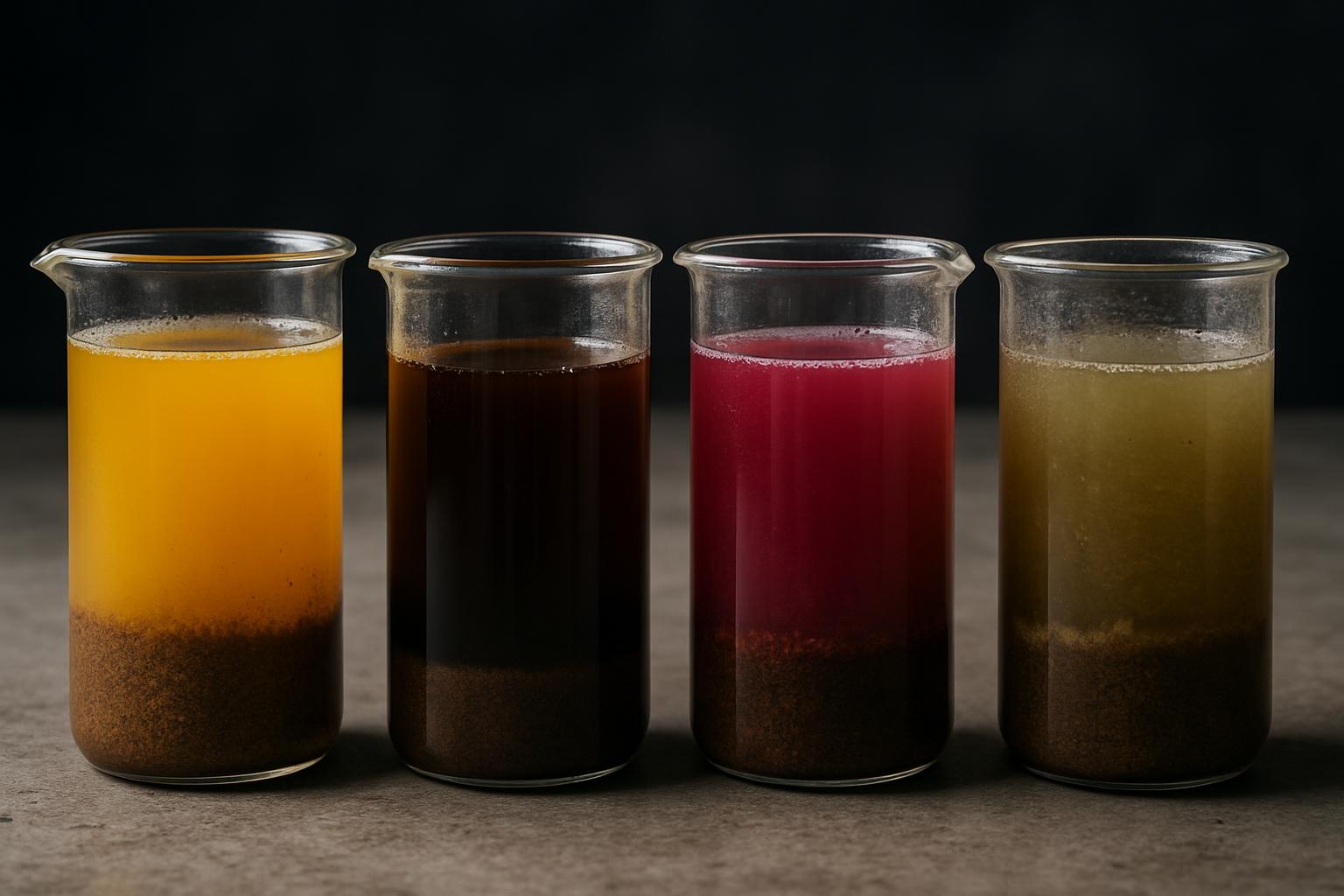
Dyeing wastewater mainly arises from scouring, cooking – bleaching, dyeing, printing, and washing after each stage. In practice, the washing – dyeing streams have a large pH fluctuation, usually from 9 to 12; high COD in the range of 1,000–3,000 mg/L; suspended solids (SS) can reach up to 2,000 mg/L. In some initial stages, the color can be very high, reaching up to 10,000 Pt-Co. The dye absorption capacity of fabrics only reaches about 60–70%, meaning that about 30–40% of excess dye enters the wastewater in its original form or as degradation products. Actual production shows that the amount of dye lost to water can fluctuate from 5% to over 30% depending on the type of dye and dyeing technology, contributing to high, stable color and batch fluctuations.
The flow and load of wastewater vary greatly by hour and shift, especially in finishing – dyeing workshops with many small batches. The range of water usage in dyeing – finishing fluctuates widely, from 16 to 900 m3 per ton of product; this means that the treatment system often faces both flow and concentration fluctuations. The temperature of the effluent after dyeing, scouring, washing – bleaching is often high, requiring cooling before entering biological units to avoid inhibiting microorganisms. Additionally, wastewater may contain salts, surfactants, residual oxidants, metals, formaldehyde, and complexing compounds… these components can reduce the effectiveness of coagulation, adsorption, and negatively affect the biological tank if there is no appropriate separation – reduction step.
Summarizing the above characteristics poses three major constraints for design – renovation: (i) a true equalization tank is needed to “flatten” peak loads and homogenize water properties; (ii) a pretreatment layer to reduce color – reduce difficult-to-decompose COD to protect the biological mass is necessary; (iii) a polishing mechanism after biological treatment is needed to ensure safety margins for color and COD when discharging according to standards. A treatment line that meets these three constraints well will enhance operational autonomy, reduce the risk of local overload, and allow for optimized operating costs according to the specific conditions of the plant.
3. Proposed improved biotechnology line
3.1. Mechanical – hydraulic pretreatment and equalization
The first layer must ensure the protection of equipment and create stable conditions for subsequent stages. A fine screen with a gap size of about 1 mm helps remove fibers, fabric scraps, and solid impurities that may cause pump – pipe blockages and foam in flotation or sedimentation. Next, the equalization tank with light stirring – aeration helps homogenize concentration, prevent sedimentation, and limit odor generation, serving as a crucial link to cut peak loads and “smooth” batch variations. For streams with high temperatures after dyeing, scouring, washing – bleaching, cooling is required to lower the temperature below 40°C before entering the biological tank, to preserve microbial activity.
The pretreatment stage is also where preliminary pH balancing and odor removal – reduction of residual oxidants are arranged according to the characteristics of local wastewater. Controlling pH before coagulation – flocculation is particularly important as it directly affects the hydrolysis and flocculation mechanisms of iron – aluminum salts, as well as the effectiveness of specialized decolorizing agents. A stable hydraulic foundation in the equalization tank will help maintain chemical dosing and contact time in the optimal range in subsequent stages, reducing fluctuations in water quality leaving sedimentation tank 1 or DAF, thereby creating a “buffer” for the biological mass to operate more stably.
3.2. Coagulation – flocculation and sludge separation (sedimentation or DAF)
The wastewater after equalization is passed through the coagulation – flocculation reaction tank to remove most of the color particles, SS, and some COD before entering biological treatment. In practice, adjusting the pH to the optimal range of about 6.0–6.5 for the coagulation reaction process helps increase the ability to neutralize electric charges and bind color colloids. When using aluminum sulfate, iron sulfate combined with polymer, the formed hydroxide flocs can significantly adsorb color substances, helping to reduce organic load and color for subsequent stages.
In terms of efficiency, coagulation usually achieves a COD reduction of about 60–70% under suitable conditions. This is an important foundation to protect the biological tank, especially when the proportion of difficult-to-decompose organic matter is high. After coagulation, the water stream can be separated from the flocculated sludge using traditional sedimentation tanks or DAF flotation. In plants containing many fibers, oils, or light flocs, DAF shows advantages in small footprint, fast processing speed, and good removal of low-density sludge thanks to fine bubbles adhering and rising to the surface for removal. The choice between sedimentation and DAF depends on the load, sludge composition, and land availability; however, for dyeing wastewater with high color, DAF is a worthwhile consideration to increase stability for the downstream line.
3.3. Optimal anaerobic – aerobic biological mass for dyeing
The biological mass is the heart of the improved technology, where the remaining organic matter after pretreatment is transformed, while also treating nitrogen – phosphorus as needed. Arranging an anoxic tank before the aerobic activated sludge tank or variations such as MBBR/SBR helps utilize the denitrification mechanism, limit sludge bulking, and increase stability when there are load fluctuations. In terms of nutrition, before aerobic treatment, it is necessary to ensure the BOD5:N:P ratio is about 100:5:1 to maintain microbial activity and biological degradation efficiency. This is a core parameter, often “lacking” in dyeing wastewater due to the presence of many difficult-to-decompose compounds and potential inhibitory substances.
In addition to balancing nutrition, potential toxicity from metals, formaldehyde, and inorganic substances also needs to be minimized through appropriate pretreatment, otherwise, it will inhibit microorganisms. The advantage of the anaerobic – aerobic configuration is the ability to adapt to load fluctuations when accompanied by a properly designed equalization tank, thereby reducing the risk of toxic shocks and overloads. For facilities requiring water reuse, fixed-bed biological filters or bio-membranes (for example, arranging UF before RO/NF) can be considered to increase clarity and reduce SS, thereby supporting the final polishing membrane stage.
3.4. Advanced decolorization and treatment of difficult-to-decompose fractions
After the biological mass, the remaining color usually comes from soluble dyes or stable, difficult-to-decompose secondary products. A combination of advanced oxidation technologies and adsorption is the necessary “weapon” to tackle this segment. Ozone has the ability to break down the chromophore groups of dyes, helping to quickly decolorize; while also oxidizing some difficult-to-decompose COD and deodorizing. On the other hand, the Fenton reaction using H2O2 and iron (II) salts generates hydroxyl radicals with very strong oxidation potential, helping to reduce color, reduce difficult-to-decompose COD, and increase the biodegradability of wastewater, thereby enhancing efficiency in subsequent stages.
Adsorption with activated carbon is often arranged as a finishing step to “catch” the remaining color and trace organic compounds after oxidation/biological treatment. With a specific surface area of about 400–500 m2/g, activated carbon is highly effective in adsorbing difficult-to-treat organic compounds and improving water quality. It should be noted that decolorization with chlorine, although it has low investment costs and certain decolorizing effects, carries the risk of generating adsorbed organic halogen compounds (AOX), so environmental goals and AOX control requirements must be considered before selection.
3.5. UF/RO/NF membranes and reuse options
When the quality of treated water is required to be higher than normal discharge levels or aimed at reuse, membrane modules are a suitable choice. In the polishing role, NF/RO can remove up to 99.5% COD under appropriate design – operation conditions, creating a leap in water quality, especially in removing salts, color, and dissolved organic compounds. To protect the membranes, a good pretreatment chain is always needed, including coagulation – DAF or sedimentation, fine filtration, and, if possible, UF to reduce SS and colloids, thereby limiting fouling.
A significant economic – environmental benefit of membrane technology in dyeing is the ability to recover and reuse, helping to save up to 70% of clean water compared to before when applied correctly. This is particularly significant in water-scarce areas or when the cost of supply – wastewater increases. However, it is necessary to balance the costs of pressure pumping energy, membrane replacement/regeneration, and managing the concentrate stream.
3.6. Disinfection and discharge
The final step is disinfection to ensure biological safety before discharge or reuse. Common disinfection options include ozone and chlorine. When considering chlorine, attention should be paid to the potential for generating AOX as mentioned; with ozone, in addition to disinfection effects, there are also auxiliary effects of decolorization – deodorization to a certain extent. The choice of disinfection method depends on the quality goals of the treated water and the specific discharge/reuse options of the facility.
For plants discharging according to QCVN 13-MT:2015/BTNMT, it is advisable to establish an output monitoring plan according to the specific indicators of the standards applicable to dyeing, including color, COD, BOD, TSS, and indicators related to dyeing – finishing activities. The combination of focused pretreatment, optimal biological mass, and appropriate polishing steps will help the system achieve and maintain water quality according to the required standards.
4. Comparison table of actual data and technology application locations
| Group/Parameter | Actual data (technical source) | Operational significance | Main affected stage |
|---|---|---|---|
| pH of washing – dyeing wastewater | 9–12 | High pH is toxic to microorganisms; needs adjustment before coagulation and biological treatment | Equalization, pH adjustment, coagulation |
| COD of washing – dyeing stream | 1,000–3,000 mg/L | High organic load, needs reduction before and optimization in biological treatment | Coagulation/DAF, biological treatment |
| Input SS | Up to 2,000 mg/L | High SS causes thick sludge, easy clogging; needs early separation | 1 mm screening, DAF/sedimentation |
| Initial color level | Up to 10,000 Pt-Co | Very high color, difficult to treat biologically; needs specialized decolorization | Coagulation – decolorization, Ozone/Fenton, activated carbon |
| Dye retention rate on fabric | ~60–70% | The remaining 30–40% enters the water, increasing color/COD | Pretreatment decolorization, advanced |
| Dye loss to water | 5% to >30% | Strong fluctuations by batch/type of dye, causing color variations | Equalization, coagulation, AOP |
| Temperature before biological treatment | Required < 40°C | Protects microbial activity, avoids inhibition | Cooling tower/heat exchanger |
| Optimal pH for coagulation | About 6.0–6.5 | Increases flocculation efficiency, decolorization | pH adjustment before reaction tank |
| COD reduction by coagulation | ~60–70% | Reduces load for biological treatment, stabilizes operation | Coagulation – flocculation, DAF/sedimentation |
| COD reduction by adsorption | Up to about 70% | Polishing difficult-to-decompose organics, helps meet standards | Activated carbon |
| Surface area of activated carbon | ~400–500 m2/g | High adsorption capacity for organic – color | Activated carbon filtration |
| COD reduction by NF/RO | Up to ~99.5% | Deep polishing, preparing for reuse | NF/RO after good pretreatment |
| Water savings from membranes | Up to ~70% | Reduces water costs, aims for circulation | UF/NF/RO, internal recovery |
| Risk of AOX when decolorizing with chlorine | Yes | Need to consider environmental goals, monitor AOX | Decolorization/disinfection |
| Biological nutrition ratio | BOD5:N:P ≈ 100:5:1 | Ensures nutritional balance for microorganisms | Nutritional adjustment before aerobic tank |
| Water usage range in dyeing – finishing | ~16–900 m3/ton | Large fluctuations, requiring flow – concentration equalization | Equalization, hydraulic regulation |
5. Renovation process and trial operation towards improved biology
The first step is to survey the characteristics of wastewater in detail according to stages (scouring – washing, dyeing, finishing) and over time (by shift, by batch), including pH, temperature, color, SS, COD, and potential inhibitory agents. Based on that, determine the scale – volume of the equalization tank to meet flow – concentration fluctuations and arrange reasonable mixing – pH neutralization points. It is necessary to supplement/standardize the mechanical layer (fine screening, bar screens) to protect pumps – pipes, while assessing the cooling needs to ensure the water entering biological treatment is below 40°C.
Next, design – adjust the coagulation – flocculation reaction tank to operate in the pH range of about 6.0–6.5, using iron/aluminum salts combined with polymer to reduce color – SS – COD to safe levels for biological treatment. In plants containing many fibers and light flocs, implement DAF instead of traditional sedimentation to increase output stability and reduce load fluctuations for the biological tank. The generated physicochemical sludge needs to be collected into a sludge storage tank and treated appropriately to avoid unnecessary load increase.
For the biological mass, the anaerobic – aerobic configuration needs to be optimized to increase load tolerance and reduce inhibition risks. Nutritional adjustments should be made to approach the BOD5:N:P ratio of approximately 100:5:1 to support microbial growth and biological oxidation efficiency. During the startup – trial operation phase, closely monitor the dynamics of sludge, odor, foam, and color/SS after the aerobic tank to fine-tune sludge circulation, retention time, aeration mode, and sludge separation. In systems requiring higher quality, consider arranging activated carbon or AOP (Ozone/Fenton) after biological treatment to remove remaining difficult-to-decompose color – COD before disinfection.
If the goal is internal reuse, implement membrane modules (UF/NF/RO) after ensuring pretreatment meets requirements. Anticipate membrane cleaning requirements, regeneration chemicals, and concentrate stream management. After completion, establish a trial operation plan by stages, set intervention thresholds (for example, if the color after coagulation exceeds the threshold, pH/chemical dosing must be adjusted; if the temperature before biological treatment exceeds limits, cooling load must be increased), and monitoring cycles to confirm achieving – stabilizing water quality according to QCVN 13-MT:2015/BTNMT before final acceptance.
6. Ensuring compliance and confirming meeting discharge standards
To demonstrate that the system meets legal requirements, businesses need to develop a sampling – analysis plan for treated water according to the characteristic indicators applicable to dyeing, including color, COD, BOD, TSS, and other related indicators according to QCVN 13-MT:2015/BTNMT. The combination of decolorization – reduction of difficult-to-decompose COD before biological treatment, optimizing biological treatment according to nutritional ratios and temperature, and polishing with activated carbon/AOP/membranes will create a safety margin to maintain the stability of these indicators.
In the optimization phase, it is advisable to establish a baseline performance for each stage: the rate of COD – color reduction through coagulation/DAF, changes in COD – BOD through the biological tank, and the level of color – COD improvement after advanced steps. When individual lines maintain stable performance, the overall system will easily meet standards and minimize the risk of violations in daily operation, even with fluctuations according to production batches.
7. Costs, risks, and common operational errors
Significant operational cost components include coagulation – decolorization chemicals, energy for aeration in aerobic tanks, electricity for ozone/DAF/membranes, and treatment of physicochemical – biological sludge. In systems with AOP/membranes, additional costs for material replacement – regeneration (activated carbon, membranes) and managing the concentrate stream need to be considered. Economic benefits can come from water recovery and reduced clean water purchases, with the potential to save up to about 70% of water when membranes are implemented correctly, but this must be placed in the overall CAPEX/OPEX equation.
Regarding operational risks, first is the fluctuation of input temperature and pH reducing coagulation – biological treatment efficiency; this can be remedied by equalization, cooling, and pH neutralization before reactions. Second is toxicity from metals, formaldehyde, or residual oxidants inhibiting microorganisms; this needs to be controlled by appropriate pretreatment and reasonable flow distribution. Third is membrane fouling due to high SS – colloids when pretreatment is inadequate; ensuring coagulation – DAF/sedimentation and fine filtration before membranes is necessary. Finally, decolorization with chlorine may generate AOX; therefore, if chlorine is used, AOX must be evaluated – monitored and consider replacing/reducing dosage with ozone or other oxidation – adsorption lines.
Another common error is neglecting the nutritional balance for biology, leading to poor oxidation efficiency and difficult-to-settle sludge. Maintaining the BOD5:N:P ratio close to 100:5:1 and controlling the temperature below 40°C before biological treatment are two “anchor points” that help the biological system be healthy and less sensitive to load fluctuations. Additionally, one should not expect a single technology to handle all types of dyes; instead, a purposeful combination of coagulation – DAF, optimal biology, and advanced polishing is the sustainable approach to consistently meet discharge standards.
8. Frequently Asked Questions (FAQ)
Question: Why must the temperature be lowered below 40°C before entering the biological tank?
Answer: High temperatures inhibit microbial activity, reduce biological degradation efficiency, and cause sludge instability. Lowering the temperature below 40°C before biological treatment helps preserve the microbial system and maintain stable treatment efficiency.
Question: Is coagulation alone sufficient to meet COD and color standards?
Answer: Coagulation can reduce COD by about 60–70% and significantly remove color in particulate form, but for soluble dyes and difficult-to-decompose COD, the effectiveness is not complete. Therefore, it often requires combining biological treatment and/or advanced steps such as ozone, Fenton, or activated carbon.
Question: What should the optimal pH for dyeing wastewater coagulation be set at?
Answer: The optimal pH range is usually around 6.0–6.5, which helps increase the ability to neutralize electric charges and create stable flocs. Maintaining this pH helps stabilize the performance of color – COD reduction in the coagulation – flocculation stage.
Question: When should activated carbon be used and what is its effectiveness?
Answer: Activated carbon is suitable in the polishing stage after biological/oxidation treatment to adsorb remaining color and difficult-to-decompose organic compounds. With a specific surface area of about 400–500 m2/g, this material is highly effective but requires periodic regeneration/replacement to maintain efficiency.
Question: Is RO/NF necessary and how much COD can it remove?
Answer: For high-quality goals or reuse, NF/RO is very useful and can remove up to about 99.5% COD when well-pretreated. Additionally, properly applying membranes can help save up to about 70% of clean water consumption in dyeing compared to before.
Question: What nutritional ratio should be maintained for the biological tank?
Answer: The BOD5:N:P ratio should be maintained at approximately 100:5:1 to ensure nutritional balance for microorganisms. This is particularly important with dyeing wastewater due to the presence of difficult-to-decompose organic matter and potential inhibitory substances.
Nanoen
NANO THANG LONG ENVIRONMENTAL COMPANY LIMITED
Hanoi Office: No. 15 TT18 Van Phu Urban Area, Ha Dong, Hanoi
Can Tho Office: 661E/29, Vo Van Kiet Street, Binh Yen A Area, Long Hoa Ward, Binh Thuy District, Can Tho City
Ho Chi Minh City Office: 533/12/7, Pham Van Bach Street, Ward 15, Tan Binh District, Ho Chi Minh City
Hotline: 0986.689.781 - 0969.054.226
Email: thanglongnanoen@gmail.com
Facebook: www.facebook.com/thanglongnanoen