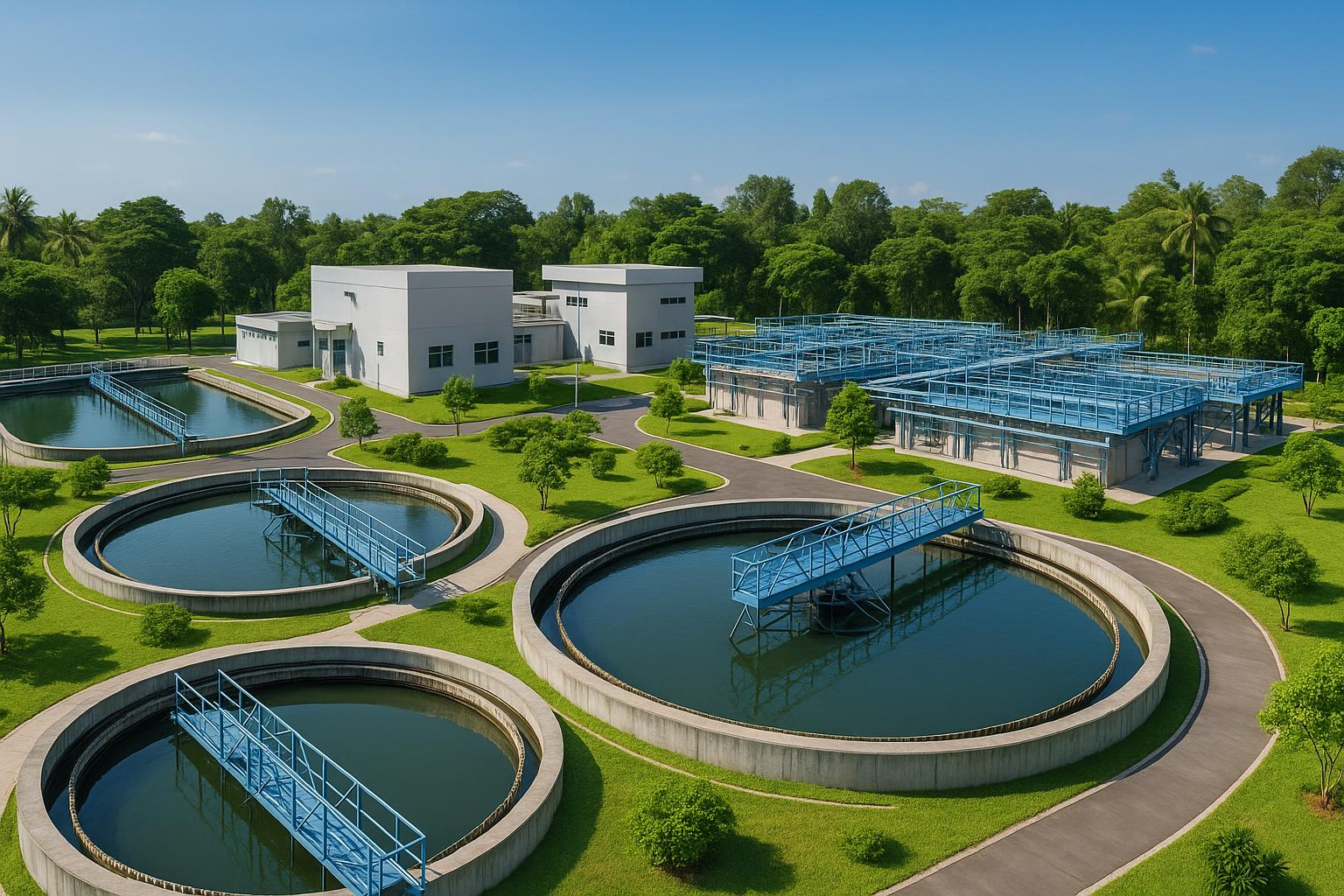
1. Context of renovating paper wastewater treatment systems and compliance requirements
In existing paper mills, physical-chemical processes often become bottlenecks when faced with wastewater containing high levels of lignin and cellulose, especially in facilities with cooking, washing, and bleaching processes. This effluent not only has a high color intensity and characteristic odor but also carries fine fiber residues and organic matter that is difficult to degrade. With the characteristic of fluctuating pollution loads according to shifts and batches, renovating the system requires a reconfigured physical-chemical technology strategy to effectively control suspended solids, color, and pH while creating a “friendly” input for the biological processes downstream. This is particularly important when the goal is to reduce chemical consumption, stabilize sludge, and maintain treatment capacity within limited land areas.
Regarding legal requirements, wastewater from the paper and pulp industry must be treated in accordance with QCVN 12-MT:2015/BTNMT before discharge. This standard sets thresholds for characteristic parameters of paper industry wastewater, focusing on organic, solid, and microbial indicators. When renovating the system, businesses need to select and adjust physical-chemical technologies to minimize non-compliance risks due to fluctuating loads, rather than adding many discrete, hard-to-control facilities. The goal is not only to “meet” the standards but to achieve stability, maintaining capacity reserves during peak production times and sudden concentration spikes.
From an operational perspective, the coordination between coagulation – flocculation, primary settling or DAF flotation, pH neutralization, and flow regulation will determine almost the entire fate of the biological subsystem. If physical-chemical processes do not reduce color, separate lignin attached to fine fibers, and bring pH to optimal ranges for subsequent processes, the system will consume biomass, chemicals, and energy while still being ineffective. The redesign of the physical-chemical layer needs to be based on data from the plant itself, but reference parameters from industry practice will serve as a basis for establishing initial operational thresholds, which can then be refined through jar-test trials and pilot testing.
Finally, renovation should be viewed as a comprehensive project, linked to goals of circular water savings, reducing sludge generation, and reusing some water for production if necessary. This is more reassuring when the physical-chemical processes operate “clean” and stable, as all biological upgrades, disinfection, or downstream filtration depend on the quality of the pre-treated water. The section below details the characteristics of paper wastewater containing lignin – cellulose, the central physical-chemical technology strategies, reference parameters from industry literature, biological integration, itemized costs, and common operational errors along with remedies.
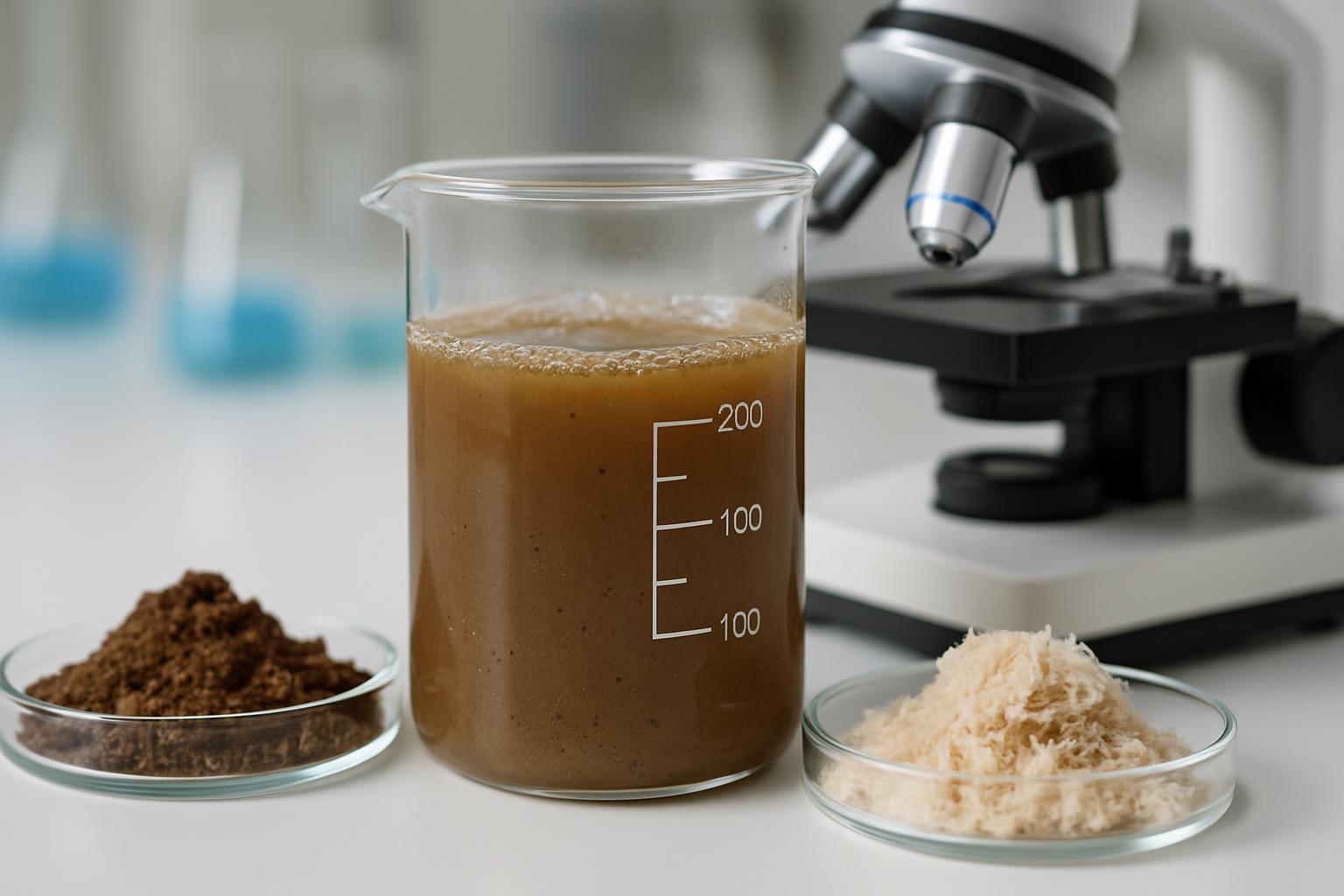
2. Characteristics of paper wastewater containing lignin and cellulose: numbers that need to be “locked” right from the physical-chemical stage
Paper industry wastewater has particularly high COD levels, typically ranging from 22,000 to 46,500 mg/l, while BOD usually accounts for about 40 – 60% of COD. This indicates that a large portion of the organic load is in forms that are difficult to degrade or slow to degrade, associated with lignin and phenolic derivatives from the cooking – bleaching process. In mills generating “black liquor,” the difficulty of treatment increases due to lignin dissolving in alkaline environments and carbohydrate degradation products contributing to color intensity and increasing biological toxicity, making the biological stage prone to shock loading if the physical-chemical treatment is not thorough.
In practice, black liquor constitutes about 70% organic and 30% inorganic components. The organic part mainly consists of lignin dissolved in alkaline liquor along with carbohydrate degradation products and organic acids; the inorganic part includes cooking chemicals such as NaOH, Na2S, Na2CO3, and other sodium salts. The simultaneous presence of lignin and free alkali raises pH, increases color intensity, and creates high COD levels even after dilution with other effluents. With such characteristics, without effective physical-chemical treatment to reduce the “fiber-attached” lignin and adjust pH, simple aerobic biology will struggle to bring COD down to target levels consistently.
Regarding water balance, the water consumption intensity in the sheet-forming – pressing and drying processes is high, leading to approximately 100 m3 of wastewater generated per ton of paper. In the total amount of water used in the production cycle, about 20% may evaporate during drying, 60% is used for diluting pulp, and 20% is in the wire – pressing stage. This distribution structure explains why internal water recycling solutions and early fiber recovery (at generation points) significantly reduce the load on the central treatment system, especially when trying to limit tank size and chemical costs in the coagulation – flocculation stage.
Another challenge is the fine fiber residue at the ultra-fine size. Particles smaller than or equal to 1 µm cannot be removed at the bar screen; only at the fine filtration step or flotation processes can they be significantly separated. The presence of fine particles and “submerged foam” makes gravity settling inefficient unless supported by appropriate coagulation – flocculation. Therefore, in mills with high fine fiber ratios, DAF flotation is often a practical choice to achieve effective fiber separation and reduce color per unit area, preparing well for the subsequent anaerobic – aerobic biology.
3. Physical-chemical technology strategies for wastewater containing lignin and cellulose
3.1. Coagulation – flocculation: the key to “pulling” fiber-attached lignin and reducing color
Coagulation – flocculation is the most critical physical-chemical technology layer when dealing with lignin and cellulose. The goal is to neutralize charges, aggregate colloidal particles, fine fibers, and difficult-to-degrade organic complexes into settleable flocs. Aluminum sulfate is usually effective in the pH range of 5 – 7, ferric sulfate in the pH range of 5 – 11, and when using lime, the pH needs to be above 11. Maintaining pH within the appropriate window not only determines floc size and separation rate but also dictates the necessary dosage of coagulant aid polymer. This is particularly important because the polymer dosage strongly depends on fiber size and the alkalinity of the wastewater.
An effective operational configuration typically includes rapid mixing to evenly disperse chemicals, followed by slow mixing to gradually increase floc size without breaking them. When wastewater contains black liquor, adjusting the dosage of ferric sulfate combined with cationic polymer often helps to better capture lignin complexes compared to simple aluminum sulfate, due to strong interactions with phenolic groups. To avoid “overdosing” that leads to soft, difficult-to-settle/floated flocs and increased sludge, jar-test operations need to be conducted regularly per shift, especially when the ratio of internal recycled water changes. Each time a batch is switched, reassessing pH and alkalinity before determining dosage is a profitable operational habit.
In the context of limited land, coagulation – flocculation aimed at DAF flotation often provides faster separation rates and smaller areas compared to settling. However, if the ratio of coarse fibers is high, the coagulation – primary settling configuration still has its place, as long as the appropriate surface loading is controlled. This is analyzed in detail in the flotation and settling sections below, along with reference parameters from the practical operation of the paper industry.
3.2. DAF flotation: effectively separating fine fibers and reducing color in small areas
With the widespread presence of fine fibers, foam, and organic colloidal particles, DAF flotation allows for rapid separation thanks to microbubbles attaching to flocs, lifting them to the surface. The air pressure in DAF typically operates at 4 – 6 bar, helping to create stable microbubbles, enhancing floc adhesion efficiency and separation rates. With a surface loading of 5 – 10 m3/m2.h, DAF achieves high separation efficiency in a small space, making it very suitable for plants needing renovation within existing footprints. In effluents containing lignin, DAF following coagulation – flocculation often results in good reductions in color, TSS, and mixed COD, helping to reduce air demand for aerobic biology and uncontrolled foam generation in the tank.
The key to stable DAF operation is the quality of flocs from coagulation – flocculation and the appropriate pH for the type of coagulant used. Flocs that are too small or too soft will struggle to attach to bubbles, easily washing away with the flow, increasing TSS in the biological input. On the other hand, controlling the ratio of saturated gas recycling and the air injection point into the mixing pipe must be synchronized with flow and temperature fluctuations, as paper wastewater can vary in temperature according to shifts. Regular monitoring of turbidity and color at the inlet and outlet of DAF helps to timely adjust chemical dosages and air pressure, creating stable operational conditions for the downstream biological unit.
3.3. Gravity settling: when coarse fiber loads are high and pulp recovery is needed
Gravity settling remains a classic choice for separating fibers and coarse solids, especially when the plant prioritizes pulp recovery at the primary stage. With favorable conditions for wastewater, surface loading can be maintained at 1 – 2 m3/m2.h to help contaminants aggregate into settleable flocs. Under common operational conditions, primary settling tanks typically operate at surface loading rates of about 5 – 10 m3/m2.h. This difference indicates that when the goal is optimal settling efficiency in limited areas, it is necessary to either reduce surface loading or switch to DAF to achieve the same level of efficiency without increasing area.
Excessive retention time in settling tanks will lead to anaerobic decomposition in the sludge layer, causing odors and weakening floc strength, making separation difficult. This is a common risk in paper production lines due to fluctuating shifts and unexpected machine stoppages. Therefore, regular sludge withdrawal control and maintaining reasonable flow rates are mandatory requirements. When primary settling acts as “rough filtration” for biology, the conditions of the bottom sludge must be kept stable to avoid pushing fine solids back into the effluent, causing sudden increases in TSS for anaerobic/aerobic tanks.
3.4. Neutralization and pH adjustment: creating an optimal reaction “window”
Due to the use of caustic soda, bleaching chemicals, and additives, the pH of paper wastewater fluctuates widely according to process, shifts, and the ratio of recycled water. Adjusting pH before coagulation – flocculation helps bring it back to the effective reaction range for each type of chemical: aluminum sulfate (pH 5 – 7), ferric sulfate (pH 5 – 11), and lime (pH > 11). A series of regulation – neutralization – coagulation will help reduce fluctuations and the amount of chemicals consumed, while also limiting excessive sludge generation due to “overdosing” with alkali/acids. Additionally, neutralization also reduces pH shock for anaerobic and aerobic tanks, which are very sensitive to black liquor and free alkali.
When facing “submerged foam” and excessive foaming in biology, the practice of adding antifoaming agents or dosing caustic soda before the biological stage has been applied. However, this should only be seen as a remedial measure. In the long term, adjusting pH and the dosage of coagulants – polymers upstream is the key to controlling persistent foam and pulling fiber-attached lignin out of the water stream, significantly reducing the need for antifoaming chemicals downstream and avoiding the consequence of washing away active sludge.
4. Reference parameters and selection of physical-chemical technology
The table below summarizes some operational parameters and reference characteristics drawn from industry literature for paper wastewater. These are not rigid “design standards,” but rather benchmarks for businesses to start jar-test trials, pilot testing, and gradually adjust to fit the technology configuration, footprint, and actual water quality at the plant.
| Item/Process | Reference Parameters | Operational Significance |
|---|---|---|
| Characteristics of paper wastewater COD | COD approximately 22,000 – 46,500 mg/l; BOD accounts for 40 – 60% COD | Establishing reduction targets in physical-chemical processes and configuring biology suitable for very high organic loads. |
| Water balance and waste generation | ~100 m3 of wastewater/ton of paper; 20% evaporates in drying, 60% dilutes pulp, 20% in wire – pressing | Basis for recalculating water recovery flow, reducing input load, and the scale of physical-chemical facilities. |
| Black liquor (composition) | ~70% organic; ~30% inorganic | Indicates the role of separating lignin – alkali in physical-chemical treatment before entering biology. |
| Optimal pH according to coagulant type | Aluminum sulfate: pH 5 – 7; Ferric sulfate: pH 5 – 11; Lime: pH > 11 | Correctly adjusting pH within the “window” helps reduce dosage and increase floc size. |
| DAF flotation – air pressure | ~4 – 6 bar | Creates stable microbubbles, increases floc adhesion efficiency, and reduces separation time. |
| DAF flotation – surface loading | ~5 – 10 m3/m2.h | Meets fine fiber separation – color reduction in small areas. |
| Gravity settling – surface loading | Good conditions: ~1 – 2 m3/m2.h; common: ~5 – 10 m3/m2.h | Used to balance area – efficiency; avoid overload causing floc washout. |
| Regulation | Reduces ~10% BOD and COD | Reduces shock loading for physical-chemical – biological processes, cutting peak concentrations. |
| MBBR intermediate (between anaerobic and aerobic) | Can treat COD up to ~80% | Stabilizes transitions, increases biological chain efficiency when inputs are difficult. |
Applying each parameter needs to be placed in the specific context of the plant. For example, if the ratio of fine fibers is high and color intensity is significant due to black liquor leaking into the common stream, the coagulation – DAF configuration will have a clear advantage. Conversely, if the primary goal is to recover coarse fibers and the area allows, primary settling with lower surface loading will be appropriate. Adjusting pH according to the selected coagulant type directly affects chemical costs and the amount of sludge generated.
5. Integrating physical-chemical with biological treatment in paper wastewater containing lignin
Lignin is a high molecular weight compound, poorly soluble and very difficult to biologically degrade, especially under aerobic conditions. The anaerobic decomposition process occurs slowly and is sensitive to temperature fluctuations, so it is necessary to maintain stable temperatures for the anaerobic tank. In terms of technology chain design, physical-chemical processes play a role in “blocking” lignin attached to fine fibers and pulling some phenolic complexes out of the stream, aiming to bring dissolved COD down to levels acceptable for biology. This not only improves COD/BOD performance downstream but also reduces foaming and residual color phenomena.
With the biological chain, an anaerobic – aerobic configuration is often applied when organic loads are high. However, directly introducing the effluent from anaerobic treatment into the Aerotank can lead to incomplete treatment due to differences in growth conditions and floc structure. Arranging an intermediate layer like MBBR between the two stages can help increase load tolerance and enhance COD removal efficiency, with reference figures treating COD up to about 80% in some configurations. When integrated this way, stable physical-chemical processes will reduce pressure on MBBR and Aerotank, while also limiting DO and foam fluctuations in the aerobic tank.
An important note is to separate the black liquor stream for localized treatment, or at least minimize leakage into the common wastewater stream before undergoing physical-chemical treatment. This is because black liquor not only carries lignin and color but also carries alkali and cooking chemicals, which can skew pH and shock both coagulation and biology. For plants that already have black liquor recycling systems, it is necessary to concurrently evaluate water balance to avoid “dirty mixing” in the central treatment line, increasing chemical and sludge costs while effectiveness remains unstable.
Finally, managing sludge generated from physical-chemical – DAF/settling is significant for biological stability. Coagulant sludge rich in lignin and fine fibers, if not withdrawn regularly, will re-decompose, releasing organic matter back into the water stream. Arranging a sludge compression – storage line suitable for shift operation modes and production downtime schedules helps prevent “sludge washout” into biology, an indirect cause of increased aeration costs and MLSS disruption.
6. Investment and operational costs: controlling by item, not by intuition
The costs of renovating physical-chemical processes in the paper industry are influenced by four main groups: separation technology (settling or DAF), chemicals (coagulants, polymers, alkali/acids), sludge treatment (compression, dewatering, transportation), and automation – measurement. Choosing DAF often helps reduce area but increases requirements for air pumps, saturation equipment, and control, while primary settling requires larger footprints but simplifies maintenance. The chemical portion significantly affects OPEX: optimizing pH according to the coagulant’s “reaction window” and conducting regular jar-tests can significantly reduce dosages and sludge production.
In the biological layer, aeration and nutrient supplementation costs are directly affected by the quality of water after physical-chemical treatment. When physical-chemical processes effectively reduce “difficult” COD and fine solids, the Aerotank can operate at reasonable loads, with less foam and less SS carryover to secondary settling, thereby reducing electricity and additional coagulant costs downstream. For plants planning to reuse water, adding sand/activated carbon filtration downstream or treating AOX will increase investment and operational costs; therefore, it should only be implemented after physical-chemical and biological processes have demonstrated stability.
The final aspect is measurement – control. pH, turbidity, color, and flow sensors are fundamental for “closing the loop” of physical-chemical operations according to actual fluctuations. A good control system does not necessarily have to be complex, but it must respond promptly and consistently with shifts. This helps businesses avoid hidden costs due to excessively high “safety buffer” chemical dosages or due to quality washout events causing regulatory violations.
7. Common operational errors in physical-chemical processes and remedies
A common error is “submerged foam” and persistent foaming phenomena in biological tanks due to residual surfactants, lignin, and fine fibers. A temporary measure may be to add antifoaming agents or dose caustic soda before the biological stage to adjust the environment, but the root solution is to optimize coagulation – flocculation to reduce the components causing foam right from upstream. At the same time, rechecking the pH of the active region of the coagulant being used; pH deviating from the window will weaken flocs, making them difficult to float/settle and allowing “difficult” organic matter to wash through, creating a foam base for biology.
The second error is the presence of many ultra-fine particles and short fibers due to overestimating the role of the bar screen. Particles ≤1 µm cannot be stopped at the bar screen; they can only be controlled at the fine filtration step or DAF after appropriate coagulation. If primary settling must still be used, it is necessary to lower the surface loading and accept a larger area, or increase polymer to achieve sufficiently large flocs. However, excessive polymer will make flocs soft, leading to “floc breakage” when entering settling tanks or DAF.
The third error is directly introducing the anaerobic effluent into the Aerotank without an intermediate layer. Sudden changes in oxidation conditions can lead to performance not meeting expectations, especially when difficult-to-degrade COD remains high. Arranging MBBR in between is a practical solution that has been applied, with the potential to treat COD up to about 80% in some cases, while also softening the transition between the two microbial systems. Along with that, maintaining stable temperatures for the anaerobic tank is an important requirement to avoid fluctuations in effectiveness.
Finally, poor sludge withdrawal control at primary settling/DAF leads to anaerobic decomposition, causing odors and organic re-emissions. A habit of stopping machines for long periods without reducing load or not “discharging sludge” will cause sludge to rot, weaken flocs, and lead to a sudden decline in the quality of biological input water upon restart. Establishing a sludge withdrawal schedule per shift and monitoring turbidity/color at the output of the solid separation stage will help early detection of deviations, allowing for timely adjustments in chemical dosages or increasing saturated gas recycling for DAF when necessary.
8. Renovation scenarios for existing systems: modular deployment scheme
The first step is to assess the field characteristics of water according to processes: sheet-forming – pressing wastewater, floor washing water, black liquor stream (if any), and bleaching water. Quickly measuring COD, pH, color, TSS, and the ratio of internal recycled water per shift helps to build a temporal load picture. With this data, conduct jar-tests to determine the optimal pH window for aluminum sulfate/ferric sulfate/lime and select effective coagulant aid polymers. At this stage, businesses can simulate small-scale DAF to decide between improved primary settling and DAF, based on color – fine fiber separation efficiency and area limitations.
Next, reconfigure regulation – neutralization to “cut peaks” in concentrations and bring pH back to the optimal reaction range for coagulation. Install (or upgrade) the chemical dosing unit controlled by pH/turbidity to limit excessive dosing when loads are low, and increase promptly when loads rise. If DAF is chosen, ensure reliable flow-controlled saturation pumps and recycling lines; if settling is chosen, reduce surface loading to the recommended range when the goal is to recover pulp and optimize solid separation. At the transition point to biology, consider arranging an intermediate layer like MBBR if difficult COD remains high, while also controlling the temperature for anaerobic processes.
Alongside technological renovation, standardize the sludge withdrawal process and conduct regular maintenance. Both DAF and settling are sensitive to sludge accumulation; a plan for sludge removal per shift and monitoring turbidity/color at the output stage will help maintain stable quality. Finally, if the business aims to reuse water, sand/activated carbon filtration steps should be introduced only after the stability of both physical-chemical and biological processes has been demonstrated. The reused water source can be prioritized from after rough filtration according to practical recommendations to reduce the load on points needing washing and equipment cleaning.
9. Reuse potential and advanced treatment: when the goal exceeds discharge
When operational requirements aim to reuse some water for production, in addition to meeting discharge standards, further steps for sand filtration and activated carbon may need to be considered to deeply reduce color and remaining difficult-to-degrade organic compounds. In some cases, adsorbed organic compounds (AOX) may need to be further reduced using activated carbon. However, adding advanced treatment will significantly increase investment and operational costs, so it should only be implemented after physical-chemical and biological processes have operated sustainably, avoiding high-cost “compensatory treatment” downstream.
Regarding the location for water reuse, practical experience shows that it can be prioritized from after rough filtration when the goal is less sensitive applications such as floor washing and industrial cleaning. This approach helps reduce the amount of new supply water without adding pressure to the advanced treatment unit. However, when the reuse goal requires higher quality (for example, supplying water for certain production stages), careful consideration of the post-treatment facility chain and constraints related to area, costs, and maintenance schedules for filtration equipment is necessary.
The success of reuse largely depends on the stability of physical-chemical processes in pulling lignin and cellulose right from the beginning of the cycle. A “clean” and less fluctuating wastewater stream after physical-chemical treatment will help extend the backwashing cycles of filtration equipment and reduce chemical consumption. Therefore, optimizing physical-chemical processes remains fundamental, even when the business aims for higher goals of internal water recycling.
10. Conclusion: the focus is on stable physical-chemical processes, then biological sustainability
Paper wastewater containing lignin and cellulose requires a proactive physical-chemical model capable of reducing color and “difficult” COD before handing over to biology. Real industry data shows that COD can reach tens of thousands of mg/l, with BOD accounting for a significant proportion but not all, and water balance along the production line generates large amounts of waste per ton of product. In this context, the choice between primary settling or DAF, optimizing pH according to coagulants and polymers, and maintaining disciplined sludge withdrawal will determine the overall efficiency of the system.
In the biological layer, the anaerobic – MBBR – aerobic configuration proves useful when inputs are difficult and fluctuating, provided that physical-chemical processes have minimized shock-causing factors such as fiber-attached lignin, pH deviations, and fine solids. When reuse is needed, adding sand/activated carbon filtration can be considered after achieving long-term stability. All of this needs to be placed under the framework of compliance with QCVN 12-MT:2015/BTNMT, with the priority not only to “meet” but to “achieve stability,” reducing risks and optimizing costs over time.
FAQ – Frequently Asked Questions
1) Does paper wastewater with very high COD really benefit from physical-chemical treatment?
Yes. Coagulation – flocculation combined with DAF or settling helps pull fiber-attached lignin and some difficult-to-degrade organic matter, thereby significantly reducing COD and color before biological treatment. This reduces the load for anaerobic/aerobic processes and minimizes foam risks, helping the entire system operate more stably.
2) How to choose between aluminum sulfate, ferric sulfate, or lime appropriately?
Base your choice on the operational pH window: aluminum sulfate pH 5 – 7, ferric sulfate pH 5 – 11, lime pH above 11. For wastewater rich in lignin/black liquor, ferric sulfate combined with cationic polymer often yields “darker” flocs, but jar-testing is necessary to finalize dosages for each batch.
3) Which is more suitable for limited space, DAF or primary settling?
DAF has an advantage in area due to surface loading of about 5 – 10 m3/m2.h and air pressure of 4 – 6 bar creating effective microbubbles. If the goal is to recover coarse fibers and space allows, settling remains effective, with surface loading potentially lowered to 1 – 2 m3/m2.h when increased separation efficiency is needed.
4) Why is an MBBR needed between anaerobic and aerobic in some systems?
Due to differences in oxidation conditions, directly introducing anaerobic effluent into the Aerotank can lead to performance not meeting expectations. An intermediate MBBR layer can help further treat COD (up to about 80% in some configurations) and soften the transition, stabilizing aerobic biology.
5) How to control persistent foam in biology?
The root solution is to optimize physical-chemical processes: adjusting pH correctly within the coagulant window, and effective coagulation – flocculation to reduce lignin and foaming agents. Antifoaming agents or adding caustic soda before biology can be used as a remedial measure, but should not be relied upon long-term.
6) What regulations must the system meet after renovation?
Wastewater from the paper and pulp industry must meet QCVN 12-MT:2015/BTNMT before being discharged into the environment. Renovation should focus on the stability of water quality after treatment, not just meeting average indicators but also effectively controlling fluctuations according to shifts.
Nanoen
NANO THANG LONG ENVIRONMENTAL COMPANY LIMITED
Hanoi Office: No. 15 TT18 Van Phu Urban Area, Ha Dong, Hanoi
Can Tho Office: 661E/29, Vo Van Kiet Street, Binh Yen A Area, Long Hoa Ward, Binh Thuy District, Can Tho City
Ho Chi Minh City Office: 533/12/7, Pham Van Bach Street, Ward 15, Tan Binh District, Ho Chi Minh City
Hotline: 0986.689.781 - 0969.054.226
Email: thanglongnanoen@gmail.com
Facebook: www.facebook.com/thanglongnanoen