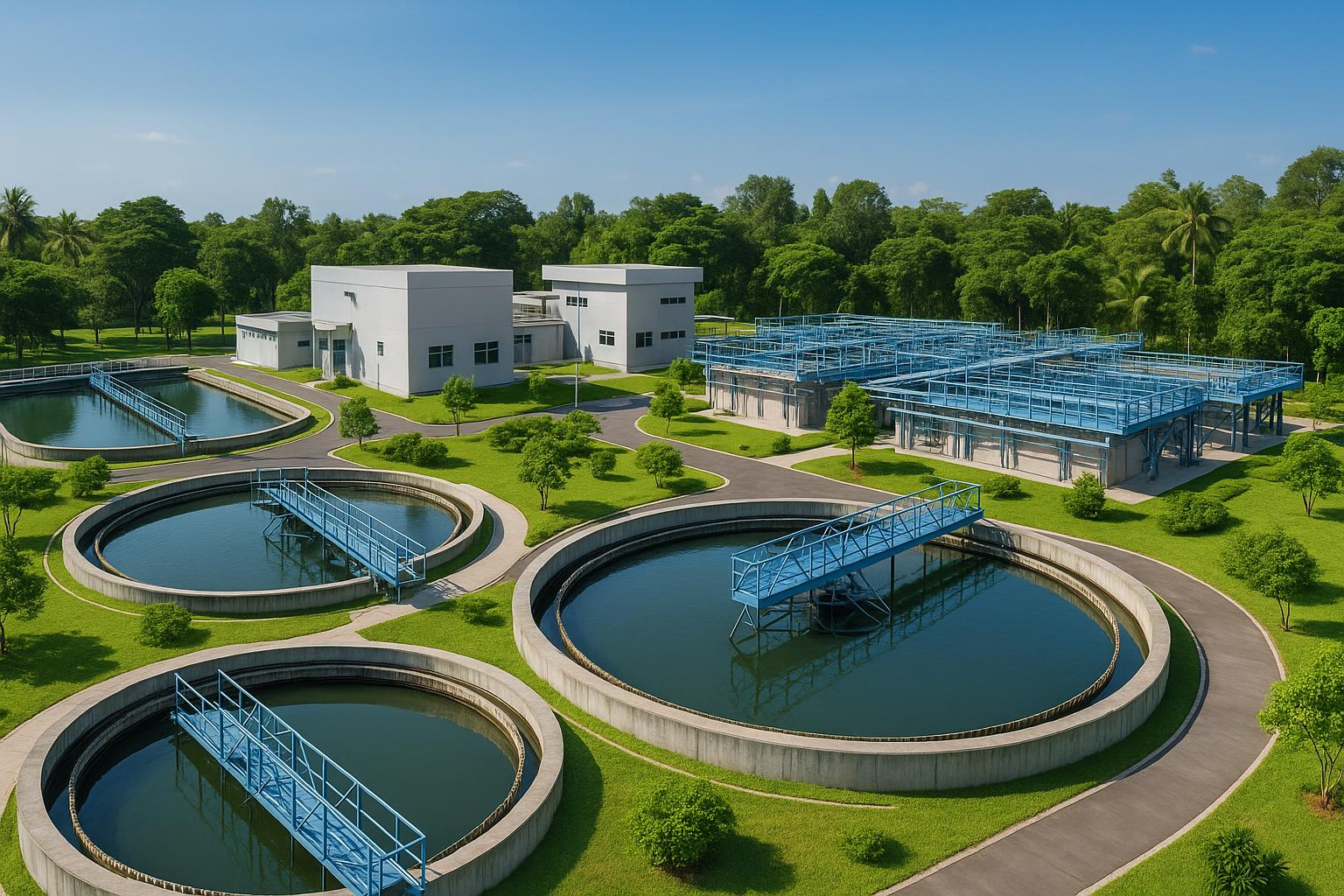
1. Context and Objectives of Renovating the Wastewater Treatment System in Paint Production
Wastewater from paint factories has a high load of organic pollution, suspended solids, and color due to the presence of solvents, pigments, film-forming agents, and additives. Most of it arises from equipment cleaning water and cooling water during the grinding/mixing stages of paint. If the existing treatment system is designed for light loads or uses unsuitable technology (mainly simple coagulation – sedimentation), achieving discharge standards will be precarious, especially when the COD/SS load fluctuates according to production shifts. Therefore, intentional renovation based on actual measured data and technology optimization is a mandatory direction for medium and large-scale paint facilities.
The objectives of renovation projects typically include three pillars: (i) stabilizing the quality of the effluent to meet current standards applicable to general industrial wastewater, namely QCVN 40:2025/BTNMT; (ii) optimizing operating costs through the management of oxidizing chemicals – coagulation and aeration energy; (iii) simplifying operations, reducing the risk of incidents and the generation of difficult-to-treat odors or sludge. These objectives need to be specified into process control indicators (pH, DO, turbidity, MLSS, chemical flow...) so that the operating team can "control by data" rather than relying on intuition.
Actual data from reference sources show that paint wastewater can reach COD levels of thousands of mg/L, SS in the thousands of mg/L, and a wide pH range due to acids/bases used in the technology and cooling water. A feasible technology pathway, which has been widely applied, is to combine advanced oxidation (Fenton) before – neutralization/coagulation – aerobic biological treatment – sedimentation – disinfection. The focus of renovation often lies in supplementing and upgrading the Fenton chamber and the downstream neutralization/coagulation system, while fine-tuning the Aerotank to better receive the “pre-oxidized” load, reducing the burden on biology and saving energy.
In addition to technology, the organizational factor has a significant impact: consolidating cleaning water into a centralized pit, regulating flow/concentration, standardizing the washing process to reduce chemical loss, and channeling cooling water with low pollution if possible. These changes help the treatment system operate in a more stable region, reducing shock loads that cause sludge or high color outputs. It is noteworthy that although many internal target parameters can be referenced from practice, companies still have to control outputs according to applicable standards, namely QCVN 40:2025/BTNMT, rather than “chasing” the instantaneous values of the receiving source.
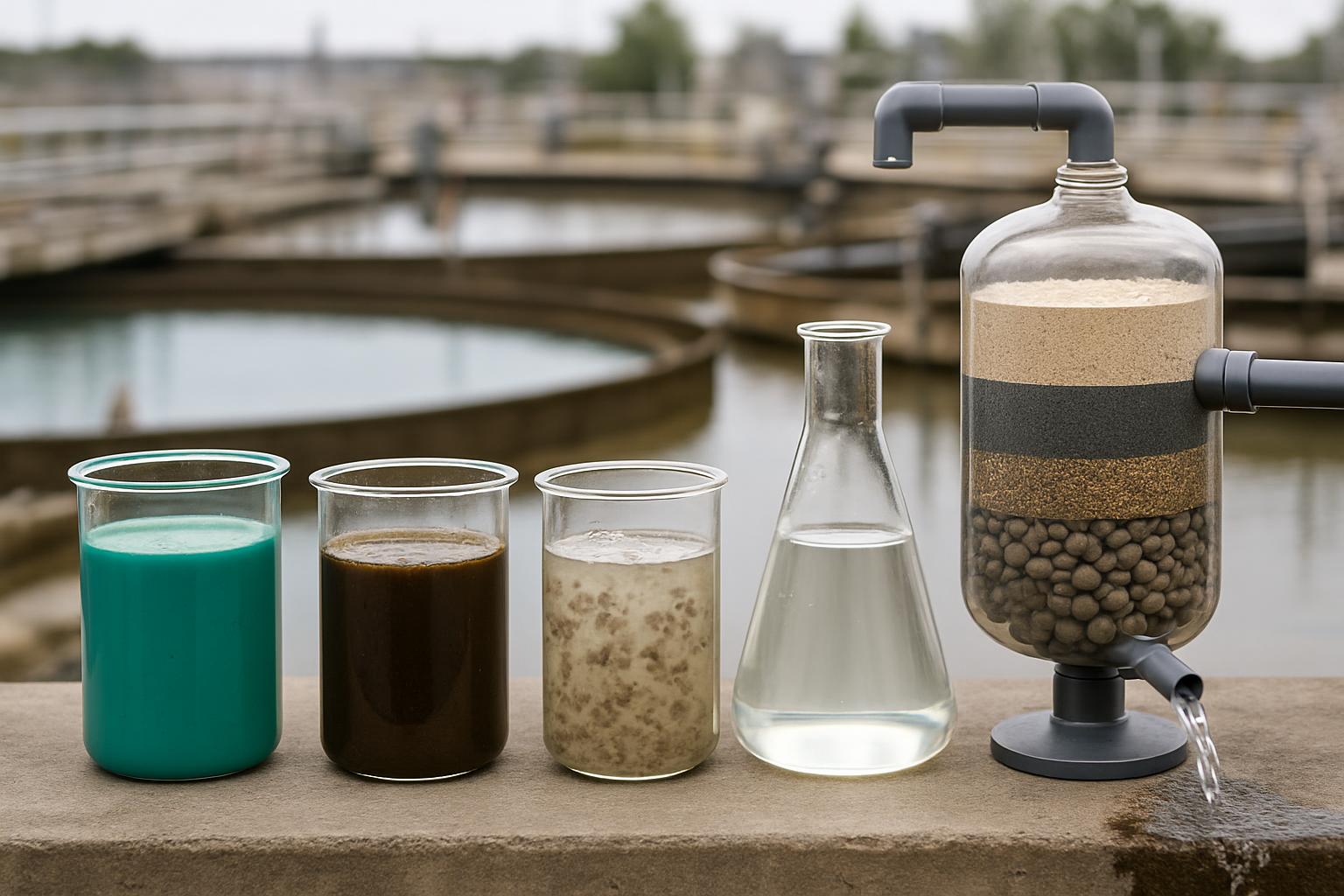
2. Characteristics of Paint Production Wastewater and Typical Data
The main sources include: cleaning water from mixing tanks, containers, pipes, and grinders; along with cooling water to limit solvent evaporation during paint grinding/mixing. According to technical documents, cooling water can be cooled down to about 7°C before being fed into the equipment, then circulated/cooled for reuse; however, there is still a risk of contamination with solvents, pigments, and additives if leaks or mixing occurs. Equipment cleaning water is a heavier pollution stream, rich in solvents and metals from pigments (lead, zinc, chromium) in some metal paint lines, while also rich in hard-to-biodegrade film-forming polymers.
A set of typical data from actual operations shows that the incoming wastewater has a pH of about 8.5; BOD5 at 588 mg/L; COD at 5,621 mg/L; SS up to 2,109 mg/L; turbidity 4,820 NTU (according to source S2). These values illustrate the level of pollution in industrial paint wastewater, especially COD and SS, which far exceed typical discharge targets. Conversely, according to this reference source, common technical targets used for post-treatment control are usually BOD5 50 mg/L, COD 100 mg/L, SS 100 mg/L, and a neutral pH range. Note that these are technical reference values in document S2; when implemented in practice, companies must compare with the current applicable standards QCVN 40:2025/BTNMT.
Color and hard-to-degrade organic compounds are the central challenges. Technical documents indicate that when applying the Fenton reaction at the correct operating pH, the COD reduction efficiency can reach up to 80% (source S3). This means that with an input COD of 5,621 mg/L, the COD after Fenton can be estimated to be around 1,124 mg/L if the reaction conditions are suitable. The remaining COD will need to be further removed by neutralization/coagulation and especially aerobic biology, along with advanced end-of-pipe treatment if high color/turbidity still remains. The method of “breaking down” the COD load by each stage helps accurately determine the necessary size and investment costs when renovating.
pH is the controlling variable throughout the technology chain. In the Fenton stage, the optimal pH is maintained at around 3–4 using inorganic acid (H2SO4 or HCl) to facilitate the generation of hydroxyl radicals from H2O2 catalyzed by iron salts (commonly FeSO4). The effluent from Fenton will have its pH raised to neutral, even >7 to facilitate the coagulation – flocculation and sedimentation process. If the pH is not adjusted correctly, the oxidation efficiency decreases significantly, resulting in high chemical consumption with disproportionate treatment effectiveness. Real-time pH control and chemical dosing based on flow rate – load ratio are key points in operational renovation.
| Parameter | Incoming Wastewater (actual data – S2) | Post-Treatment Technical Reference Threshold (S2) | Technical Notes |
|---|---|---|---|
| pH | ~8.5 | ~5.5–8 (neutral) | Fenton requires pH 3–4; then neutralized to the neutral range for effective sedimentation/coagulation. |
| BOD5 | 588 mg/L | 50 mg/L | Reduced by oxidation + aerobic biology. The input BOD load is high compared to the target. |
| COD | 5,621 mg/L | 100 mg/L | If targeting 100 mg/L, over 98% of total COD must be removed. |
| SS (TSS) | 2,109 mg/L | 100 mg/L | Coagulation – sedimentation and biological sedimentation are two key points to reduce SS. |
| Turbidity | 4,820 NTU | — | Controlled by coagulation, filtration, or flotation if necessary. |
3. Technology Renovation Pathway: From Pre-Treatment to Standard-Compliant Output
3.1. Collection, Channeling, and Pre-Treatment Regulation
The first step in any renovation project is to redo the “source problem”: consolidate cleaning water into a collection pit, arrange fine mesh screens to block packaging, labels, and solid particles; while channeling low-pollution cooling water if it can be recycled. This reduces the load of coarse sediment and lowers chemical costs in the downstream tanks. A flow and concentration regulation tank is mandatory, with aeration to avoid anaerobic conditions and to remove some volatile solvents. This tank helps average the COD/SS load hourly, reducing the “shock” phenomenon when discharging according to equipment cleaning batches.
In renovation, it is necessary to recheck the pump system, pipes, and sampling points in the regulation tank. The goal is to be able to measure pH, turbidity, and estimate COD in real-time (if sensors are available) to adjust the Fenton chemical dosage later. If the current regulation tank is too small or lacks aeration, expanding the volume and adding a blower/submersible mixer often yields immediate results, as stabilizing input is always the cheapest step to improve overall system efficiency.
3.2. Advanced Oxidation with Fenton: “Taking Down” Hard-to-Degrade COD Segments
The Fenton reaction is the core of modern paint wastewater treatment technology when it is necessary to treat long-chain organic compounds, color, and hard-to-degrade additives. According to practical documents, the chemicals used include H2O2 and ferrous salt (FeSO4) as a catalyst; the optimal operating pH is adjusted to around 3–4 using inorganic acid (H2SO4 or HCl depending on availability and tank materials) to generate highly oxidative hydroxyl radicals. When the pH is not in this range, the effectiveness of Fenton decreases significantly due to free radicals being “trapped” or iron precipitating early, wasting chemicals.
Reference data shows that Fenton can achieve COD reduction efficiency of up to 80% if operated correctly, thereby reducing COD from thousands of mg/L to around one thousand mg/L before moving on to subsequent steps. With an input COD of 5,621 mg/L (S2), the expected “post-Fenton” level could be around 1,124 mg/L, facilitating aerobic biology to further treat the easily biodegradable COD and reduce coagulation chemical costs. In renovation, attention should be paid to the size of the reaction tank, retention time, and mixing system to ensure rapid mixing – uniform stirring; simultaneously, chemical dosing should be implemented based on instantaneous flow rather than fixed hourly.
The accompanying issue with Fenton is the iron sludge formed and the potential for corrosion. Tanks, pipes, and dosing pumps should use compatible materials (FRP, HDPE, suitable stainless steel), and design periodic sludge discharge points. If the system previously lacked neutralization after Fenton, a separate neutralization chamber should be added, and online pH measurement should be conducted before moving to coagulation. This is a common bottleneck that causes many systems to have “Fenton but no water” due to pH not being returned to the neutral range before sedimentation.
3.3. Neutralization, Coagulation – Flocculation, and Sedimentation I: Blocking SS and Remaining COD
After oxidation, the wastewater passes through a neutralization tank to raise the pH to neutral or slightly alkaline (practical documents note adjusting pH >7 with NaOH before coagulation) to optimize the role of alum/PAC and anionic polymer in binding colloidal particles – color into easily sedimentable flocs. The chemical policy needs to be fine-tuned according to turbidity and COD after Fenton, avoiding excessive dosing that causes increased sludge and leads to sludge disposal costs. Slow – fast mixers, flocculation retention time, as well as polymer dosing points are important variables that need to be reviewed in renovation.
Sedimentation I is responsible for removing the formed floc. If the current sedimentation is experiencing sludge washout or large fluctuations, it is necessary to review the surface load, flow distribution status, and the condition of the collection trough, while also adding oil separation equipment if significant oil/paint floats. The sedimented sludge is transferred to the sludge storage tank for treatment. After Sedimentation I, turbidity and SS must be significantly reduced, creating a foundation for aerobic biology to work stably. Regular jar tests help optimize operations with the lowest possible chemical costs.
3.4. Aerobic Biology (Aerotank) and Sedimentation II: “Polishing” BOD/COD
The remaining COD after Fenton – physical sedimentation is usually composed of compounds that are more biodegradable, suitable for passing through the Aerotank. The Aerotank operates with aerobic microorganisms, requiring continuous oxygen supply through blowers, gas distribution systems, or combined submersible mixers. Since it has undergone pre-oxidation, the load into the Aerotank is “easier to breathe,” allowing for a reduction in MLSS density or aeration energy compared to the case without Fenton, while also reducing the risk of odors and foam due to free solvents.
Sedimentation II plays the role of separating biological sludge from clear water. A portion of the activated sludge is returned to the Aerotank to maintain microbial density, while the excess is transferred to the sludge storage tank. If the existing system frequently encounters sludge washout, checking the return ratio, SV30 index, and nutrient balance is mandatory. Integrating DO measurement and establishing aeration modes according to load also helps reduce energy while maintaining output stability. At the end of the chain, the water is usually disinfected (chlorine or UV) before being discharged into the general drainage system of the industrial park.
3.5. Disinfection, Color and Odor Control
Disinfection is the final step to eliminate remaining pathogenic microorganisms before discharge. In paint production, odor agents mainly come from volatile organic compounds and anaerobic decomposition in poorly aerated tanks. Sufficient aeration in the regulation tank, controlling Fenton – neutralizing to the correct pH, and effective coagulation – sedimentation usually help significantly reduce color and odor. When further “polishing” of color is needed, powdered activated carbon/polymer dosage adjustments, or additional filtration can be considered; however, each option needs to be evaluated for specific cost-benefit based on the current color load.
In renovation, if the existing system already has a disinfection module, it usually only needs to optimize dosing points and contact time. If the output is still turbid/color high, it is advisable to revisit adjustments to previous steps (Fenton/coagulation/sedimentation) rather than “compensating” with disinfection because disinfection does not reduce color/turbidity and can even increase by-products when using chlorine.
3.6. Sludge Waste Management: Safety and Costs
Sludge generated from Fenton – coagulation contains iron and may carry heavy metals from pigments; biological sludge has a high organic content. Renovating the sludge system needs to ensure there is a separate storage tank, a sludge pumping system, and a thickening method, possibly adding polymer to effectively separate sludge water. Reducing the dosage of coagulating chemicals and optimizing Fenton at the correct pH also significantly reduces the amount of generated physical sludge, thereby lowering transportation – sludge treatment costs.
In terms of operation, a regular sludge discharge schedule should be established to avoid re-decomposition causing odors. Sampling sludge for composition testing is necessary before handing over to the treatment unit. The configuration of machinery (sludge presses, drying yards, thickening tanks) is determined by scale and dry sludge goals, but during the renovation phase, focusing on good coagulation – sedimentation conditions will yield immediate results, preventing the sludge storage from becoming overloaded.
| Fenton Items | Setup/Data | Reference Source |
|---|---|---|
| Operating pH | About 3–4 | S2, S3 |
| Oxidizing/Catalyst Chemicals | H2O2 + FeSO4 | S2 |
| Acid for pH Adjustment | H2SO4 or HCl | S2, S3 |
| COD Reduction Efficiency | Up to ~80% | S3 |
| pH after Neutralization for Coagulation | > 7 | S2 |
4. Operational Optimization and Cost Control
The operating costs of the paint wastewater treatment system typically focus on three groups: chemicals (H2O2, iron salts, acids/bases, alum/PAC, polymers), energy for aeration/mixing, and sludge treatment – transportation. Optimization thus begins with managing chemical dosing according to pH and actual load measurements. Setting the Fenton pH point at around 3–4 through flow rate and alkalinity control helps avoid acid waste and maintain hydroxyl radical generation efficiency. After Fenton, neutralizing to >7 before coagulation will work more effectively, reducing the dosage of alum/PAC and polymer, thereby lowering sludge generation – a significant cost.
On the other hand, since Fenton has “shortened” many complex organic compounds, the Aerotank can operate at a more optimal DO level, avoiding excessive aeration. Maintaining appropriate DO and MLSS at the designed thresholds helps save electricity while ensuring output quality. As the amount of physical sludge decreases, the associated costs in the thickening/dewatering stage also decrease. All these adjustments need to be based on continuous monitoring of pH, turbidity, and periodic analysis of COD/BOD5 to gradually adjust, avoiding sudden changes that cause instability.
Another aspect of savings comes from operations at the production workshop: standardizing the equipment cleaning process by batch, separately collecting concentrated washing streams to evenly load into the regulation tank instead of discharging all at once; limiting paint loss onto the floor; and effectively controlling leaks in the cooling system. This reduces peak instantaneous loads and avoids chemical consumption during “peaks,” which can be expensive. The choice of acid/base should also consider the total cost of use (price – concentration – safety – tank materials) rather than just relying on unit prices.
Finally, operational optimization cannot lack a monitoring block: representative sampling points, recording flow – chemical dosage – pH in each tank, and incident logs. Once the data is sufficiently dense, adjusting the chemical dosing controller, optimizing retention time in the Fenton/coagulation tanks, and distributing air in the Aerotank will become “quantitative,” helping achieve sustainable savings rather than temporary measures.
5. Recommended Technology Configuration by Scale and Load
For medium-sized plants with high but fluctuating COD loads, the configuration “Fenton – neutralization – coagulation – sedimentation I – Aerotank – sedimentation II – disinfection” is a solid backbone. The regulation tank needs to have sufficient capacity to absorb discharge peaks from batch equipment cleaning. The Fenton chamber has separate fast – slow mixing, and pH is automatically controlled; neutralization – coagulation has a mixer, alum/PAC, and polymer dosing system. The Aerotank controls DO flexibly to keep up with the load out of sedimentation I. This configuration has been successfully applied by many units for paint wastewater with high COD/SS, according to the technology descriptions in the reference documents.
For large plants, or those requiring “polishing” the output water for color/turbidity, consideration can be given to adding flotation (DAF) after coagulation to enhance color removal – microbubbles carry light sediment; or adding powdered activated carbon in the coagulation tank to adsorb remaining organic matter. Membrane filtration (UF/NF/RO) should only be considered when there are requirements for water reuse or very strict standards for color/conductivity, as the investment – operation – regeneration costs are high and require extremely stable pre-treatment to avoid membrane clogging.
In all configurations, the key difference determining effectiveness often does not lie in “adding what equipment” but in “controlling reaction conditions” such as pH, retention time, and mixing. Allocating resources for good measurement – control will yield much greater effectiveness than adding unnecessary steps. The simpler the configuration but the more precise the control, the easier it is to manage costs and the higher the stability.
Depending on production characteristics (solvent-based – water-based paint ratio, washing frequency, use of metal pigments...), the pollution stream can vary greatly. Therefore, before “finalizing” the configuration, it is necessary to conduct Jartest experiments and, if possible, run a pilot Fenton – coagulation on representative samples to determine optimal dosages and color reactions. The pilot results will be reliable evidence for investment renovation decisions, while also providing baseline data to establish standard operating procedures.
6. Evaluation of Discharge Efficiency and Compliance with QCVN 40:2025/BTNMT
The ultimate goal of renovation is to achieve output that meets current applicable standards, namely QCVN 40:2025/BTNMT for general industrial wastewater. Instead of listing limit values, companies should convert regulatory requirements into easily controllable internal indicators for each stage. For example, with the reference dataset having an input COD of 5,621 mg/L (S2), if setting an internal post-treatment target of 100 mg/L according to the technical reference threshold in S2, the total removal efficiency needs to exceed 98%. A typical scheme is “Fenton reduces about 80% COD” (S3), bringing COD down to around 1,124 mg/L; the remaining part will be handled by coagulation – biology to achieve the target.
With BOD5 at 588 mg/L (S2), the internal target of 50 mg/L emphasizes the role of the Aerotank and Sedimentation II in controlling the remaining dissolved organic load after Fenton – coagulation. SS at 2,109 mg/L requires Sedimentation I to have sufficient capacity after coagulation and Sedimentation II to be stable to control sludge washout. Breaking down targets by parameters like this helps the operating team understand the “role” of each tank and know how to adjust when there are deviations (for example, if output SS increases, look back at coagulation – Sedimentation I/II, not increase chlorine).
Effectiveness evaluation should be based on representative sampling over time (composite) rather than instantaneous samples, especially with batch washing lines. Fenton pH logs, amounts of H2O2/FeSO4 added, neutralization pH, turbidity after Sedimentation I, DO in the Aerotank... are necessary data for analysis when output quality varies. If standards are exceeded, the corrective process should start from checking pH – chemical dosage, then checking mixing/stirring and sedimentation tank load, and finally considering adding advanced treatment steps.
Due to legal compliance requirements, all final comparative reports must reflect QCVN 40:2025/BTNMT applicable to the facility. The technical thresholds from reference documents (e.g., BOD5 50 mg/L; COD 100 mg/L; SS 100 mg/L in S2) can be used as internal benchmarks – for design and monitoring – but when accepting/monitoring, the reference benchmark is the current standard mentioned above.
7. Common Mistakes in Renovating Systems and How to Fix Them
The most common mistake is not properly controlling pH in the Fenton and neutralization stages. If the Fenton pH is not within the range of 3–4, oxidation efficiency decreases significantly, leading to excessive chemical consumption while COD reduction is not proportional; at that point, the COD load shifts to biology, overwhelming the Aerotank and increasing the risk of output violations. Similarly, if the pH after Fenton is not returned to neutral before coagulation, floc formation is poor and Sedimentation I washes out sludge, causing high output SS.
The second mistake is designing/expanding sedimentation tanks without considering surface load and flow distribution. Many systems after renovation with added Fenton – coagulation still experience sludge washout due to Sedimentation I lacking a weir, or because the incoming flow “hits straight” without flow direction walls, disrupting the sludge layer. Fixing this involves renovating the collection trough, adding flow direction walls, and rechecking overflow rates. Uneven sludge removal also leads to “muddiness” when thick sludge is pulled up to the surface.
The third mistake is overusing polymers to “patch” coagulation issues, leading to increased costs and making sludge treatment difficult. Polymer is a supplementary tool, not a substitute for optimizing pH and alum/PAC dosing. A simple jar test each time production batches or water supply seasons change can help save significant chemicals. In terms of biology, insufficient sludge return or prolonged low DO will reduce BOD/COD removal efficiency, causing odors and foam, leading to odor complaints even if the output may still meet numerical standards.
Finally, many places forget to invest adequately in measurement – control. No online pH in Fenton and neutralization; no DO measurement in the Aerotank; no daily recording of chemical dosages... leads to operations based on intuition. When incidents occur, there is no data to analyze root causes and fine-tune. Meanwhile, the costs of basic measuring devices are often much lower than the losses from wasted chemicals/electricity throughout the system's lifecycle.
8. Conclusion and Investment Direction
Renovating the wastewater treatment system in paint production is not just about adding a tank, but restructuring the technology chain around key control axes: Fenton operating at the correct pH – dosage, effective neutralization/coagulation, stable sedimentation, and biology “polishing” the remaining organic matter. Actual data show that the input COD/SS load is very high, thus the approach of “pre-oxidation – sedimentation – biological decomposition” proves effective, especially when the goal is stable output and optimal costs.
In every decision, use real data as a guiding principle: input data (pH, COD, SS), Fenton efficiency according to jar test/pilot, post-neutralization pH, turbidity after Sedimentation I, DO in the Aerotank, and output analysis results. From there, identify “bottlenecks” and invest appropriately in important control – measurement nodes, rather than implementing unnecessarily complex technologies. The goal of complying with QCVN 40:2025/BTNMT is immutable; the fastest way to achieve the goal is to optimize each step through small adjustments based on accurate measurements.
For investors, the appeal of systematic renovation is the dual effectiveness: reducing legal – operational risks and saving long-term costs. When the system is controlled by data, the consumption of chemicals and electricity will gradually move into the “optimal path,” while also reducing sludge generation. The result is a stable reduction in costs per m³ treated, and the capacity to respond to increased production or compatibility with new products is also strengthened, creating a sustainable competitive advantage for paint factories in the context of increasing environmental demands.
9. FAQ
1) Is it mandatory to use Fenton for paint wastewater?
Not every case is mandatory, but for paint wastewater with high COD, color, and hard-to-degrade additives, Fenton helps shorten molecules, significantly reducing the load before moving to biological treatment. Practical documents record that COD reduction efficiency can reach up to 80% when operating at the correct pH and chemical dosage.
2) Should H2SO4 or HCl be used to adjust pH in Fenton?
Both are used in practice; the choice depends on availability, tank/pipe materials, and safety policies. The important thing is to maintain a stable pH of around 3–4 throughout the reaction time to achieve good oxidation efficiency.
3) How to reduce polymer costs in coagulation – flocculation?
Start by ensuring that the pH after neutralization is within the optimal range and that the alum/PAC dosage is determined by jar tests on representative samples. Polymer should only be used as a coagulant aid; properly adjusting pH and mixing – flocculation time will significantly reduce polymer demand and the amount of generated sludge.
4) Does the Aerotank need upgrading when adding Fenton?
Usually, no expansion is needed if Fenton – coagulation operates correctly, as the hard-to-degrade organic load has significantly decreased. However, it is advisable to add DO monitoring and optimize air distribution to save energy while controlling sludge return to maintain appropriate microbial density.
5) Why is the output SS still high despite coagulation – sedimentation?
The cause may be due to suboptimal coagulation pH, incorrect polymer dosing points, or Sedimentation I being disturbed due to poor flow distribution. Rechecking pH, conducting jar tests, and reviewing surface load and sedimentation troughs are steps that should be taken before considering adding new processes.
6) How to set internal targets to ensure compliance with standards?
Use actual input data and technical reference thresholds in operational documents (e.g., BOD5 50 mg/L; COD 100 mg/L; SS 100 mg/L in S2) to break down targets by each stage. However, when reporting compliance and acceptance, companies must compare with QCVN 40:2025/BTNMT applicable to the facility.
Nanoen
NANO THANG LONG ENVIRONMENTAL COMPANY LIMITED
Hanoi Office: No. 15 TT18 Van Phu Urban Area, Ha Dong, Hanoi
Can Tho Office: 661E/29, Vo Van Kiet Street, Binh Yen A Area, Long Hoa Ward, Binh Thuy District, Can Tho City
Ho Chi Minh City Office: 533/12/7, Pham Van Bach Street, Ward 15, Tan Binh District, Ho Chi Minh City
Hotline: 0986.689.781 - 0969.054.226
Email: thanglongnanoen@gmail.com
Facebook: www.facebook.com/thanglongnanoen