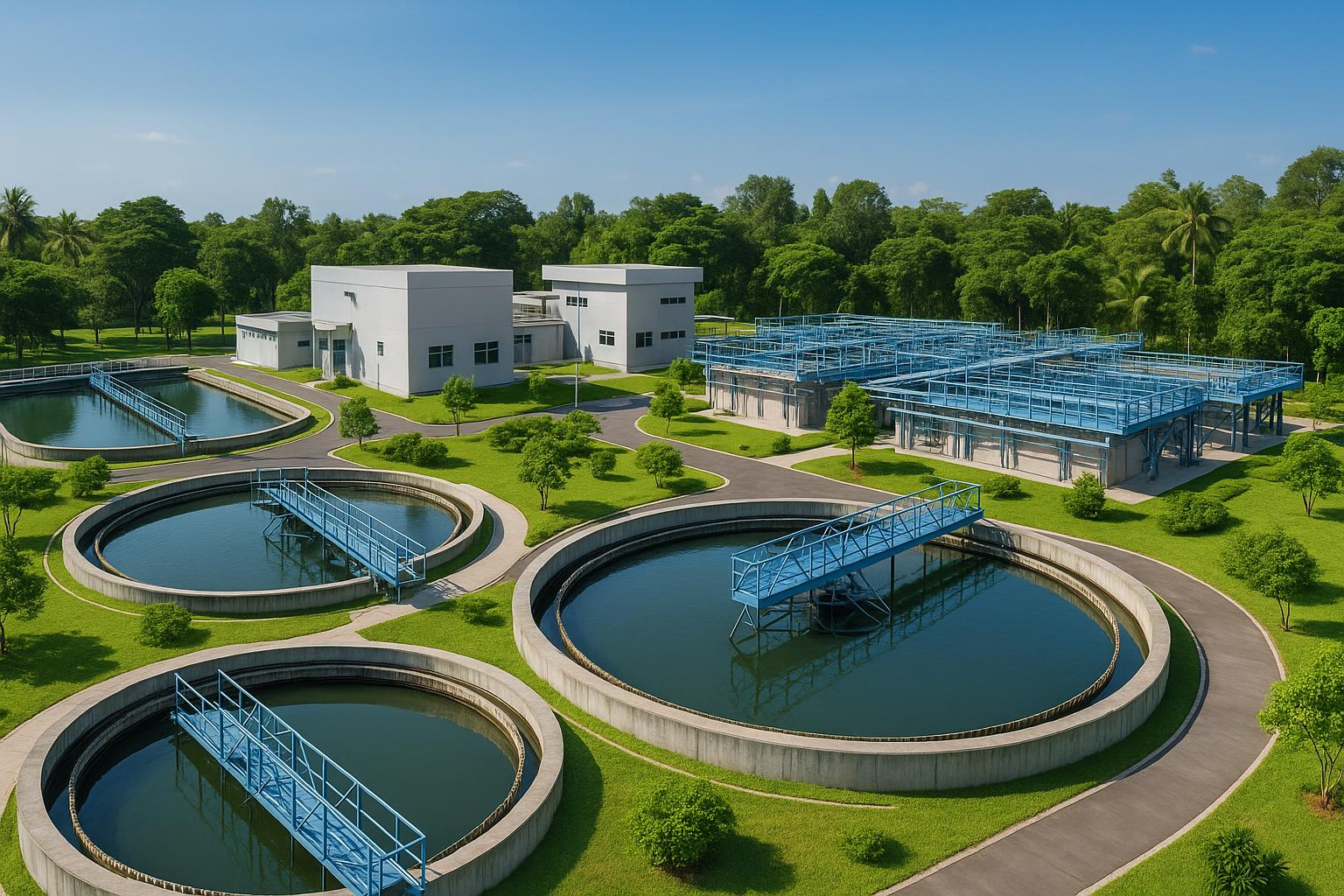
1. Context and objectives for renovating wastewater treatment systems in the food processing industry
Food processing plants in Vietnam are facing two simultaneous pressures: the need to expand capacity to meet increasing orders and the increasingly stringent environmental requirements from regulatory agencies and international customers. Therefore, renovating the wastewater treatment system is not just a "patch" for the old facility, but also an opportunity to restructure the treatment process to handle higher loads, be more stable against raw material fluctuations, while optimizing operation and long-term costs. With wastewater rich in organic matter, oils and fats, nitrogen, and phosphorus, the selection and combination of appropriate technologies play a decisive role in the final effectiveness.
This article focuses on three groups of content that businesses often need when planning renovations: (i) characteristics of wastewater in food processing and their implications for design and operation; (ii) advanced treatment technology combinations suitable for each typical problem, along with key operational parameters; (iii) components of renovation costs and how to control arising risks; and (iv) closely adhering to compliance requirements according to current QCVN standards. All quantitative data used are drawn from referenced materials clearly stated in the sources section, rephrased for technical and operational purposes.
2. Characteristics of wastewater in food processing: sources and pollution loads
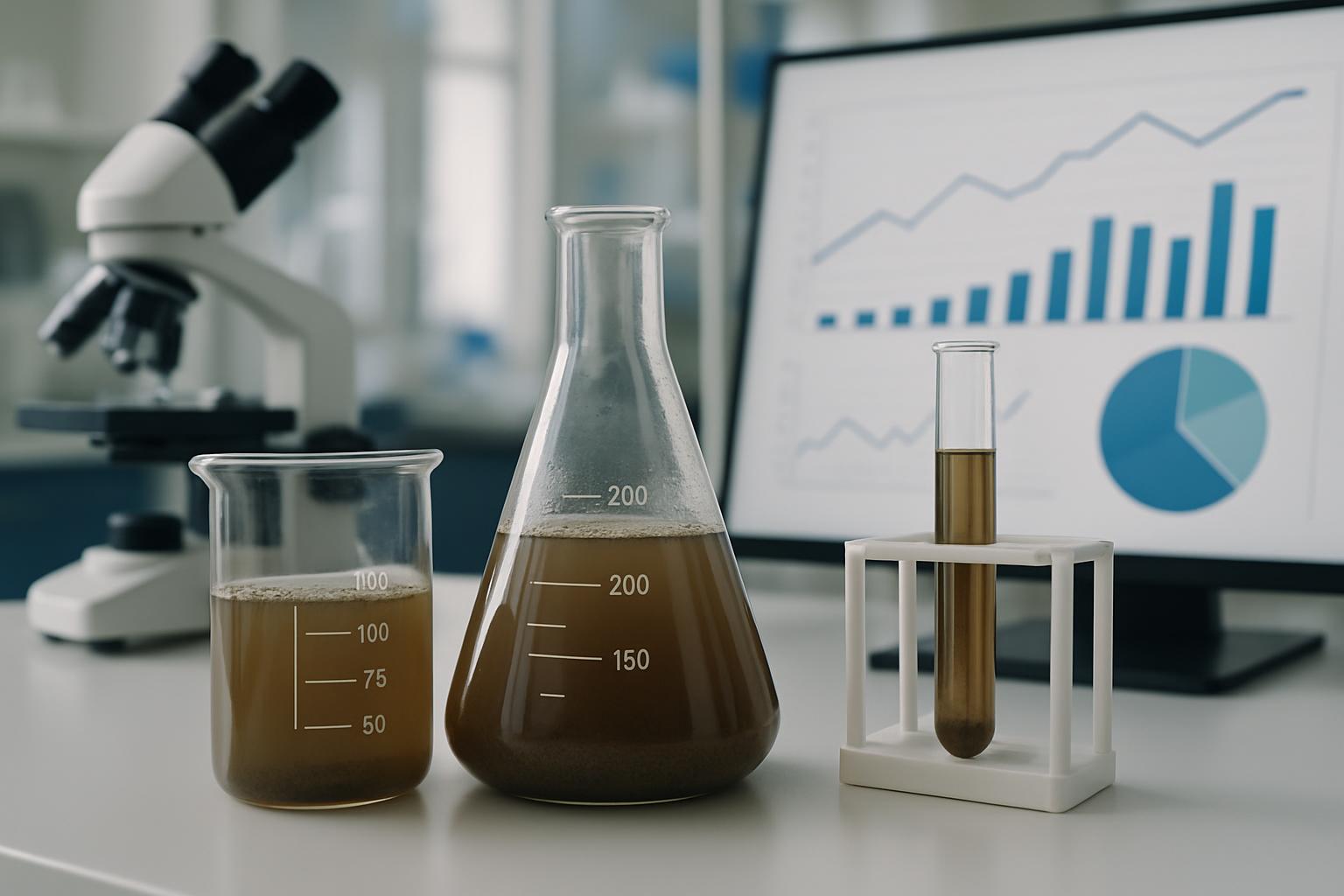
Wastewater from food factories originates from two main groups: workers' domestic activities and production. The production group further breaks down into stages of washing and cleaning raw materials, cleaning conveyor belts, floors, equipment, and processing and cooking areas. Notably, the initial preprocessing stage (washing, sorting, trimming) often generates a large flow and carries a lot of organic solids, starch, or protein fragments. For seafood, meat, sausage, and other food processing facilities, the oil and fat content is usually high; while vegetable processing plants tend to have high suspended solids and BOD but lower nitrogen content.
The characteristics of wastewater in the food industry are generally "highly organic" compared to many other industries, with BOD, COD, TSS, total nitrogen, and total phosphorus all being prominent. Experimental data from reference sources show that: the influent pH usually ranges from 6.5 to 8.5; BOD5 can vary from a few hundred to several thousand mg/L; COD can range from about 800 to 3,500 mg/L; TSS from about 120 to 700 mg/L; total nitrogen can reach several hundred mg/L; total phosphorus several dozen mg/L; coliform can be at very high levels. These values explain why anaerobic, anoxic, aerobic lines, and oil and grease separation units, DAF flotation, often appear in optimal technology schemes.
| Parameter | Typical range (source S2 reference) | Typical range (source S3 reference) |
|---|---|---|
| pH | 6.5 – 8.5 | 5.5 – 6.5 |
| BOD5 (mg/L) | 700 – 2,000 | 560 – 1,500 |
| COD (mg/L) | 1,000 – 3,500 | 800 – 2,500 |
| TSS/SS (mg/L) | 350 – 700 | 120 |
| Total N (mg/L) | 100 – 350 | 100 – 250 |
| Total P (mg/L) | 30 – 100 | 10 – 50 |
| Oils and fats (mg/L) | 50 – 200 | – |
| Coliform (MPN/100 mL) | 10^4 – 10^5 | 4,000,000 |
Looking at the table above, even the "typical input values" have already exceeded the allowable discharge thresholds of the general standards for the industry. The direct consequences are: (i) it is very difficult to completely combust the organic load using only aerobic lines; (ii) the need for oil and grease separation and flotation before biological treatment is clear with the oily group; (iii) to reduce nitrogen, it is almost certain that anoxic denitrification and stable nitrification-denitrification control must be present; (iv) the final disinfection step is mandatory due to very high coliform levels. Therefore, the design and renovation need to fully account for the retention space and time for each segment, rather than relying on a "multi-functional" unit.
3. Advanced treatment technologies and suitable combinations for renovation
3.1. Pre-treatment: bar screens, equalization, grease separation, and DAF flotation
Pre-treatment is the "insurance" layer of the entire system. Coarse and fine bar screens prevent pump clogging and reduce the load of coarse solids; equalization tanks help smooth out flow and concentration fluctuations to avoid shock loading downstream. For plants with high fat content, grease separation units and especially DAF flotation quickly remove light particles and oil before entering biological treatment. According to technical documents, DAF generates very fine air bubbles (smaller than 100 micrometers) that adhere to suspended particles, lifting them to the surface for removal, thereby effectively reducing TSS/oils and preventing the formation of scum in the aerobic tank downstream.
The equalization tank needs to be aerated or mixed sufficiently to prevent early anaerobic settling and odor generation, while also arranging for chemical dosing to adjust pH when necessary. Practical data show that before entering anaerobic treatment, many systems operate effectively when maintaining a slightly neutral pH, around 6.7–7.5, to create favorable conditions for anaerobic microorganisms to begin decomposing organic matter and limit excessive acid production. Early pH balancing in pre-treatment also helps stabilize the coagulation-flocculation-DAF line, as coagulation efficiency significantly depends on the pH of the wastewater.
3.2. High-load anaerobic (UASB/biogas) for concentrated organic wastewater
When the influent BOD/COD is high, adding an anaerobic stage like UASB will help "shock-proof" the aerobic stage and save energy. In the UASB tank, anaerobic microorganisms decompose organic matter into CO2 and CH4; the CH4 gas can be recovered as energy for some items in the plant. Operating experience shows that wastewater with balanced pH in the range of 6.7–7.5 should be fed into UASB to stabilize the activity of anaerobic sludge granules and limit sludge washout due to acidification. The anaerobic stage is particularly suitable for meat, seafood, and oily food processing facilities, where COD loads can reach thousands of mg/L according to reference data.
A common trap when renovating is trying to "attach" UASB to the existing scheme without ensuring prerequisite conditions: sufficient grease separation, pH balancing, and flow equalization. UASB is very sensitive to free oils and sudden load fluctuations; if pre-treatment is overlooked, performance significantly decreases and the risk of sludge floating and loss of granules occurs. Conversely, when properly combined, UASB can greatly reduce COD/BOD loads before aerobic treatment, reducing aeration costs and less excess sludge.
3.3. Anoxic – aerobic (AAO/A2O, Aerotank) for nitrogen removal and COD completion
The AAO/A2O line utilizes sludge-water recirculation between anoxic and aerobic phases to remove total nitrogen. In aerobic conditions, ammonia is oxidized through two steps: nitrite then nitrate under the action of nitrosomonas and nitrobacter; then nitrate is reduced to nitrogen gas in the anoxic stage. A key indicator to grasp when renovating is the oxygen demand for nitrification: to convert ammonia, the required oxygen is about 4.3 mg O2 for every 1 mg NH4+ oxidized, according to published design documents. This indicates that in plants with high total nitrogen (100–350 mg/L according to reference ranges), aeration capacity must be "excess" for nitrification, not just for BOD oxidation.
Aerotank is the "heart" of the aerobic line, but is only truly stable when the influent has been reduced in oils and large TSS. Maintaining proper sludge recirculation in anoxic conditions helps supplement endogenous carbon for denitrification and prevents filamentous bacteria from overgrowing, causing bulking and poor settling. With the characteristic of nitrogen-rich food wastewater, controlling the balance between anaerobic/anoxic/aerobic stages during renovation often directly determines the ability to reduce total nitrogen to meet standards.
3.4. SBR and MBBR – compact options for limited space
SBR (Sequencing Batch Reactor) is characterized by batch phases: filling – aeration – settling – decanting – resting. According to actual operating data, a cycle can typically have a filling time of about 1–3 hours, aeration of about 2 hours, and decanting of about 0.5 hours (settling usually completes before the 2-hour mark in this phase). Thanks to the flexible cycle, SBR allows multiple functions to be combined into one tank, making it very suitable for renovations in tight conditions. However, to avoid "gaps", the inflow over time needs to be managed by the equalization tank upstream.
MBBR (Moving Bed Biofilm Reactor) is another option when wanting to increase biomass density without expanding the tank, by adding floating media. In the context of food industry with high fats and fine solids, MBBR is often placed after DAF or after anaerobic treatment to avoid clogging. Transitioning to MBBR helps increase the organic-nitrogen load tolerance in limited space while reducing the risk of sludge bulking because the main biomass is in the form of attached biofilm, not entirely dependent on suspended MLSS.
3.5. Disinfection and final filtration
After biological settling, the water often needs disinfection to reduce coliform levels. In many systems, chlorine is dosed in the intermediate tank to kill remaining bacteria. Pressure filtration or rapid sand and activated carbon filters can be added to "polish" remaining TSS and stabilize discharge quality during sudden load fluctuations.
For food processing plants with effluents containing many fine suspensions (e.g., starch, small protein fragments), filtration after disinfection also helps limit the formation of trihalomethanes when chlorine reacts with dissolved organic matter; thus, discharge quality is more stable over time. The decision to include or exclude final filtration should be based on TSS profiles by hour/day and actual output requirements.
4. Key operational parameters when renovating: notable figures
When "integrating" technology into the existing system, several quantitative parameters serve as a basis for adjustments. The values below are extracted from the aforementioned technical-operational documents, serving as references for the pre-feasibility phase, helping the technical team to estimate preliminary capacity and configuration before delving into simulations and pilot testing.
| Unit/Process | Key parameters | Reference values | Source notes |
|---|---|---|---|
| pH adjustment before anaerobic (UASB) | Target pH range | ~6.7 – 7.5 | Reference S1 |
| DAF flotation | Bubble size | < 100 µm | Reference S2 |
| SBR | Filling time | ~1 – 3 hours/batch | Reference S2 |
| SBR | Aeration time | ~2 hours/batch | Reference S2 |
| SBR | Decanting time | ~0.5 hours/batch | Reference S2 |
| Nitrification (aerobic) | O2 demand for NH4+ | ~4.3 mg O2/1 mg NH4+ | Reference S2 |
The values above do not replace detailed design but indicate the "blind spots" often overlooked during renovations: if sufficient aeration capacity for nitrification (not just for BOD) is not planned, total nitrogen will be difficult to reduce; if DAF does not achieve sufficiently fine bubble size, the efficiency of oil-TSS separation will drop, and the subsequent aerobic stage will pay the price; if the pH entering UASB is not controlled to remain in the slightly neutral range, the granule sludge will lose activity. Conversely, when these parameters are ensured, the renovation trajectory gets closer to the goal of sustainable operation.
5. Renovation strategy for existing systems: step-by-step risk reduction
The first step should be to survey the overall flow and load by shift and by day over at least several typical production cycles, including cleaning times. This data indicates whether there is a need to increase equalization volume, add DAF, or just upgrade pumps and blowers. Next, review the current state of the tanks: structure, waterproofing, working water level, and the ability to arrange mixing and aeration equipment. In many projects, simply optimizing hydraulics (changing inlet/outlet points, baffles, overflow pipes) has significantly improved effective retention time without needing to build new tanks.
After locking in the flow configuration, move on to updating and coordinating technology. With existing Aerotank-settling systems, it is often advisable to add an upstream anoxic line (such as an Anoxic with mixing), increase sludge recirculation, and install DAF before biological treatment if there is high oil and fat content. For systems currently using SBR but struggling to increase loads, the number of batches per day can be increased, or an equalization tank can be added to extend the aeration phase as needed. If the COD load is very high, consider inserting anaerobic (UASB) before the existing aerobic stage. In general, successful renovation is more about "plugging gaps" (grease separation, load balancing, pH balancing) than adding many expensive pieces of equipment.
6. Renovation costs: components and control methods
Renovation costs are typically divided into four components: construction-structural (adding, reinforcing tanks; repairing pipes, baffles), equipment-electromechanical (blowers, pumps, DAF, sludge presses, control panels), chemicals-consumables (PAC, polymer, alkaline/acid for pH balancing, disinfectants), and operational-maintenance costs during the trial run phase. While it is difficult to provide absolute figures as each plant is different, experience shows that common "cost overruns" often stem from underestimating the level of oil and fat (leading to DAF needing upgrades mid-project), undersizing equalization tanks, or choosing aeration equipment that does not meet the nitrification needs based on actual total nitrogen.
To control costs, design backward from operational goals: if the influent has high total nitrogen, prioritize aeration capacity and reasonable anoxic configuration instead of widespread upgrades; if there is a lot of oil and fat, good neutralization and flotation will save costs for aerobic treatment and filtration later. Providing flexible space (adding reserve compartments, bypass pipes, waiting points for DAF or MBBR media) helps avoid the need to "tear down and rebuild" when increasing future capacity. Finally, prepare a trial run plan according to load thresholds to avoid purchasing-installing maximum equipment from the start unnecessarily.
7. Discharge standards and how to demonstrate compliance
Regarding the legal framework, food industrial facilities need to compare and comply with the National Technical Regulation QCVN 40:2025/BTNMT on industrial wastewater. The application and updating of water standards in the environmental group are subject to regulation under Circular 06/2025/TT-BTNMT. In the renovation process, it is advisable to early identify the requirements applicable at the discharge location (e.g., receiving sources, sensitive conditions...) to choose appropriate treatment targets from the outset.
For demonstrating compliance, build a monitoring plan for the trial run and stable operation: determine sampling locations and frequencies, the list of analysis parameters closely aligned with applicable standards, and action flowcharts when parameters fluctuate (increasing PAC-polymer pre-treatment doses when TSS is high; extending aeration phases or increasing sludge recirculation when total nitrogen begins to exceed...). Monitoring records, operational logs, and technology adjustment reports are important evidence for regulatory agencies and customers.
8. Common mistakes during renovation and how to fix them
The first is "forgetting" pre-treatment. Many renovation systems only increase aerobic volume but do not increase the capacity to separate solids – fats – TSS at the inlet, leading to floating scum, clogged aeration distribution, and poor settling of activated sludge. Fix this by installing DAF with fine bubbles (smaller than 100 µm according to technical data), optimizing pH – PAC – polymer for effective flotation, and controlling fats from the source through grease traps and regular cleaning.
The second is undersizing aeration capacity because it is only calculated based on BOD while forgetting the oxygen demand for nitrification. With total nitrogen potentially reaching 100–350 mg/L according to typical data, the amount of oxygen needed for ammonia conversion is about 4.3 mg O2 for 1 mg NH4+. If the blower does not have sufficient backup, the system will "struggle" under increased loads, resulting in high NH4+ and NO2- levels, leading to coliform not decreasing. Aeration capacity, distribution, or batch sizes (for SBR) need to be adjusted to ensure sufficient time and oxygen.
9. Application of microorganisms to accelerate stabilization after renovation
After renovation, many systems choose the "quick catch-up" solution by adding commercial microorganisms. For the anaerobic stage, products containing specialized anaerobic microorganisms can help accelerate organic decomposition; according to practical data, they can significantly reduce COD and BOD compared to influent (the reduction can reach about 80% under suitable conditions), thereby reducing the load on the aerobic stage. In the aerobic stage, adding high-density liquid strains helps shorten startup time and, under favorable conditions, can increase the overall efficiency of the system by an additional 30–40% compared to before supplementation.
Regarding dosage, a practical guideline notes that during startup, continuous supplementation should be done for about 10 days at a rate of 40–80 ml for each m3 of wastewater per day; then maintain weekly at a level of about 1–5 ml/m3 to keep it stable. These dosage ranges are only initial references; optimal dosage depends on wastewater characteristics, technology configuration, and adjustment goals (odor reduction, nitrogen removal improvement, settling enhancement...). Step-by-step testing is necessary, closely monitoring operational indicators to avoid waste or disrupting the stabilizing biological system.
10. Recommended technology scenarios for each wastewater group
For vegetable and fruit processing plants or foods with low nitrogen but high BOD/TSS, a simple physical-chemical pre-treatment line (bar screens, equalization, coagulation-flocculation, flotation) combined with aerobic treatment (Aerotank or biological filtration) is often sufficient. When space is tight, SBR can be considered to consolidate phases into one tank. The key point is to control microbial sludge to handle the "peak" load after cleaning shifts, maintain good settling, and avoid MLSS washout.
For seafood processing facilities, sausages, fish balls – beef balls... that are rich in organic matter, nitrogen, and oils and fats, a DAF unit should be placed after equalization to cut oils and TSS before entering anaerobic treatment (UASB). After anaerobic treatment, implement an anoxic-aerobic (AAO/A2O) line for nitrogen removal and COD completion; if space is limited, replace Aerotank with MBBR or use SBR with flexible batch times. In special cases such as fish sauce processing with high salinity and organic content but limited space, a configuration of grease separation – anaerobic – anoxic – aerobic in an MBBR style combined with final pressure filtration is a feasible configuration based on practical experience.
11. Practical conclusion
Renovating wastewater treatment systems in the food processing industry is a simultaneous challenge of technology – operation – cost. The design revolves around good pre-treatment (solids separation, pH balancing, DAF when necessary), anaerobic treatment for concentrated flows, and sufficient anoxic-aerobic margins for nitrogen removal and COD completion, disinfection – filtration to stabilize output. A few "locking" quantitative parameters such as pH 6.7–7.5 before anaerobic treatment, DAF bubbles under 100 µm, SBR cycle of 1–3 hours filling/2 hours aeration/0.5 hours decanting, and oxygen demand for nitrification of about 4.3 mg O2 per mg NH4+ are important milestones when developing renovation plans.
Legally, it is necessary to position discharge targets according to QCVN 40:2025/BTNMT and update according to Circular 06/2025/TT-BTNMT. Regarding costs, focus on addressing "bottlenecks" rather than racing for equipment, and always provide flexible space – connections for easy upgrades. With a systematic approach, the treatment system after renovation not only meets discharge standards but also remains sustainable as the plant changes shifts, increases capacity, or changes product structures.
FAQ – Frequently Asked Questions
1) When should UASB be added to the existing system?
When the influent BOD/COD is high and there are many oils and fats, adding UASB before aerobic treatment helps cut large organic loads, reduce aeration costs, and excess sludge. However, it is necessary to ensure pre-treatment (DAF, grease separation) and stabilize the pH entering anaerobic treatment around 6.7–7.5 for granule sludge to operate effectively.
2) Why is DAF often prioritized for food wastewater?
DAF generates fine air bubbles (around under 100 µm) that help lift light suspended particles and oils to the surface, thereby reducing TSS/oils before biological treatment. For oily effluents, DAF helps avoid scum – clogging in aerobic stages and significantly improves the stability of the entire system.
3) Is SBR suitable when space is tight?
Yes. SBR consolidates many phases (filling – aeration – settling – decanting) in one tank and can operate with a reference cycle of about 1–3 hours filling, 2 hours aeration, and 0.5 hours decanting for each batch. The prerequisite is to have an equalization tank upstream to smooth out flow – concentration between batches.
4) How to estimate preliminary aeration needs when total nitrogen is high?
In addition to oxidizing BOD, oxygen for nitrification needs to be calculated: about 4.3 mg O2 for every 1 mg NH4+ converted. If this part is not included, the system will lack oxygen for autotrophic bacteria and may easily show high ammonia/nitrite levels at the outlet.
5) Should commercial microorganisms be used after renovation?
Adding microorganisms can shorten startup time and, under suitable conditions, help increase system efficiency by about 30–40%. A reference guideline is to use about 40–80 ml/m3 for 10 days during the initial phase, then maintain weekly at 1–5 ml/m3; however, dosage should be tested for each system to achieve optimal effectiveness.
6) What should be noted about discharge standards when setting renovation targets?
Please compare requirements according to QCVN 40:2025/BTNMT and update regulations according to Circular 06/2025/TT-BTNMT, while determining receiving source conditions to set appropriate treatment targets. The monitoring – trial run plan should closely adhere to this target to consistently demonstrate compliance.
Nanoen
NANO THANG LONG ENVIRONMENTAL COMPANY LIMITED
Hanoi Office: No. 15 TT18 Van Phu Urban Area, Ha Dong, Hanoi
Can Tho Office: 661E/29, Vo Van Kiet Street, Binh Yen A Area, Long Hoa Ward, Binh Thuy District, Can Tho City
Ho Chi Minh City Office: 533/12/7, Pham Van Bach Street, Ward 15, Tan Binh District, Ho Chi Minh City
Hotline: 0986.689.781 - 0969.054.226
Email: thanglongnanoen@gmail.com
Facebook: www.facebook.com/thanglongnanoen