1. Overview: Dust in Food Processing and Compliance Requirements
In food processing plants, dust is present from the raw material receiving and dry processing stages to drying, roasting/frying, packaging, and even daily cleaning activities. Dust from flour, spices, starch, coffee beans, or cardboard packaging not only affects the quality of the batch but also puts pressure on the health of workers and the operation of equipment. In fact, even cleaning with brooms or compressed air can stir dust back into the air, exacerbating cross-contamination if there is no proper collection system. Therefore, a well-designed dust extraction and filtration system is a core technical defense layer, alongside production cleaning processes and allergen control, to ensure food safety.
From a legal perspective, industrial emissions (including dust) must meet requirements according to current standards. In the context of food processing with many sources of dry dust generation, businesses should compare their systems with QCVN 19:2024/BTNMT to assess compliance regarding dust emissions from chimneys, choose monitoring points, and periodic monitoring plans. The goal is to ensure that all items from source collection, filtration, and clean gas discharge are controlled for emissions quality before being released into the environment. Although each plant has its own specifics, the general spirit is to prioritize source collection, multi-stage filtration when necessary, and arrange operations and maintenance to be stable, clean, and easily verifiable.
A good system not only "exceeds standards" in terms of emissions but also supports quality management systems such as HACCP and ISO by reducing the risk of cross-contamination and stabilizing the working environment. From an economic efficiency perspective, reducing dust accumulation on machines and floors also helps reduce cleaning maintenance costs, limits adhesion that causes mechanical damage, and in the long term, reduces the risk of production interruptions. This is the motivation to invest systematically in extraction and filtration technology rather than temporary solutions.
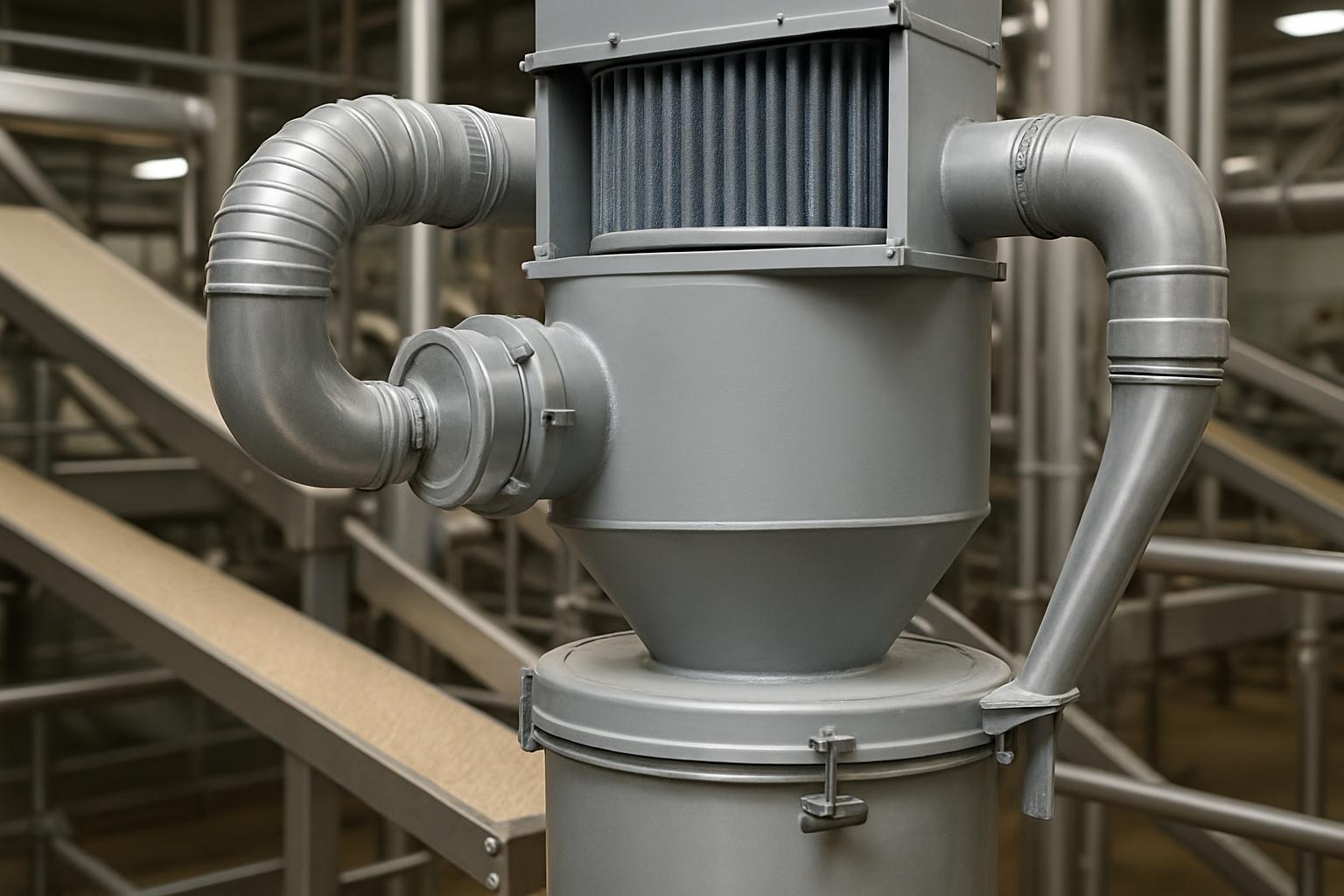
2. Characteristics of Food Dust: Sources, Harm, and Operational Consequences
Dust in the food industry has a very wide size spectrum, from coarse particles generated by pouring/dispensing raw materials to fine and ultra-fine particles generated during grinding, drying, roasting, and frying. The dry raw material preparation stages such as flour, cocoa powder, spices, and coffee beans easily create fine dust that lingers in the air. The drying process to remove moisture from fruits and vegetables, as well as powdered seeds, generates additional small dust that is difficult to see with the naked eye. During roasting/frying, heating, oil adhesion, and burnt fragments can release fine particles; while in the packaging area, dust leakage from filling hoppers, conveyors, and paper/carton packaging is a continuous source.
Regarding harm, food dust can reduce quality and compromise product hygiene by carrying microorganisms, mold, and allergens. In terms of health, long-term exposure can cause respiratory irritation, skin allergies, eye effects, and increase the risk of occupational diseases. For equipment, dust accumulation causes abrasion, retains heat, clogs mechanisms, and when accumulated and encountering sparks, can become a fire and explosion source, especially with dust from grains, sugar, or starch. It is also important to note that cleaning with compressed air or brooms often stirs dust, dispersing it more widely instead of eliminating it, thus only suitable when there is a corresponding extraction system to thoroughly collect it.
Another challenge is the "cleanliness" of the production space: fine dust always tends to infiltrate enclosed areas if there is no source collection. This increases the need for cleaning and the risk of dust settling on surfaces that come into contact with food. Therefore, besides filtration equipment, the architecture of the system – the positioning of extraction hoods, duct layout, and clean area isolation – are important technical decisions to prevent dust from exceeding the generation area, keeping the downstream process chain safe.
3. Main Dust Extraction and Filtration Technologies for Food Plants
3.1. Fabric Filter (Baghouse) – The Backbone for Dry Dust, High Volume
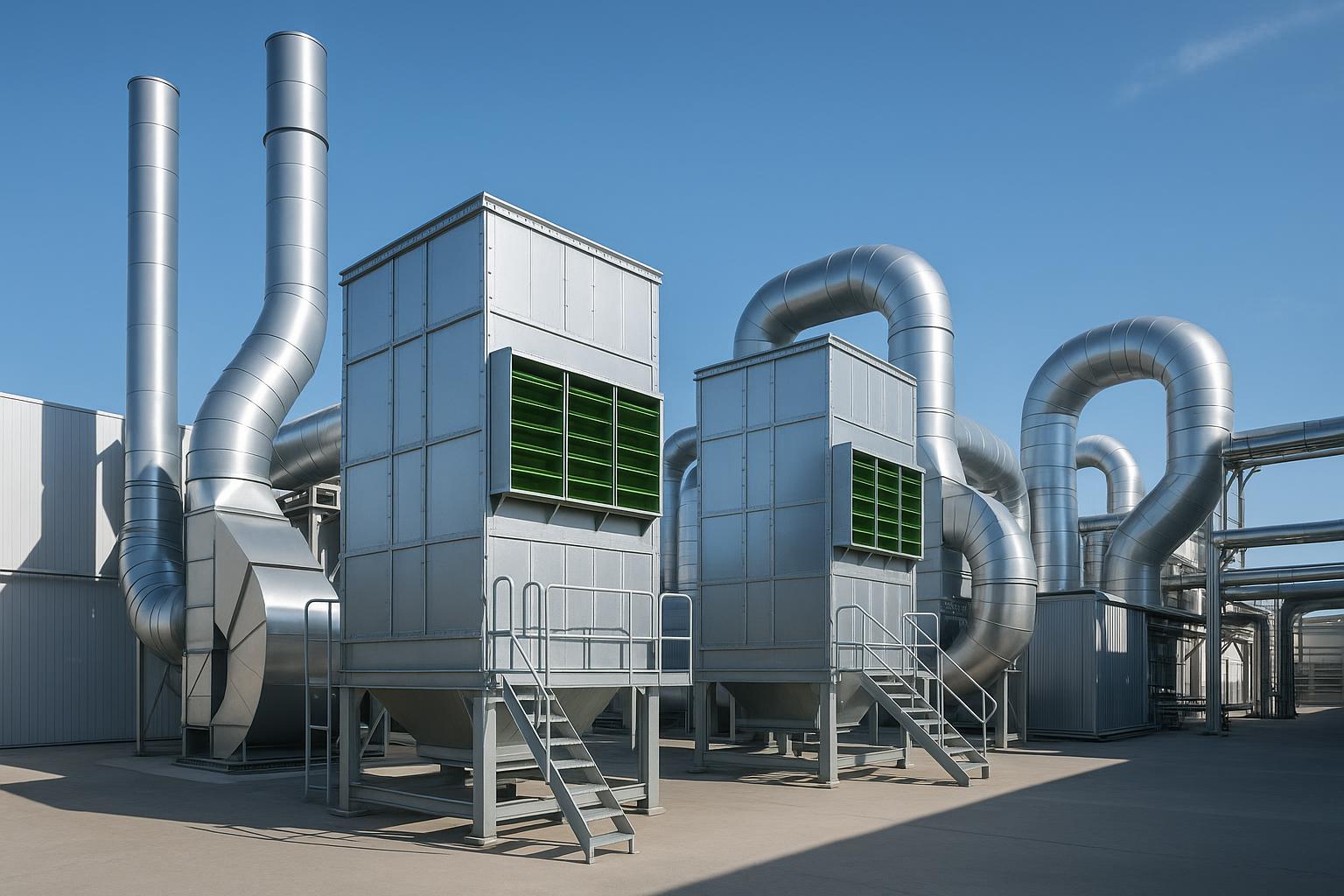
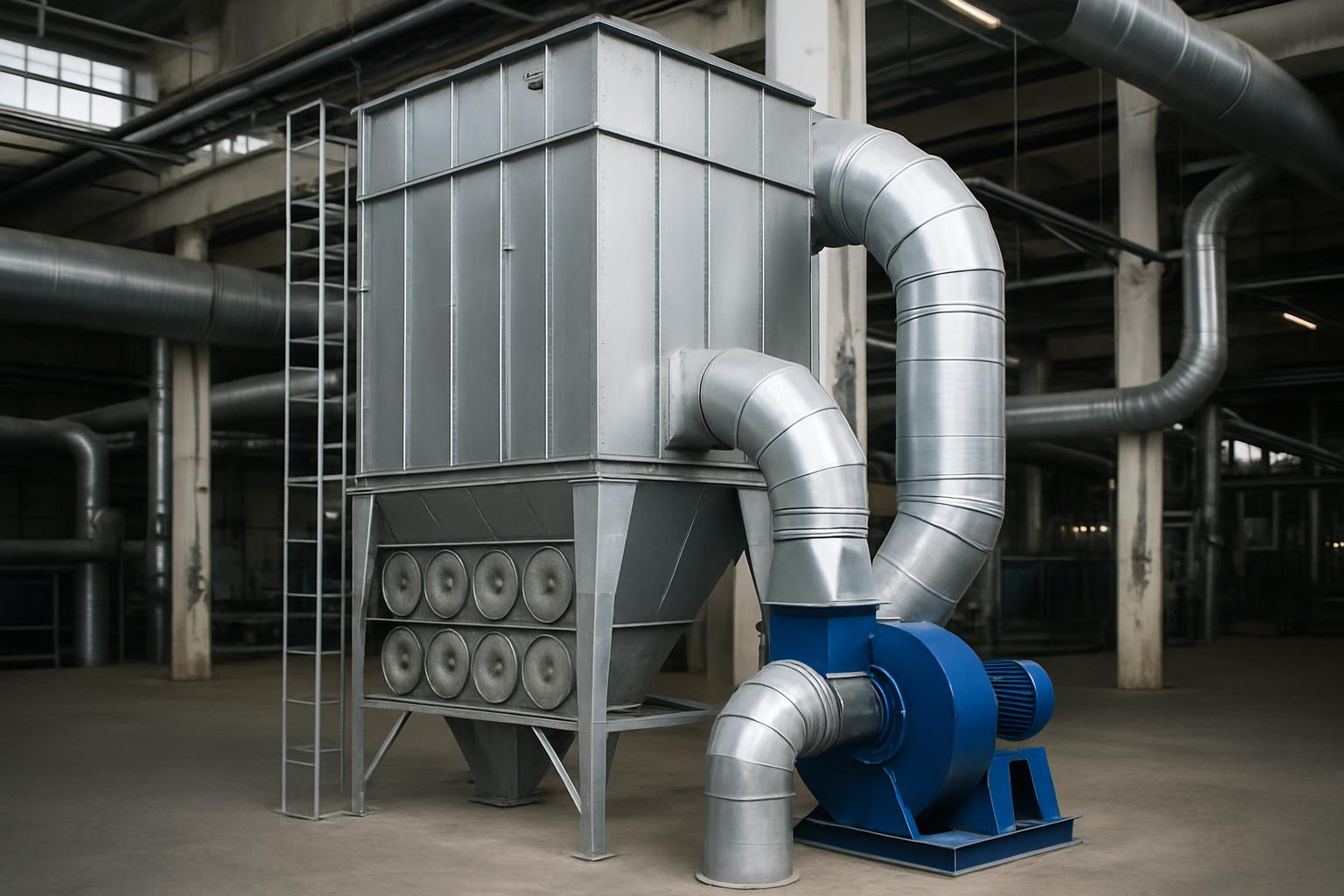
Fabric filter technology is fundamental in dry dust handling, with a filter chamber configuration containing multiple fabric bags and a zoned extraction system that collects dust to the center. According to actual data, this technology effectively handles dust particles sized 2–10 µm with efficiencies ranging from 85% to 99.5%, even in environments with certain humidity. Filter materials vary from cotton, felt, synthetic fibers to fiberglass; among which synthetic fibers are widely used due to their heat resistance, mechanical durability, and reasonable cost. Proper operation will go through a "dust cake formation" phase on the fabric surface, thus significantly increasing efficiency before needing to regenerate the bags.
For food plants, fabric bags are suitable for large volume dust discharge points such as grinding, sifting, silo loading, and bagging. The standard configuration usually combines automatic dust shaking with compressed air pulses to maintain moderate resistance and stable airflow. The key point is to choose filter materials compatible with the stickiness and moisture of the dust (e.g., sugar dust, starch) to minimize filter clogging; along with designing hoppers for dust collection and discharge to avoid bridging.
In terms of maintenance, fabric bags are easy to replace and low-cost, suitable for plants needing lifecycle economic efficiency. Common risks include moisture and stickiness causing blockages, increasing resistance; this can be mitigated by proper extraction hoods, reducing moisture intrusion, localized heating, or separating coarse dust before fine filtration. When arranged in clean areas, secondary filtration should be added at the recirculation air level to prevent fine particles from returning to the production space.
3.2. Cartridge Filter – High Efficiency for Fine Particles, Tight Spaces
The cartridge dust filtration system uses pleated filter cores, providing a large surface area within a compact device size. According to actual data, this technology achieves efficiencies of 95%–99%, effectively handling ultra-fine dust particles below 1 µm. A significant advantage is the ability to operate continuously 24/7, integrating automatic dust shaking with compressed air pulses without needing to stop the machine, making it suitable for food lines requiring stable clean ventilation and minimal downtime.
In food applications, cartridges are particularly useful in spice areas, fine powders, and coffee roasting – where fine dust adheres easily and disperses. In terms of design, arranging the filter cores vertically and selecting evenly spaced, wide pleats helps release dust more effectively and reduces residue buildup at the bottom of the pleats compared to horizontal installation. When deep cleanliness is required, a secondary filtration level such as HEPA can be added after the cartridge to protect the clean space – although this configuration detail needs to be balanced according to the hygiene requirements of each plant.
From a maintenance perspective, cartridges are easy to disassemble and have a long core lifespan if cleaned at the right intervals. Common risks include choosing the wrong filter membrane material for moist/oily dust, leading to rapid clogging and increased pressure differentials. A good cartridge system will demonstrate stable pressure differentials, a "sufficient and correct" dust shaking rhythm, and the ability to maintain high efficiency for fine particles over time.
3.3. Cyclone – Preprocessing Coarse Dust, Reducing Load for Fine Filtration
Cyclones utilize the centrifugal force of swirling air to separate coarse particles from the air stream, serving as an ideal "coarse filter" placed before a baghouse or cartridge. According to actual data, cyclones are typically used for dust sizes of 100–5 µm, with processing efficiencies of 65–95%. The strengths of cyclones include simple construction, few moving parts, and collecting dust in a dry form that can be reused (such as flour, starch) if hygiene requirements are met.
In food processing, cyclones are often positioned at the discharge points of grinding, sifting, or powder feeding equipment to separate coarse dust particles, thereby quickly reducing the dust load entering fine filtration, extending the lifespan of fabric bags/cartridge cores. Cyclones also stabilize the hydraulic mode of the piping because they "drop" heavy dust early, helping the extraction fans work more easily and reducing the risk of clogging in distant branches.
Although highly effective with coarse particles, cyclones are not a standalone solution for fine dust. Therefore, the wise approach is to integrate cyclones as a preprocessing stage in a multi-level chain, aiming for sustainability and lifecycle economic efficiency for the fine filtration system downstream. Designing a closed dust collection and discharge hopper, avoiding reverse suction, is an important consideration to prevent flow loss and dust recirculation.
3.4. Electrostatic Precipitator (ESP) – Selective for Ultra-Fine Particles and High Flow
ESP ionizes air in a high-voltage electric field; dust particles receive an electric charge and are attracted to oppositely charged plates, then shaken off into a hopper. According to actual data, dust removal efficiency reaches 85–99% and can filter particles from 10 to 0.005 µm. Low pressure loss and high processing flow are prominent advantages, suitable for discharge points requiring low pressure differentials and long-term energy sustainability.
In the food sector, ESP is noted as a choice for dust with electrostatic properties, easily ignitable such as aluminum, titanium, corn flakes, epoxy resin, and coal dust. In food plants, ultra-fine organic dust can arise during roasting/frying, drying, but the electrical conductivity, moisture, and stickiness need to be carefully evaluated before application. The advantage of ESP is its high efficiency with ultra-fine particles, but it requires strict insulation, cleaning of plates, and electrical safety.
In terms of operation, ESP requires a regular maintenance schedule to keep the plate surfaces clean and ensure effective shaking/vibration systems. A common mistake is neglecting periodic cleaning, leading to reduced efficiency due to compacted dust layers. Proper design and operation will help ESP leverage its "deep filtration" advantage while remaining stable in energy costs.
3.5. Wet Scrubber – Integrating Cooling and Gas Absorption
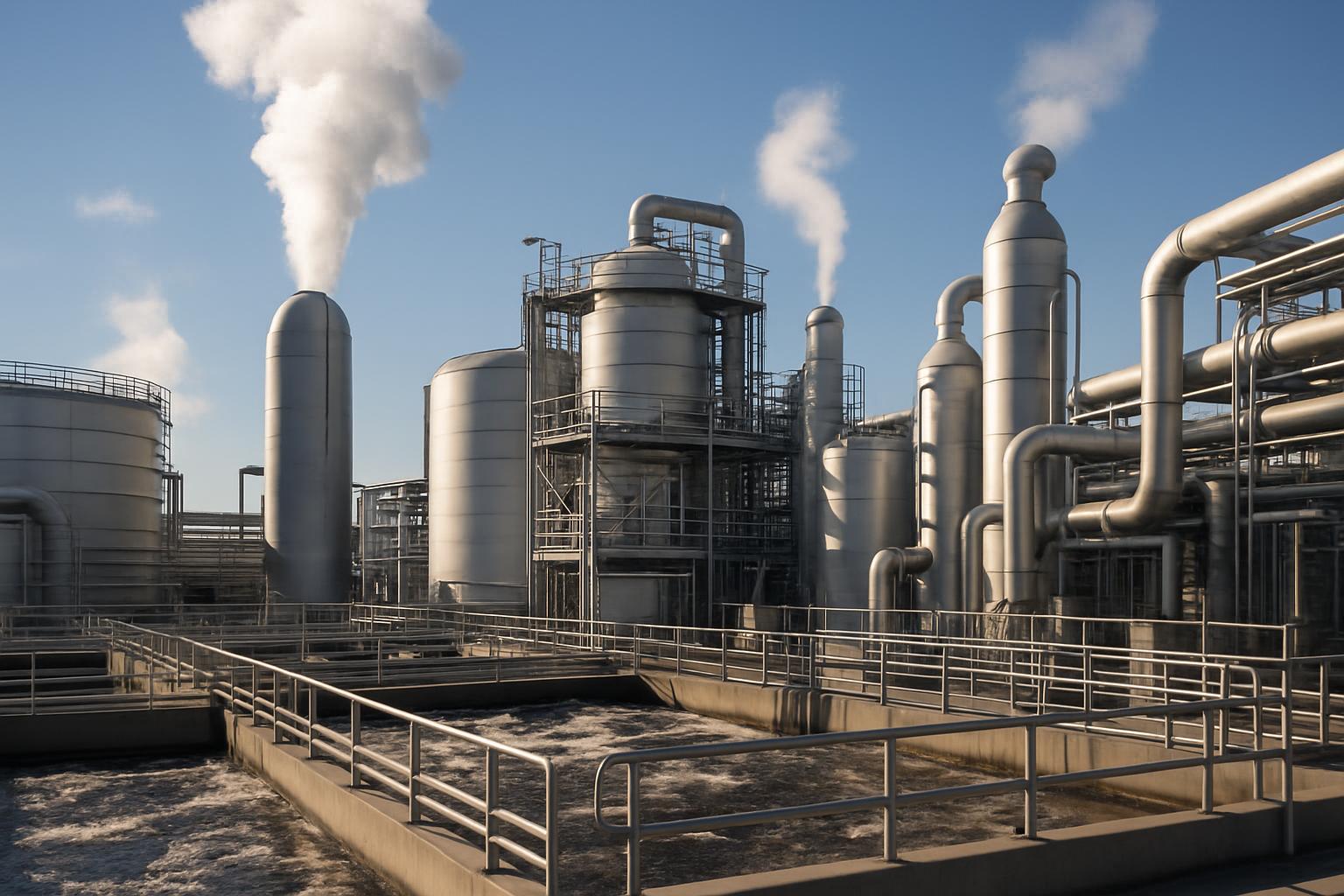
Wet scrubbers expose dust-laden air directly to liquid; dust is retained, forming waste sludge. This method is highly effective for fine dust and can simultaneously remove some toxic gases (SO2, NOx) within permissible limits. Additionally, scrubbers help cool the gas stream before discharge, useful for heat-generating points in processing such as furnaces and high-temperature drying chambers.
In food plants, wet scrubbers prove useful for fine dust-laden air mixed with vapor or requiring cooling before fine processing. However, for sticky dust like sugar or starch, considerations are necessary due to the formation of thick sludge, increasing wastewater treatment loads and the risk of sedimentation. Designing spray nozzles, baffle layers, and evenly distributing liquid-gas flow is key to maintaining performance, while also arranging mist separators to prevent moisture carryover to downstream processes.
In terms of operation, scrubbers require management of circulating water, waste sludge, and corrosion prevention suitable for the environment. The advantage is the immediate reduction of fine dust and cooling; the downside is the generation of a wet treatment line, requiring space and additional maintenance. Therefore, scrubbers often play a "right place – right time" role rather than completely replacing dry filtration throughout the plant.
3.6. Mobile Fabric Dust Filter – Flexible for Dispersed Processing Points
Mobile fabric dust filters are a portable solution for dispersed or non-fixed processing locations. Dust-laden air is drawn through fabric bags to capture dust, with clean air escaping outside; dust falls into a settling chamber to maintain performance. Actual data shows that the dust container capacity can exceed 100 liters, suitable for intermittent tasks or moderate-small dust flows.
In food plants, mobile equipment is particularly useful for testing areas, manual packaging, small mixers, or sudden "hot spots" without on-site extraction hoods. The advantage is that it requires minimal mechanical modification, can "run to the source" to collect dust immediately, thus preventing dust from dispersing into clean areas. However, for continuous lines or large dust generation, mobile equipment should only be a supplement, not a replacement for central systems.
In terms of maintenance, the simple structure allows for quick bag removal and cleaning, but regular dust emptying schedules need to be managed due to limited capacity. When operating in areas close to open food, clean air discharge direction and appropriate noise levels must be controlled, as well as ensuring the cleanliness of the equipment body before moving between areas to avoid "carrying dust" throughout the plant.
4. System Design Thinking: Source Collection, Optimizing Ducts, and Cleaning
4.1. Source Collection and Appropriate Hood Placement for Processes
Source collection is the number one principle for controlling dust in food plants. Equipment such as hoppers, bag pouring points, grinders, sifters, roasting/frying, and powder dispensing need to be shielded and fitted with extraction hoods to capture dust right at the source. The hood layout must respect worker operations, not obstruct material feeding, while covering a wide enough dust-generating area to limit dust escaping into the atmosphere.
At open operation points (e.g., semi-automatic packaging), extraction hoods can combine with soft curtains, barriers, and sweeping air streams to direct dust toward the intake. The extraction fan and ducting should be configured to minimize bends, reduce pressure loss, and distribute suction evenly among branches. When it is not possible to cover tightly, a "local suction rim" approach with the intake located close to the source can also significantly reduce dust dispersion, especially when combined with coarse separation (cyclone) before fine filtration.
4.2. Duct – Fan Design: Prioritizing Compact, Sealed, and Easy to Clean
In food environments, dust extraction ducts should be arranged in short lines with few bends to minimize pressure loss and dust accumulation at dead corners. Flanges and access doors should be designed for periodic cleaning; anti-adhesion surface materials will be beneficial for sugar and starch dust. Sealed dust collection hoppers and discharge locks are mandatory to prevent reverse airflow, maintaining the designed airflow of the fan.
With extraction fans, the goal is stable operation across varying loads due to the number of branches opening/closing per shift. Synchronization between the fan, cyclone, and fine filtration helps avoid strong fluctuations in pressure differentials, thereby reducing unnecessary dust shaking cycles and extending the lifespan of filter materials. Additionally, the final discharge line needs to consider chimney positioning, wind direction, and sampling capabilities for compliance measurement.
4.3. "Design for Hygiene" in Food Plants
Besides performance, every detail of the dust extraction system needs to serve hygiene goals – preventing re-emission and cross-contamination. Main filters installed vertically help dust fall naturally, reducing residue buildup on filter surfaces; evenly spaced pleats that are easy to release dust will increase core lifespan. Locations that may cause dust dispersion (access doors, dust discharge) must have sealed mechanisms, quick operations, and be ready for secondary collection if needed.
Manual cleaning tools such as brooms and compressed air should only be used in conjunction with dust extraction to avoid dispersion. Cleaning plans for rooms and machines need to synchronize with automatic dust shaking schedules, bag/core replacement, and dust discharge, ensuring that production areas remain in a "neat – clean – sealed" state according to quality management requirements. Operational training plays a decisive role in helping responsible personnel understand what should and should not be done to keep the system in a standard state.
5. Technology Comparison and Selection Direction
Each filtration technology has its "sweet spot" regarding particle size, efficiency, and different usage scenarios. Food plants often require multi-level configurations: cyclone for coarse separation, baghouse or cartridge for fine filtration, and wet/ESP selection depending on specific gas streams. The table below summarizes quantitative data from actual sources, along with operational notes – applications in the context of food plants.
| Technology | Filtration Efficiency (Actual Data) | Suitable Particle Size Range | Operational/Application Notes |
|---|---|---|---|
| Fabric Filter (Baghouse) | 85% – 99.5% | 2 – 10 µm | Handles large volume dry dust; suitable for grinding, sifting, bagging; operates effectively even in certain humidity. |
| Cartridge | 95% – 99% | Highly effective for particles < 1 µm | Compact design; continuous operation 24/7; automatic dust shaking with compressed air. |
| Cyclone | 65% – 95% | 100 – 5 µm | Coarse filtration/preprocessing; collects dry dust that can be reused; reduces load for fine filtration. |
| Electrostatic Precipitator (ESP) | 85% – 99% | 10 – 0.005 µm | Suitable for ultra-fine particles, high flow; used for electrostatic, easily ignitable dust (corn flakes, aluminum, titanium...). |
| Wet Scrubber | "Relatively high efficiency" (qualitative) | Fine dust mixed with vapor | Simultaneously cools and can remove some SO2, NOx; generates a sludge-water treatment line. |
| Mobile Fabric Dust Filter | — | — | Dust container capacity > 100 l; suitable for dispersed locations, moderate-small flow, intermittent tasks. |
The performance data and particle size ranges in the table serve as a reference basis for "layering" suitable technologies for each dust generation source in the plant. For instance, a grinding-sifting line may use a cyclone first, followed by a baghouse; while a fine spice area needing space efficiency prioritizes cartridges, adding a secondary filtration level if strict clean space is required. For discharge points with heat-vapor, scrubbers will assist in cooling and fine filtration, but the sludge treatment line generated needs to be balanced.
Regarding costs, instead of looking at the unit price of individual equipment, businesses should calculate the total lifecycle costs including: fan energy, filter materials – dust shaking, cleaning labor, raw material loss due to dust, and non-compliance costs (risks of machine downtime, batch recycling). Technologies with automatic dust shaking, stable 24/7 like cartridges can optimize total costs when machine runtime value is high; while baghouses excel in large loads with reasonable material costs. The final decision needs to be "personalized" according to the technology flow and operational priorities of each plant.
6. Operation – Maintenance – Hygiene Control of the System
6.1. Stable Operation: Dust Shaking, Pressure Differential, and Flow
The general principle is to maintain the filter pressure differential within a stable range, shaking dust just enough to restore airflow without excessively wearing the filter material. For cartridges, the dust shaking mechanism using compressed air allows for continuous operation 24/7 without stopping the machine, very suitable for food lines requiring maintained clean ventilation. For baghouses, setting the dust shaking cycle based on pressure differential helps prevent over-shaking, preserving a "good dust cake" for fine filtration.
The airflow must be evenly distributed across the filter cross-section; flow disturbances or false suction due to leaks will reduce dust shaking effectiveness and lower efficiency. The preprocessing cyclone system needs to control leaks at hoppers and ensure free-falling dust columns, avoiding reverse dust lifting. For scrubbers, balancing water-air flow and effective mist separation is fundamental to maintaining filtration performance and not "wetting" downstream levels.
6.2. Preventive Maintenance: Filter Materials, Dust Hoppers, and Wastewater
Filter materials (fabric bags/cartridge cores) need to be monitored for pressure differentials, observing surfaces to determine the right time for cleaning – replacement. Bags/cores that clog quickly are often signs of moist/sticky dust, lack of coarse separation, or inappropriate dust shaking rhythms. Dust hoppers must have a regular discharge schedule, preventing bridging and sticking, especially with sugar – starch; failing to discharge in time leads to "backflow" dust damaging discharge valves and reducing filtration efficiency.
For scrubbers, maintenance focuses on pumps – spray nozzles, cleaning baffle layers, and managing waste sludge. Circulating water needs to be controlled to avoid sediment buildup causing clogs; the wastewater treatment line must be ready for the characteristics of food dust sludge. ESP requires cleaning of plates, checking shaking/vibration mechanisms, and insulation to maintain dust collection efficiency; neglecting this will cause "baked-on" dust layers, making them difficult to release and quickly reducing efficiency.
6.3. Hygiene Control and Cross-Contamination in the Plant
High-tech dust extraction systems are a proven control measure to filter allergens and reduce cross-contamination risks; however, effectiveness depends on synchronized hygiene implementation. Industrial cleaning should limit the use of brooms/compressed air alone as they only "stir up" dust; instead, they should be immediately combined with local dust extraction for collection. Surfaces – spaces with high hygiene sensitivity need secondary filtration levels and organized pressure room arrangements to prevent dirty air intrusion.
Operational – maintenance records, troubleshooting, and compliance checks are the foundation of the quality management system. Regular training helps the team identify "hot spots" of newly emerging dust over time, thus proactively adding extraction hoods or mobile equipment instead of allowing dust to become a systemic issue. When the dust extraction system is considered part of the "hygiene ecosystem," the plant will maintain a stable clean baseline, facilitating quality inspections.
7. Compliance with Emission Standards: Reference Framework and Practices
For dust emissions into the environment, businesses need to refer to QCVN 19:2024/BTNMT to determine applicable limits, arrange measurement points, and monitoring plans. Good practices include: clearly identifying chimneys/discharge points, connecting all sources of generation to appropriate extraction – filtration systems, and ensuring independent, objective measurement plans. Based on this, optimizing system activities (increasing coarse separation, enhancing dust shaking, adding filtration levels) will directly translate into stable measurement results through evaluation periods.
It is important to note that meeting standards is not just about "meeting at the measurement point," but also linked to a sustainable operational model: limiting dust dispersion in the workshop, reducing re-suspension during cleaning, and preventive maintenance to maintain filtration efficiency over time. Continuously reviewing the "dust flow" in the technology chain, updating collection configurations when changing formulas – processes is the best way for food plants to maintain proactive compliance, rather than being reactive before inspection periods.
When planning new investments or upgrades, contractors should be required to propose configurations – documentation proving performance based on the actual data mentioned (e.g., performance and particle size ranges of baghouse, cartridge, cyclone, ESP), rather than vague commitments. Transparency about parameters and operational scenarios is the basis for businesses to control compliance risks and optimize total lifecycle costs.
8. Typical Application Scenarios and Configuration Recommendations
For the grain grinding – sifting line, with high dust loads and a wide size spectrum, the reference configuration is often a preprocessing cyclone to "drop" coarse dust, followed by a baghouse for fine filtration down to several micrometers. Overall performance is further reinforced by automatic dust shaking mechanisms and managing sealed dust hoppers; depending on the required hygiene level of the production room, a secondary filtration level can be added in the recirculation air line. This configuration correctly leverages the "sweet spots" of cyclones (100–5 µm, 65–95%) and baghouses (2–10 µm, 85–99.5%).
In the fine spice area needing compact space, cartridges prove effective with efficiencies of 95–99% even for particles below 1 µm, and can operate 24/7 with automatic dust shaking. To avoid moisture – stickiness in the core, it is necessary to control vapor/oil sources and select appropriate filter membrane materials. For heat-vapor generating areas like drying/roasting, scrubbers can be placed upstream to cool and treat fine dust mixed with vapor, then switch to dry fine filtration, depending on each plant's emission and hygiene requirements.
In dispersed, non-fixed locations (testing, manual packaging, off-line operations), mobile fabric dust filters serve as a "rapid response team" with dust containers over 100 liters. Although they do not replace central systems, this equipment helps meet on-site generation needs, reducing dust dispersion during temporary operations. Concurrently, businesses should use data from temporary "hot spots" to decide on investing in fixed extraction hoods when the demand becomes permanent.
9. Frequently Asked Questions (FAQ)
Is the cartridge filter suitable for fine spice dust?
The cartridge system achieves 95–99% efficiency and effectively handles dust particles below 1 µm, making it very suitable for fine dust such as spices and flavor powders. The advantage is continuous operation 24/7 with automatic dust shaking, helping maintain a clean environment without needing to stop the machine.
Why should a cyclone be placed before a baghouse?
Cyclones are effective for particles 100–5 µm at 65–95%, separating coarse parts and reducing the load for the fabric bags downstream. This way, the baghouse operates more stably, with less filter clogging and extended filter material lifespan.
What advantages does the electrostatic precipitator (ESP) have in handling ultra-fine dust?
ESP achieves 85–99% efficiency and can filter particles from 10 to 0.005 µm with low pressure loss. This technology is suitable for high flow and electrostatic, easily ignitable dust, but requires maintenance of plates and strict insulation.
In what cases is mobile dust filtering equipment useful?
Mobile equipment is suitable for dispersed, non-fixed processing points or moderate-small dust flows, with dust containers over 100 liters. This is a flexible solution for handling temporary "hot spots" before a central system can be installed.
Can wet filtration completely replace dry filtration in food plants?
Wet filtration is effective for fine dust and can cool, but generates a sludge-water treatment line, not always suitable for sticky dust like sugar or starch. Typically, scrubbers are used "in the right place – at the right time" and combined with dry filtration for overall optimization.
What emission standards should a plant refer to for dust?
Businesses should refer to QCVN 19:2024/BTNMT to determine limits, measurement points, and industrial emission monitoring plans. Based on that, choosing – configuring appropriate extraction filtration systems is necessary to meet compliance requirements stably.
Nanoen
NANO THANG LONG ENVIRONMENTAL COMPANY LIMITED
Hanoi Office: No. 15 TT18 Van Phu Urban Area, Ha Dong, Hanoi
Can Tho Office: 661E/29, Vo Van Kiet Street, Binh Yen A Area, Long Hoa Ward, Binh Thuy District, Can Tho City
Ho Chi Minh City Office: 533/12/7, Pham Van Bach Street, Ward 15, Tan Binh District, Ho Chi Minh City
Hotline: 0986.689.781 - 0969.054.226
Email: thanglongnanoen@gmail.com
Facebook: www.facebook.com/thanglongnanoen