1. Legal context and dust control requirements
In industrial emissions treatment projects in Vietnam, technology selection must closely adhere to legal requirements regarding output dust concentration. According to QCVN 19:2024/BTNMT, the total dust limit in flue gas is tightened to 60 mg/Nm³ starting from July 1, 2025. This is a challenging threshold for traditional mechanical dust separation solutions, but it falls within the safe operating range of modern fabric bag dust filtration systems when designed and operated correctly.
Fabric bag dust filtration (bag filter/fabric filter) is currently one of the highest efficiency filtration technologies on the market, often achieving 96–99% according to actual operational data. With such efficiency, even when the input dust load is quite high, the equipment still has a safety margin to meet the standards. In fact, with good configuration and control, the output dust concentration can reach levels of 10–20 mg/m³N in most cases. Therefore, for factories planning to upgrade their emissions treatment systems to comply with QCVN 19:2024/BTNMT, fabric bags are a technical option worth considering right from the design stage.
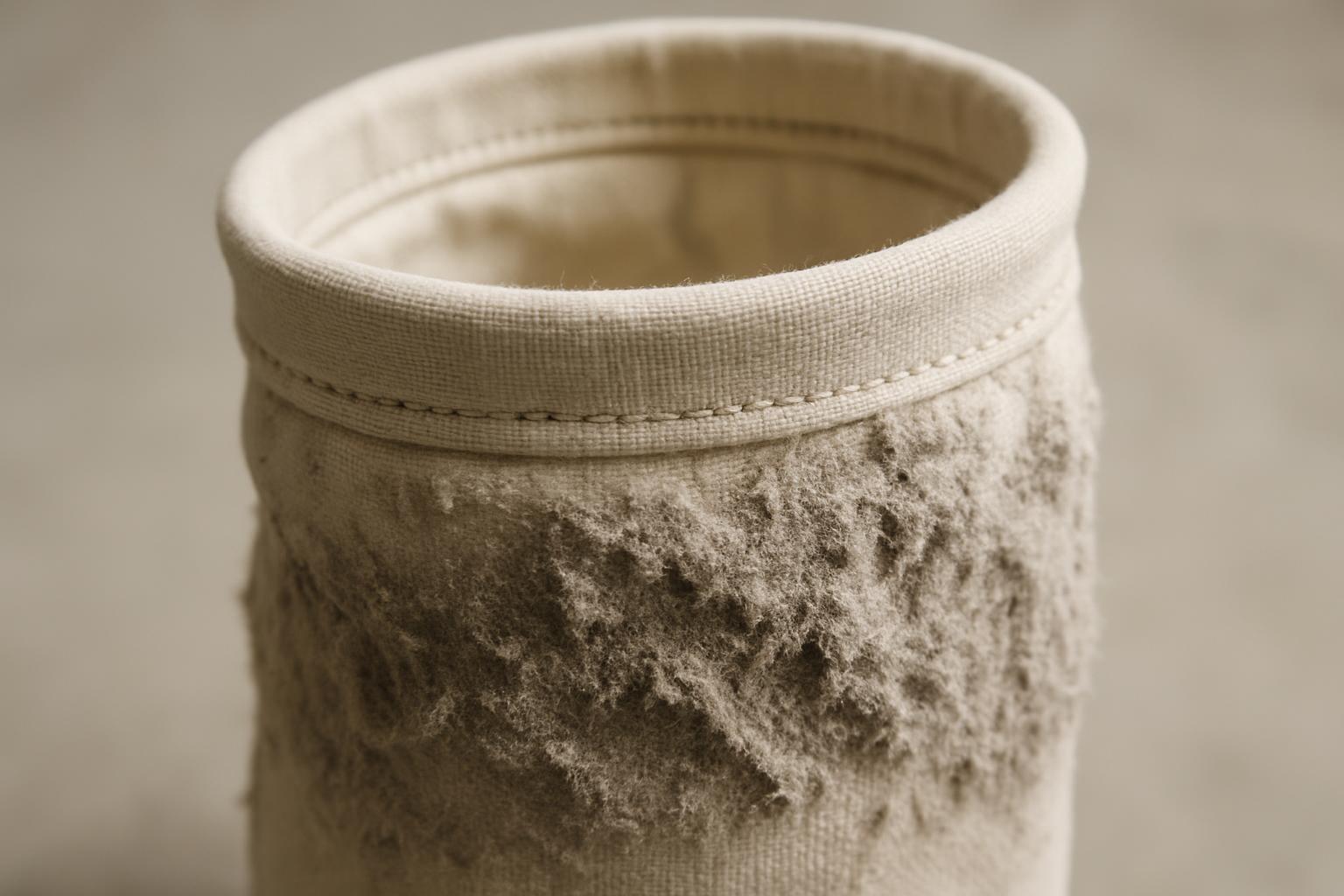
2. Overview of fabric bag dust filtration technology and scope of application
Fabric bag dust filtration uses a porous material field made of woven or non-woven fabric to separate solid particles from the air stream. Dust-laden air enters the "dirty air" chamber, passing through the bag wall due to the pressure difference created by the suction fan; dust is retained on the outside surface of the bag, while clean air enters the "clean air" chamber and exits through the flue. The dust capture principle is a combination of several mechanical mechanisms: screening for larger particles, inertial impaction for medium particles, and a combination of electrostatic attraction and diffusion for fine particles.
Modern fabric bag equipment effectively handles input dust concentrations ranging from approximately 30–5,000 mg/m³. When concentrations exceed 5,000 mg/m³ (as in some large coal-fired boilers), a cyclone should be arranged as a pre-treatment step to reduce the load on the bags. In terms of capacity, one square meter of filter fabric surface can operate at approximately 150–180 m³/h; this is a core parameter when calculating fabric area and the number of bags. Thanks to the mechanism of creating a "dust cake" on the surface, fabric bags can capture very fine particles, even below 1 µm, which many mechanical technologies struggle to achieve.
3. Detailed structure and operating principle
3.1. Filter chamber, dirty/clean air chambers, dust hopper, and discharge
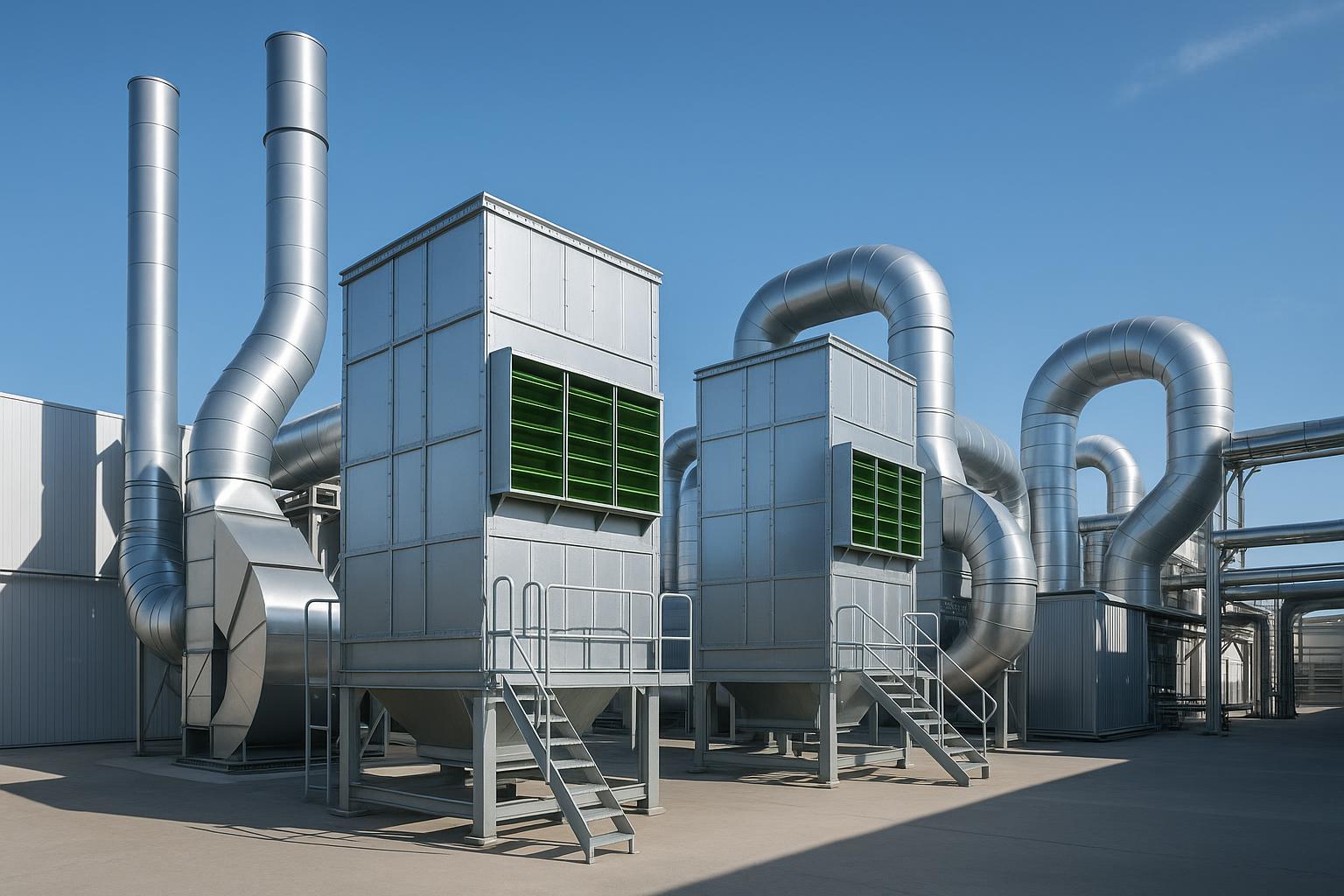
The core of the equipment is a steel filter chamber, sealed by a tube sheet into two functional chambers: the dirty air chamber below and the clean air chamber above. The air stream after passing through the bag field can only escape towards the clean chamber and out the discharge pipe, effectively preventing cross leakage. At the bottom of the filter chamber is a conical or pyramidal hopper to collect dust falling off the bag surface during the cleaning cycles, helping to avoid material accumulation in dead zones.
To ensure stable dust discharge without causing reverse air leakage, the discharge opening at the bottom of the hopper is typically equipped with an airlock rotary valve. In cases of large discharge flow or multiple collection points, a screw conveyor or bottom conveyor will collect dust into a common storage bin. The correct combination of hopper geometry, airflow dynamics, and bottom discharge mechanisms determines the reduction of sticking and "hopper arching" phenomena, especially when handling fine dust that tends to clog.
3.2. Filter bags, support frames, and material options
Filter bags are the separating elements that determine the overall system efficiency. The common cylindrical shape has a diameter of approximately 125–250 mm with a length of 1.5–2 m. Some applications use rectangular shapes with a width of 20–60 mm and a length of 0.6–2 m to optimize floor space. Bag materials are typically woven or non-woven fabrics made from synthetic fibers such as PE, PP, aramid (Nomex), PPS, PTFE… with a thickness of about 0.3 mm. Thicker fabrics increase the ability to retain fine particles but cause increased resistance, so optimization is needed based on dust characteristics and filtration objectives.
The support frame (cage) made of steel placed inside the bag helps prevent the bag from collapsing when the air flows from outside to inside. The frame surface is usually galvanized or coated with epoxy to resist corrosion and reduce points of failure that could tear the bag during shaking. On a medium scale, a device can use from several dozen to several hundred bags, arranged in rows and compartments to facilitate sequential dust cleaning, ensuring that the effective filtration area is always maintained while locally cleaning a portion of the bag field.
3.3. Pulse-jet dust cleaning system and control
The pulse-jet dust cleaning method is the core technological difference of modern bag filtration generations. The compressed air tank assembly is maintained at a pressure of approximately 4–6 bar, ready to create cleaning pulses. The solenoid valve controls the pulses with very short opening times, typically around 0.1–0.2 seconds, directing air into the blow pipes placed at the mouth of the bag rows. When the air pulse goes backward from top to bottom, the bag inflates instantly, dislodging the "dust cake" and releasing dust that falls into the hopper.
The controller monitors the pressure difference between the dirty and clean chambers to determine when cleaning is needed. The set pressure difference threshold is usually in the range of 1,000–1,500 Pa, balancing the maintenance of the dust cake and avoiding increased resistance that reduces flow rate. In multi-compartment chambers, the poppet valve of the compartment being cleaned will close to separate the flow, then reopen immediately after the pulse ends, allowing the system to operate without stopping entirely during cleaning.
3.4. Operating cycle and the role of the dust cake
During the filtration phase, the first dust particles form a thin layer on the bag surface, acting as a "filter aid" that significantly enhances the ability to retain ultrafine particles. This is why fabric bags often achieve efficiencies of 96–99% and can effectively handle very small particles, which a single-stage cyclone (70–85%) struggles to achieve. However, when this layer becomes too thick, resistance increases, requiring cleaning to restore the surface and return to the design flow rate.
The strength of the pulse-jet method is its ability to clean in short, continuous cycles, locally cleaning each bag row, unlike older mechanical shaking/tapping mechanisms that often require a complete shutdown for cleaning. As a result, the average efficiency over time remains stable, avoiding large fluctuations in flow through the flue, while reducing the risk of pushing dust beyond limits during transitional phases.
4. Selecting filter fabrics based on temperature and chemicals
Temperature and the chemical composition of emissions are two variables that directly affect the lifespan of filter bags. In the low-to-medium temperature range, polyester (PE) is often chosen due to its cost and availability, but if the gas has high humidity or hydrolysis conditions, pre-treatment for moisture should be considered because PE can degrade in high temperature-humidity environments. Polypropylene (PP) has good acid-alkali resistance but has a lower temperature limit (around 95°C), making it suitable for small-scale systems with low SO₂ gas.
For coal-fired boilers, the temperature range of 160–200°C makes heat-resistant materials such as Nomex (aramid) or PPS effective, with PPS standing out for its sulfuric acid resistance. PTFE and fiberglass can withstand the harshest environments, with the ability to endure temperatures up to around 260°C, suitable for very high-temperature emissions or those rich in corrosive agents. An important note is that the acid dew point of coal-fired gas is usually around 130–150°C; the system should operate at least 15–20°C above the dew point to avoid condensation that can damage the bags and corrode the equipment casing. For coal with a sulfur content of around 0.5% or higher, priority should be given to PPS or PTFE-coated surfaces.
| Material | Operating temperature | Outstanding characteristics | Recommended applications |
|---|---|---|---|
| Polyester (PE) | Max around 130°C | Common, relatively moisture resistant | Biomass boilers, rice husk; low-medium gas |
| Polypropylene (PP) | Max around 95°C | Good acid/alkali resistance | Small systems, low SO₂ gas |
| Nomex (Aramid) | About 200°C continuous, peak about 220°C | Heat resistant, mechanically durable | Coal boilers 160–200°C |
| PPS | Max around 190°C | Resistant to H₂SO₄, suitable for high S | Boilers with significant SO₂/SO₃ |
| PTFE | Max around 260°C | Very good chemical resistance | Harsh conditions, long lifespan required |
| Fiberglass | Max around 260°C | High heat resistance | Emissions >200°C |
5. Basic design: air/fabric ratio, filtration velocity, and area calculation
Two important practical parameters are the filtration velocity through the bag field and the air-to-cloth ratio. With a vertical flow arrangement, the recommended filtration velocity is around 1.0–1.3 m/s. Excessively high velocities increase resistance, accelerate bag wear, and make it difficult for the air pulse to "strip" the dust layer, while excessively low velocities can easily cause dust settling in the ducts, losing control of the loading point at the inlet. In heavily dusty industries such as cement, a typical air-to-cloth ratio of about 2 m³/m²/min can be used for ores, coal, clinker dust, and about 5 m³/m²/min for limestone, cement dust to determine initial sizing.
In terms of surface productivity, actual operational data with pulse-jet filter bags is around 150–180 m³/h per square meter of fabric. Once the required flow rate is known, the total fabric area can be calculated using the formula A = Q/V (with Q and V in the same unit system). For example, a system of 30,000 m³/h, if converted to m³/min and applying the selected ratio, the total area calculated is approximately 416.67 m² based on the reference model. Using round bags with a diameter of 160 mm and a length of 6 m, which have an area of about 3.01 m² per bag, the required number is approximately 138–140 bags. This is a preliminary interpolation method to select the bag field and equipment casing size before delving into optimizing inlet aerodynamics and compressed air arrangement.
6. Performance, operating thresholds, and technology comparison
Fabric bag filtration achieves efficiencies of 96–99% due to the role of the "dust cake" and the pulse-jet mechanism that maintains a relatively clean working surface. When designed with appropriate velocity and air-to-cloth ratios, the output dust concentration can reach around 10–20 mg/m³N in most practical cases. The recommended input dust load range is approximately 30–5,000 mg/m³; if this threshold is exceeded, pre-treatment with a cyclone is necessary to reduce wear and excessive sticking on the bag surface, avoiding "bag clogging" and sudden pressure spikes.
Compared to cyclones and electrostatic precipitators (ESP), fabric bags can effectively handle particle sizes below 1 µm, while single-stage cyclones are generally only effective for particles larger than 10 µm. Investment costs are average, and operating costs are also average due to the need for periodic bag replacements and maintenance of the compressed air system. Both fabric bags and ESPs are sensitive to operating conditions (humidity, temperature, dust resistivity), while cyclones are less sensitive but struggle to meet the 60 mg/Nm³ threshold according to QCVN 19:2024/BTNMT when used alone.
| Criteria | Fabric bag dust filtration | Cyclone | ESP |
|---|---|---|---|
| Dust filtration efficiency | 96–99% | 70–85% (single) / 85–92% (cluster) | 95–99% |
| Smallest particle size effectively handled | < 1 µm | > 10 µm | < 1 µm |
| Investment cost | Average | Lowest | Highest |
| Operating cost | Average (bag replacement, compressed air) | Lowest | Low (electricity) |
| Sensitive to temperature/conditions | Yes (fabric limits, humidity, acid dew point) | Negligible | Yes (dust resistivity) |
| Suitable for small-medium boilers | Very suitable | Mainly pre-treatment | Oversized, high cost |
| Meets 60 mg/Nm³ (QCVN 19:2024/BTNMT) | Yes | No | Yes |
7. Advantages, limitations, and common operational errors
The standout advantage of fabric bags is their high and stable efficiency across a very wide particle range, especially with fine and ultrafine particles. The pulse-jet design allows for continuous cleaning without stopping the system, thereby maintaining stable flow through the flue. The system is also flexible enough to integrate auxiliary devices such as differential pressure gauges, safety sensors, explosion-proof valves, or dust discharge/recovery systems as required. In terms of maintenance, replacing bags and accessories is relatively straightforward compared to many other technologies when access doors and working platforms are well arranged.
However, fabric bags are sensitive to humidity and condensation, especially when exceeding the acid dew point. Polyester materials can hydrolyze in high temperature-humidity conditions; therefore, many systems need to implement moisture control measures before the inlet or choose more resilient materials. Additionally, the quality of compressed air supplied for dust cleaning must be dry and clean to avoid introducing moisture/oil onto the bag surface, causing clogging. If the input dust load is too high compared to recommendations without pre-treatment, an unusually thick dust layer will rapidly increase pressure differentials, making air pulses ineffective and significantly reducing bag lifespan.
Common operational errors include: setting the cleaning pressure differential too low, causing excessive cleaning that removes the filter aid layer and reduces efficiency; or setting it too high, leading to increased power consumption and the risk of flow collapse as the system approaches a "clogged" state. Incorrectly selecting fabric materials for specific temperature/chemical conditions can lead to early bag failure; poorly finished cage surfaces can cause friction that tears the bag; and uneven inlet design can cause some rows of bags to become overloaded with dust. Each small error in these processes can push the output dust concentration beyond limits, directly affecting compliance with standards.
8. Typical applications and recommended configurations
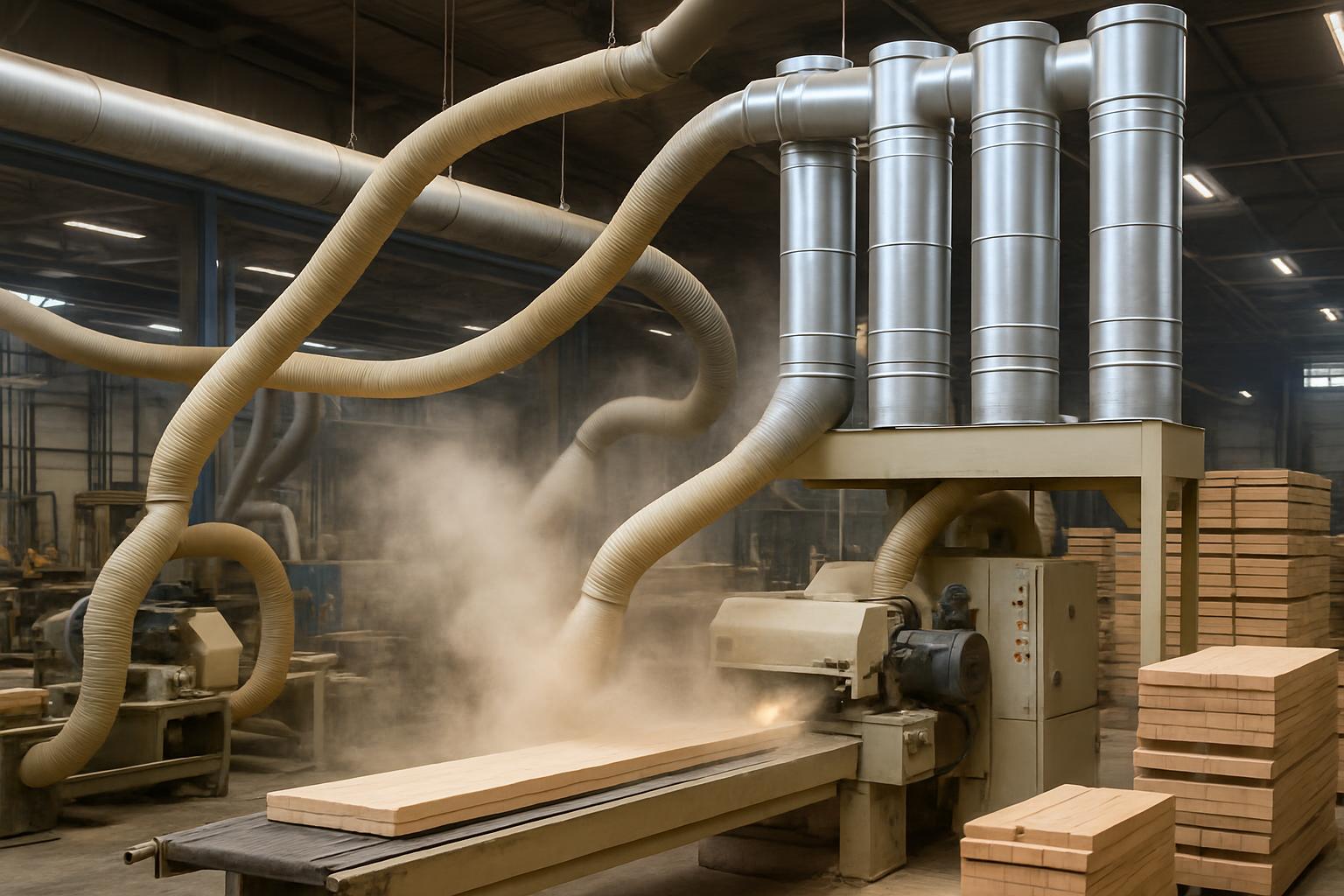
Fabric bag systems are widely applied across various industries: biomass, coal, oil-fired boilers; cement and raw material grinding; wood processing; ceramics; food; pharmaceuticals; rubber-plastics; mining and screening; textiles; and mechanical and surface processing. In production lines generating dispersed fine dust, a collector pipe and hood synchronized with a centrifugal fan will direct the air to a common filter chamber, ensuring that each emission point maintains appropriate suction velocity. For humid air or steam-laden gas, it is advisable to arrange moisture separation equipment before entering the bag field to reduce the risk of clogging and fabric hydrolysis.
For coal-fired boilers, combining a cyclone upstream is a practical solution when dust concentrations are high and particles are abrasive. Selecting PPS bag materials or PTFE-coated surfaces is advisable when sulfur content is significant, while ensuring the temperature is always maintained at least 15–20°C above the acid dew point. For small-medium boilers, fabric bag filtration often provides a reasonable total lifecycle cost due to average investment and the ability to meet strict emission thresholds without requiring as much space as ESPs. Multi-compartment configurations with bottom discharge using airlock valves and continuous screw conveyors will create a reliable operational chain in the 3-shift/day working conditions of industrial plants.
9. Frequently Asked Questions (FAQ)
1) Does the fabric bag filtration system meet 60 mg/Nm³ according to QCVN 19:2024/BTNMT?
Under proper design and operation conditions, the efficiency of 96–99% allows fabric bags to meet this threshold. In practice, many systems even achieve output concentrations of around 10–20 mg/m³N, providing a safety margin for businesses.
2) When is it necessary to install a cyclone before the fabric bags?
When the input dust concentration exceeds approximately 5,000 mg/m³, a pre-treatment cyclone helps reduce the load, limiting wear and sticking on the bag surface. This configuration also helps maintain more stable pressure differentials and extend bag lifespan.
3) Which bag material should be chosen for high-sulfur coal boilers?
PPS is a suitable choice due to its resistance to H₂SO₄ environments, and PTFE coating enhances chemical resistance in harsh conditions. Always operate above the acid dew point of around 130–150°C by at least 15–20°C to avoid condensation that can damage the bags.
4) What is a reasonable setting for the dust cleaning pressure differential?
The common setting range is approximately 1,000–1,500 Pa to balance maintaining the "dust cake" and limiting increased resistance. Specific optimization depends on dust characteristics, air-to-cloth ratio, and operational goals.
5) How should the pressure and duration of the compressed air pulse be set?
The pulse pressure is typically around 4–6 bar, with solenoid valve opening times of about 0.1–0.2 seconds. A strong and short pulse helps dislodge the dust layer without damaging the fabric structure.
6) How can the risks of moisture and sticking on the bag surface be controlled?
Ensure that the compressed air is dry and clean, and consider moisture separation before the inlet when the air contains steam. For polyester, be aware of the risk of hydrolysis in high temperature-humidity conditions and consider alternative materials if the environment is unfavorable.
Nanoen
NANO THANG LONG ENVIRONMENTAL COMPANY LIMITED
Hanoi Office: No. 15 TT18 Van Phu Urban Area, Ha Dong, Hanoi
Can Tho Office: 661E/29, Vo Van Kiet Street, Binh Yen A Quarter, Long Hoa Ward, Binh Thuy District, Can Tho City
Ho Chi Minh City Office: 533/12/7, Pham Van Bach Street, Ward 15, Tan Binh District, Ho Chi Minh City
Hotline: 0986.689.781 - 0969.054.226
Email: thanglongnanoen@gmail.com
Facebook: www.facebook.com/thanglongnanoen