1. Wood Dust in Factories: Characteristics, Risks, and Management Requirements
Wood dust is generated in almost every processing stage: sawing, planing, milling, drilling, sanding, edge banding, polishing, CNC… with a very wide range of sizes, from coarse shavings to fine and ultra-fine particles that are hard to observe. In MDF/HDF and plywood production lines, dust is also mixed with wood fibers, adhesives, and impurities, altering the aerodynamic behavior of particles in the ducts. Without source collection, this dust mixture quickly spreads in the air, settling on processing surfaces and measuring/control equipment, causing a decrease in finishing quality, increased errors, and rising maintenance costs over time.
The greatest risk in wood factories is dust fire and explosion. Sawdust and fine dust accumulate at sufficiently high concentrations, encountering heat sources or sparks in the duct, which can trigger a rapid combustion or localized explosion that spreads through the duct network. Operational realities in the industry show that even a single overheating friction point on a tool, or a spark from a switch, can cause an incident if there is no protective layer to detect – extinguish sparks and isolate explosions. In addition to fire and explosion safety, the working environment also bears the burden of hygiene: dust covers sliding rails, bearings, motors, causing overheating, travel jams, and reducing equipment lifespan.
Regarding environmental compliance, industrial emissions from the dust treatment system of wood factories fall under the regulation of QCVN 19:2024/BTNMT. Enterprises need to design and operate systems so that the exhaust air after filtration meets the total dust requirements according to this standard, while also organizing chimney monitoring, controlling operational modes, and maintenance according to design-installation records. Although specific limits for each case must be referenced in the standard, the important technical message remains: source collection, effective fine particle filtration, and stable operation are key to achieving standards sustainably.
From a production organization perspective, a central dust extraction system that collects uniformly for multiple machines often yields much better results than individual vacuum machines. The airflow is maintained stable, operational management (dust shaking, bottom discharge, noise control) is convenient, and it is easier to integrate safety layers (spark detection – extinguishing, rotary valves, explosion isolation) compared to individual machines. This is especially true in large-scale factories that operate multiple shifts and require high surface quality in sanding and coating processes.

2. Architecture of Industrial Dust Extraction Systems for Wood Factories
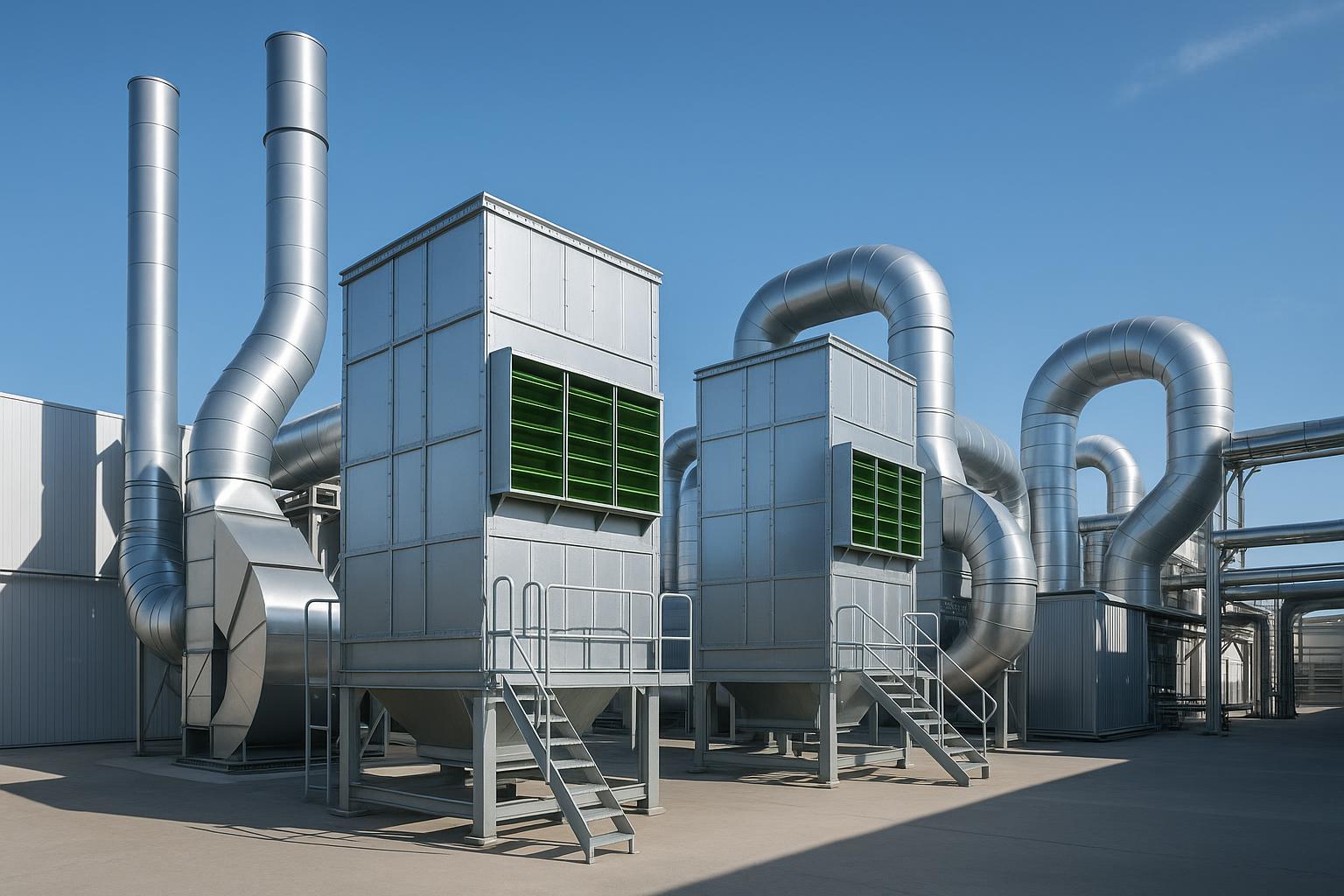
A complete system typically includes: extraction hoods at each point of dust generation, duct networks, industrial centrifugal fans, filtration units (pre-separation cyclone and/or fabric bags, cartridges), dust regeneration mechanisms (dust shaking), and discharge mechanisms (hoppers, rotary valves, screw conveyors), along with soundproofing – exhaust ducts. The first link is the extraction hood: the geometric design of each machine helps accelerate the airflow right where the particles are generated, limiting the suction of large objects and avoiding unnecessary air intake from the workshop, which wastes energy. In the panel sawing or CNC process, the hood needs to cover the entire cutting area, arranging suction slots along the cutting path to limit chip spraying.
The duct network acts as the "transport infrastructure" for dust. The duct layout should minimize sharp bends, sudden size changes, and avoid stagnation points where the speed drops too low. Branches should be balanced using air valves or hoods with adjustable cross-sections to ensure reasonable flow distribution when multiple machines are running simultaneously. For wood dust environments, selecting materials and duct surfaces that resist abrasion, limit static electricity, and implementing grounding measures against static electricity are basic safety layers.
Industrial centrifugal fans are the "heart" that creates negative pressure to maintain airflow. Choosing a fan should not only be based on electrical power but importantly on pressure and flow at the working point, corresponding to the total pressure loss of the entire duct – filter – accessory line. According to industry experience, balancing high-quality fan blades significantly reduces noise; for workshops prioritizing worker health, solutions should aim to maintain working noise levels below 80 dB (according to reference materials), combining soundproofing and placing fans outside the operational area to reduce noise impact.
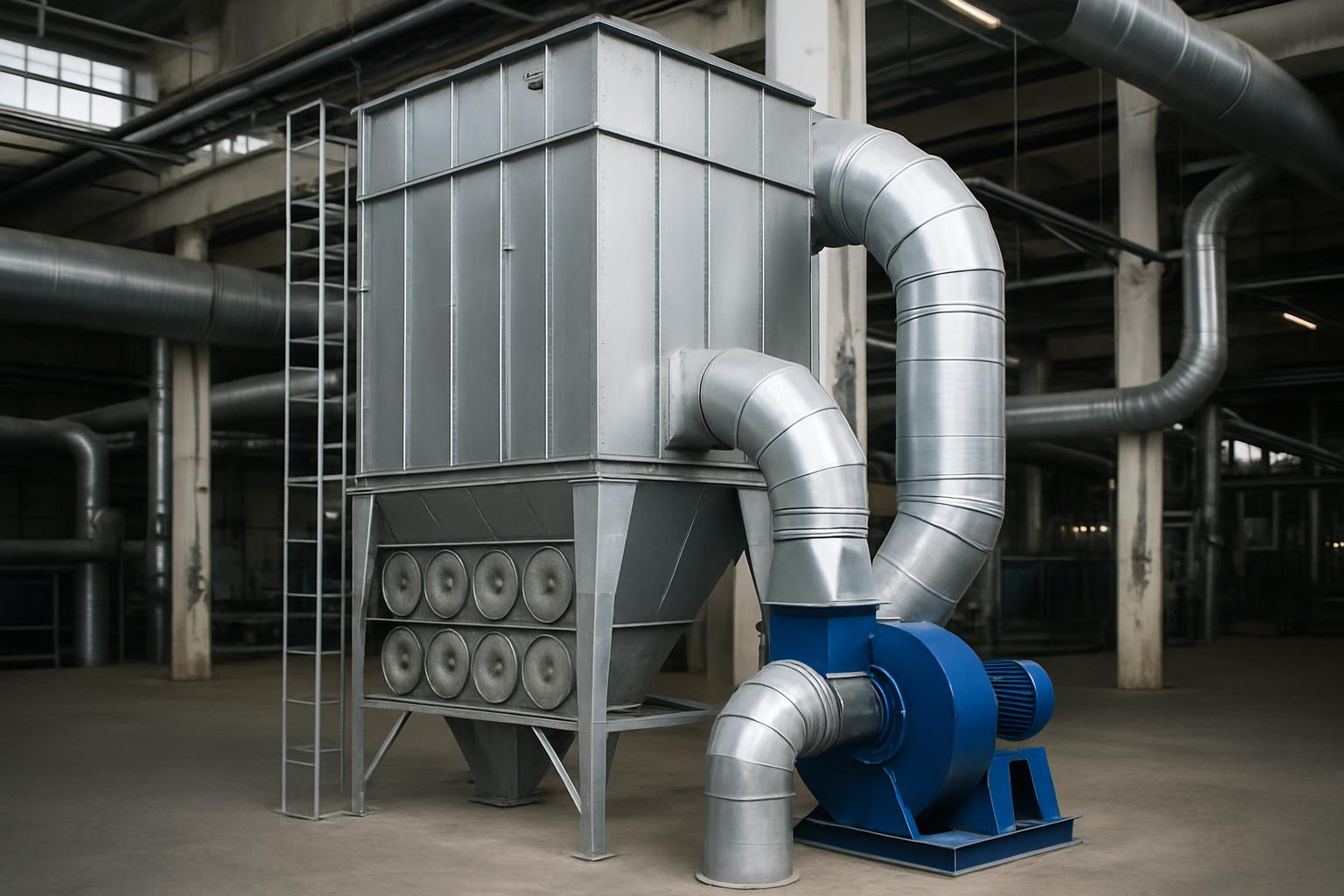
The filtration unit is where the success or failure of fine dust capture efficiency is determined. For mixed dust and large flow, fabric bags (bag filters) are a popular choice due to their large filtration area, ability to handle fine particles, and continuous operation. In stages with a lot of shavings – chips, a cyclone is placed upstream to reduce the load on the bag, limiting wear and extending the dust shaking cycle. For very fine sanding dust, cartridge cores can be considered for high fineness and easy replacement in limited spaces. The pneumatic dust shaking mechanism helps maintain stable pressure differentials without needing to stop the machine when cleaning the bags.
3. Choosing Filtration Technology for Wood Dust Characteristics
3.1 Pre-separation Cyclone
The cyclone relies on swirling motion to separate heavy particles that hit the walls and fall into the hopper. In wood factories, it is particularly useful in the chip – shavings line generated from sawing, planing, and rough milling, where large amounts of material can overload or tear the filter material if they go directly into the main filter chamber. A properly positioned cyclone will significantly reduce the load of coarse dust into the fabric bag or cartridge, thereby extending the dust shaking cycle, lowering average pressure drop, and saving compressed air for the dust shaking system.
However, the cyclone is not a fine particle filter; in sanding – polishing processes, small and light particles often escape with the airflow from the cyclone. Therefore, in most modern wood systems, the cyclone serves as a pre-treatment stage before the fine filter chamber. The installation of multi-stage or parallel cyclones should be calculated based on actual flow/particle distribution, avoiding unnecessary installation that increases pressure loss.
3.2 Fabric Bag Filter and Dust Shaking Mechanism
Fabric bag filtration is the "gold standard" in most wood workshops due to its flexibility, high load capacity, and effectiveness with fine dust. Dust-laden air enters the bag chamber, and the sudden drop in velocity allows coarse particles to fall into the hopper, while fine particles adhere to the outer surface of the bag and are retained by surface filtration mechanisms. According to reference materials, industrial fabric bag systems achieve approximately 99% dust capture efficiency for particles sized 0.5–1 micron when operated correctly and shaken with compressed air periodically. This value is suitable for sanding processes that require high air quality after filtration to protect the paint surface.
The dust shaking unit using compressed air, solenoid valves, and air tanks allows for periodic bag regeneration without stopping the system. The dust shaken off falls into the hopper and is continuously discharged through rotary valves into bags or screw conveyors. If the dust shaking cycle is set too short, it will increase compressed air consumption and wear on the filter material; if too long, the pressure differential increases, reducing suction flow at the hood. Therefore, integrating pressure differential measurement in the filter chamber to control dust shaking according to thresholds is a recommended practice, helping to maintain filtration efficiency while saving energy.
3.3 Cartridge Cores for Fine Dust
In lines emphasizing fine sanding, cartridge cores are a consideration due to their high filtration area per unit volume, quick replacement, and suitability for low spaces. The pleated structure allows for a large surface density, suitable when compactness is needed while still effectively handling fine particles. In hybrid setups, cartridges are often paired with pre-separation cyclones to reduce wear and avoid early clogging of the filter surface due to shavings.
It is important to note that cartridges are more sensitive to overloads of coarse dust and sticky oils/adhesives in the air; when these factors are present, a primary layer (cyclone, separation mesh) should be added, and suitable filter materials should be selected. The dust shaking cycle using compressed air also needs to be tightly set to avoid tearing the pleats or pushing dust deep into the material structure.
4. Comparison Table of Dust Filtration Technologies in Wood Factories
| Solution | Main Function | Reference Efficiency | Suitable Particle Types | Application Notes |
|---|---|---|---|---|
| Cyclone | Pre-separation of heavy particles using centrifugal force | — | Chips, shavings, coarse dust | Reduces load for fine filtration; cannot replace fine dust filtration |
| Fabric Bag (Bag Filter) | Surface filtration, dust shaking with compressed air | ~99% at 0.5–1 μm (according to reference materials) | Fine – mixed dust, large flow | Automatic bag cleaning with compressed air, no need to stop the machine |
| Cartridge | Surface filtration with pleated core, dust shaking with pulses | — | Very fine sanding dust, limited space | Preferably with a primary separation layer to avoid overload of shavings |
| Cyclone + Bag Filter Combination | Coarse separation + fine filtration | System efficiency published by manufacturers up to 99.98% (according to reference materials) | Common for medium – large wood workshops | Optimizes pressure drop and filter material lifespan |
5. Duct and Fan Design: Maintaining Stable Flow, Reducing Noise and Losses
The goal of duct design is to transport dust to the filter chamber without settling along the way while keeping pressure losses within the range that the fan can compensate. The duct geometry should be smooth, minimizing sharp bends; connecting branches should use smooth transition tees to avoid turbulence and localized low pressure that can accumulate dust. In areas where direction changes are unavoidable, access doors can be arranged for periodic cleaning. Balancing flow between branches using air valves or adjustments at the extraction hood allows for uniform suction force when the number of machines running changes.
Choosing centrifugal fans must be based on the characteristics of the entire line: length – number of bends – filtration level – accessories, plus allowances for dust shaking and gradual dirt accumulation on the filter bags. When considering equipment, do not just look at electrical power; it is necessary to compare the flow-pressure characteristic curves with the calculated working point. Additionally, noise control is a requirement for occupational health; thick casing structures, well-balanced fan blades, and added soundproofing help create a quieter working environment. According to reference materials, maintaining noise levels below 80 dB is a reasonable benchmark to avoid noise pollution in the workplace.
Connections between ducts – fans – filter chambers need to be airtight to avoid air leaks that can cause flow drops at the hood. A sturdy duct suspension system reduces vibrations transmitted to the workshop structure. For large systems, placing fans and filter chambers outside the workshop with a roof cover will reduce noise in the production area while also facilitating maintenance – dust discharge.
6. Dust Fire and Explosion Safety: Multi-layer Design
Preventing fire and explosion in wood dust systems requires a multi-layer approach. The first layer is spark prevention: selecting tools – appropriate cutting modes to reduce overheating friction; managing electrical maintenance, cable clamps, and grounding to limit electric arc discharges. The second layer is early detection: integrating spark detection sensors on the main duct, activating extinguishing sprays immediately on the line to eliminate fire sources before they enter the filter chamber. The third layer is consequence isolation: arranging shut-off valves/explosion isolation valves on branches – before the filter chamber to prevent propagation if an incident occurs.
In the hopper discharge and dust storage areas, it is necessary to avoid heat sources, prohibit smoking, and arrange electrical equipment that meets appropriate protection levels. Wood dust is very dry and easily accumulates static electricity; therefore, the duct system and equipment must have reliable grounding solutions, ensuring low ground resistance to discharge static electricity. Finally, operational training: recognizing abnormal signs (burning smell, increased vibration – noise, unusual pressure differentials) and emergency response procedures must be regularly practiced.
7. Operation – Maintenance: Maintaining Filtration Efficiency and Stable Flow
The dust shaking cycle directly affects the pressure differential in the filter chamber and the suction flow at the hood. If the system uses compressed air, controlling shaking based on pressure differential rather than a fixed timer often yields more savings, as it only shakes when needed. According to reference materials, modern fabric bag systems allow for automatic dust shaking without stopping the machine; therefore, the maintenance schedule focuses on checking solenoid valves, air tanks, air lines, and the sealing of chambers.
In the collection section, continuous dust discharge using rotary valves helps avoid full hoppers – a phenomenon that can cause discharge blockage, returning dust back into the filter chamber. For mobile machines or small setups, container capacities of 15–25 liters or bags of 100–200 liters are common ranges (according to reference materials); setting reminders to replace bags/containers per shift will help avoid overfilling. Additionally, it is necessary to periodically clean access doors in ducts, check wear at sharp bends where chips impact strongly, and replace filter materials according to manufacturer guidelines.
Increased noise, fan vibrations, burning smells, or rising bearing housing temperatures are warning signs that require immediate inspection. Dust accumulation on fan blades disrupts balance, causing increased noise – vibration; cleaning blades and rebalancing is mandatory to avoid bearing damage. For extraction hoods, periodically adjusting the position – suction gap according to changes in fixtures/processing equipment helps maintain effective dust capture right at the source.
8. Compliance with QCVN 19:2024/BTNMT for Industrial Emissions in the Wood Industry
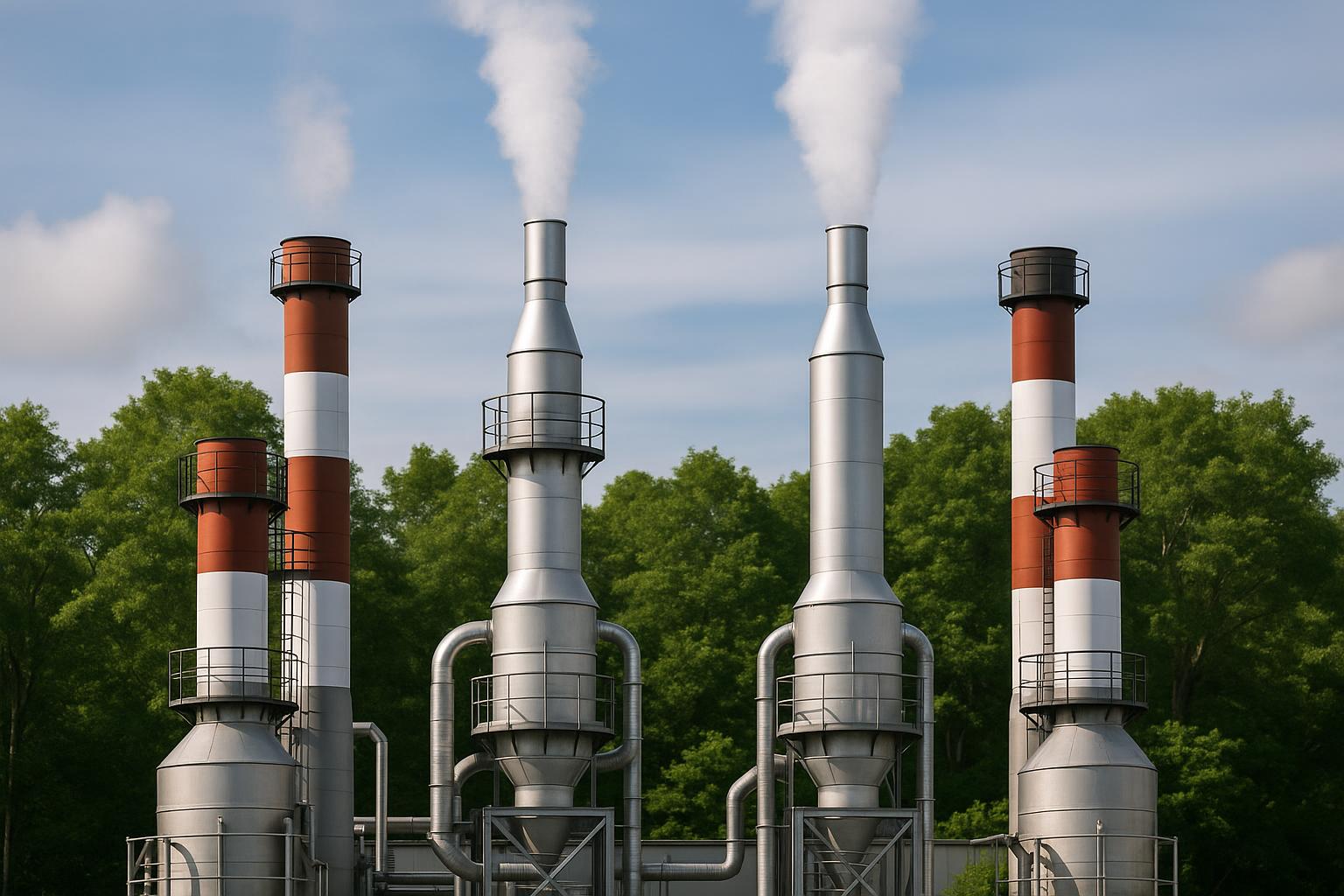
QCVN 19:2024/BTNMT is the standard applied to industrial emissions, including the discharge from wood factory dust filtration systems. When designing, it is necessary to ensure that clean air after filtration meets total dust requirements before being released into the environment, while also being ready for monitoring at chimneys/discharge points. Specific limit values depend on the subject of application and are referenced in the standard; therefore, safe technological solutions in the wood industry remain a combination of pre-separation + high-efficiency fine filtration, along with strict operation – maintenance to maintain stable pressure differentials and flow.
The handover documentation for the system should include: P&ID diagrams, design data for flow – pressure – pressure drop at all levels, dust shaking operation procedures, periodic inspection – maintenance guidelines, filter material replacement instructions, and calibration plans for measurement equipment (pressure, spark sensors if any). During operation, enterprises should develop a chart to monitor pressure differentials in the filter chamber over time, linked to the dust shaking/bag changing schedule, to demonstrate stable control when assessing compliance.
9. Common Design – Operational Errors and Solutions
Firstly, selecting fans based on electrical power instead of necessary pressure – flow causes working points to be misaligned; even with high electrical power, the suction force at the hood remains weak. The solution is to accurately calculate the total pressure drop of the entire line (ducts, bends, valves, filters, cyclones, hoppers…) under unfavorable conditions and select fans according to the corresponding characteristic curves, allowing for dirt accumulation and dust shaking. Secondly, installing ducts with many sharp bends and sudden openings causes localized pressure drops, accumulating dust at bend feet. It is advisable to replace them with large-radius bends, smooth transitions, and add access doors at risk accumulation points.
Thirdly, underestimating pre-separation, allowing large chips – shavings to go directly into the filter chamber can tear bags or cause rapid clogging. The solution is to add a cyclone before the filter chamber in rough processing lines, while controlling chip sizes with appropriate extraction hoods to avoid sucking in large wood pieces. Fourthly, setting dust shaking intervals too short leads to increased compressed air consumption and material wear; switching to pressure differential control would be more reasonable. Finally, overlooking safety layers for explosion prevention such as spark detection – extinguishing, isolation valves, especially in lines with strong spark sources (saws, CNC), is an unacceptable risk in long-term operations.
10. Investment Scenarios and Optimizing Lifecycle Costs
In small workshops, mobile vacuum machines can serve a few individual positions, but operating costs, cleaning, bag/container replacement, and noise increase rapidly as scale expands. In contrast, central dust extraction systems require a larger initial investment (ducts, filter chambers, fans, fire and explosion safety), but operate more economically due to stable flow, automatic dust shaking, and centralized maintenance. From a lifecycle perspective, centralization helps reduce production downtime due to incidents, lower cleaning labor costs, and proactively meet periodic environmental inspections.
Key optimization points include: designing extraction hoods suitable for machine layouts, placing cyclones in areas with high chip generation to reduce the load on bags, selecting filter materials appropriate for dust characteristics (fine sanding dust prioritizes cartridges/knitted bags, mixed dust – large flow prioritizes fabric bags), and setting dust shaking control based on pressure differentials. According to reference materials, properly operated fabric bag systems can achieve approximately 99% capture efficiency for the 0.5–1 μm range; in a pre-separation + fine filtration combination, the system efficiency can be published up to 99.98%. When organizing dust discharge, containers of 15–25 liters or bags of 100–200 liters are suitable for mobile machines, while large systems should integrate rotary valves for continuous discharge to avoid stopping machines due to full hoppers.
The sound environment is also a "hidden" cost if not addressed from the outset. Fans – ducts – exhaust ducts should have soundproofing solutions, sound insulation panels at the filter/fan chamber. According to reference materials, maintaining working noise levels below 80 dB is a reasonable threshold in workshop conditions; exceeding this can affect productivity and worker comfort, even leading to more costly remedial measures.
11. Effectiveness Verification and System Handover
Immediately after installation, it is necessary to organize load testing with multiple machine combinations, measure pressure differentials in the filter chamber, record flow rates at several representative hoods, and confirm the operation of the dust shaking mechanism (air pressure, sequential solenoid valves). For systems with cyclones, check the distribution of incoming/outgoing flow to avoid dust being sucked back. In terms of safety, simulate scenarios for activating spark detection – extinguishing and isolation situations to confirm the response chain is as designed.
The handover documentation should include installation drawings, detailed instructions for each item: fan operation, bearing maintenance schedules, filter material replacement plans, checks on rotary valves – screw conveyors – hoppers, and criteria for assessing safety readiness (testing spark sensors, isolation valve tests). Enterprises should maintain a pressure differential tracking log, dust shaking schedules, fan running hours, noise – vibration conditions, along with incident/cleaning logs for ducts, to optimize operations and meet environmental compliance assessments according to QCVN 19:2024/BTNMT.
FAQ
-
Does the fabric bag filtration system achieve sufficient efficiency for sanding processes?
Yes. According to reference materials, industrial fabric bag filtration can achieve about 99% for particles sized 0.5–1 μm when operated correctly and shaken with compressed air. For lines with a lot of fine dust, pre-separation can be combined and bag materials optimized for more stable efficiency.
-
Is the cyclone + fine filtration combination really necessary?
For processes generating a lot of chips – shavings (sawing, planing, milling), cyclones are very useful to reduce coarse dust loads, limit wear, and help filter bags shake effectively. Reference materials indicate that a properly engineered combination can bring system efficiency up to 99.98%.
-
What noise level should be set in the workshop?
Noise directly affects health and productivity. Good practice is to aim for solutions that keep operational noise levels below 80 dB through well-balanced fans, soundproofing arrangements, and placing noisy equipment outside the operational area (according to reference materials).
-
Should I choose mobile machines or a central system for medium-sized workshops?
Mobile machines are suitable for a few individual suction points, but as the number of machines increases, cleaning – bag replacement costs and noise become significant. Central systems provide stable flow, automatic dust shaking, and integrated safety, facilitating compliance with QCVN 19:2024/BTNMT.
-
How should dust container capacity be arranged to avoid stopping the machine?
For mobile machines, containers of 15–25 liters or bags of 100–200 liters are common and easy to handle (according to reference materials). Large systems should integrate rotary valves for continuous discharge into silos/bags to avoid full hoppers causing dust to be returned.
-
How to comply with QCVN 19:2024/BTNMT for emissions?
Designing for source collection, combining pre-separation and high-efficiency fine filtration, and operating – shaking dust correctly is fundamental. Enterprises need to organize chimney monitoring according to regulations and maintain operation – maintenance records to demonstrate stable control.
Nanoen
NANO THANG LONG ENVIRONMENTAL COMPANY LIMITED
Hanoi Office: No. 15 TT18 Van Phu Urban Area, Ha Dong, Hanoi
Can Tho Office: 661E/29, Vo Van Kiet Street, Binh Yen A Area, Long Hoa Ward, Binh Thuy District, Can Tho City
Ho Chi Minh City Office: 533/12/7, Pham Van Bach Street, Ward 15, Tan Binh District, Ho Chi Minh City
Hotline: 0986.689.781 - 0969.054.226
Email: thanglongnanoen@gmail.com
Facebook: www.facebook.com/thanglongnanoen