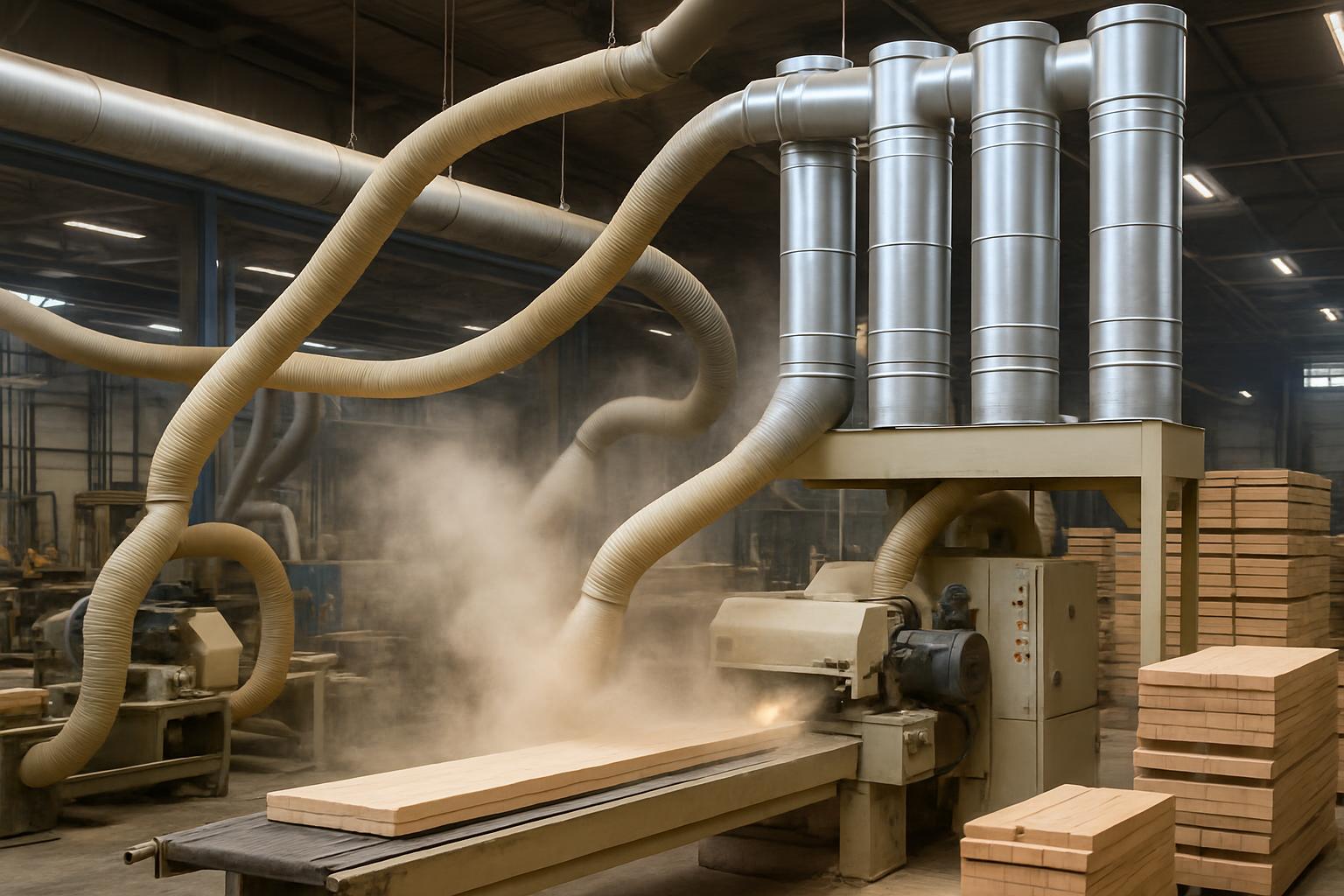
1. Context and the need for biofilter application in food processing
In food processing plants, emissions are often complex: they contain both inorganic components such as ammonia and hydrogen sulfide, as well as volatile organic compounds generated from frying, baking, drying, and fermentation processes. Many gas streams also mix with oil mist, acid-alkali fog from auxiliary processes, and odors from wastewater treatment systems. This scenario makes a "one-stop" treatment technology almost impractical, requiring a routing solution – combining multiple treatment layers to be both effective and economical. In this context, biological filtration (biofilter) emerges as a core treatment layer for odor-causing gases and many low-concentration VOCs, especially after pre-treatment to remove oils and grease.
Biological filtration aligns with the philosophy of cleaner production: using native or adapted microorganisms to oxidize odor-causing substances into mineral forms, minimizing chemical use. According to domestic specialized documents, common odor sources in food processing come from fermentation processes and by-products, which generate NH₃, H₂S, and VOCs; in frying and baking workshops, they are rich in aldehydes, ketones, and oil mists; while the wastewater treatment area produces unpleasant gas mixtures due to biological decomposition. Therefore, if designed correctly, biofilters can act as a "biological buffer" absorbing odor load fluctuations by shift, batch, and maintaining stable emission quality.
From an investor's perspective, the core point when considering biofilters is the total lifecycle cost and operational risk. This technology utilizes natural buffering materials, relies less on chemicals, and the energy consumption for fans and recirculation pumps is usually reasonable, thus opening up competitive investment returns and operational costs compared to thermal incineration or purely adsorption technologies in the low-concentration emission landscape. When integrated correctly in the treatment chain, biofilters help reduce the load on expensive downstream processes or even completely replace them when gas characteristics are suitable.

2. Operating principles of the biological filtration system (biofilter)
Biofilters rely on three continuous stages: mass transfer from gas to the moist phase, diffusion through the biofilm, and biological transformation. The polluted gas stream is directed through a layer of buffering material covered with a moisture film. Target gas molecules first dissolve into the moisture layer adhering to the surface of the buffer particles, then diffuse into the microbial film – where many heterotrophic, aerobic, or substrate-specialized bacteria gather. Here, biological oxidation occurs: organic carbon is converted into CO₂ and H₂O; inorganic gases such as NH₃, H₂S are transformed into stable inorganic salt forms.
To maintain this "microbial factory," the system arranges a drip or misting liquid flow to provide moisture, supplement nutrients as needed, and adjust the pH of the film layer. When the biomass grows thick beyond operational thresholds, the shear force of the irrigation flow will cause some to slough off, bringing the system back to equilibrium. This principle allows biofilters to self-adjust to some extent, reducing the need for frequent chemical interventions.
The effectiveness of the process directly depends on the contact ability between the gas and the surface of the biofilm. Therefore, the morphology of the buffering material, porosity, moisture retention capacity, and uniform gas-water distribution are key. When designed correctly, the system can maintain a high effective microbial surface area with moderate resistance, ensuring the designed flow rate without excessive energy trade-offs for suction/blowing fans.
3. System configuration and buffering materials
3.1. Buffering materials and their roles
Buffering materials in biofilters serve as both a "living substrate" for microorganisms and a hydro-thermal stabilizer for the film layer. In practice, Vietnam widely uses natural materials such as organic mulch, peat, wood chips, or mixtures with soil – compost; some configurations additionally incorporate activated carbon layers to enhance primary adsorption of difficult-to-degrade VOCs. Criteria for selecting materials include: sufficient specific surface area for microbial adhesion, mechanical strength to avoid rapid subsidence, stable moisture retention capacity, and no sudden increase in resistance after a period of operation.
The strength of organic materials is their environmental friendliness and reasonable initial costs; however, operators need to recognize the downside of degradation over time due to the activity of the microbial system and the gas stream. In this case, the maintenance strategy focuses on periodically supplementing the buffer layer by area rather than removing it entirely, often combined with discharging excess sludge – accumulated biomass to maintain porosity. For some plants wishing to reduce material property fluctuations, specialized plastic buffers may be an option, but considerations for moisture retention and nutrient supply differ from organic substrates.
3.2. Airflow and irrigation/recirculation streams
A healthy biofilter requires a uniform gas distribution network, limiting preferential flow that causes part of the buffer layer to "die" due to lack of contact. For this reason, the air supply surface often uses perforated pipes or distribution floors with appropriate spacing – open area to reduce local pressure differentials. Above or interspersed among the layers, the irrigation system plays a role in providing moisture and regulating pH. Experience shows that recirculating the irrigation flow helps maintain stable chemical-biological conditions without relying too much on fresh water or frequent chemicals, while also helping to wash away by-products that may inhibit biological activity.
During operation, the moisture balance needs to be closely monitored. If the buffer surface is too dry, the ability to dissolve substrates into the moist phase and biological transformation will significantly decrease; conversely, if too moist, the pores become filled, leading to increased resistance and creating undesirable anaerobic zones. Additionally, the pH of the moisture layer can shift according to the incoming gas load, for example, when treating high levels of H₂S, the acidification trend due to sulfate salt formation needs to be compensated by appropriate irrigation and alkaline supplementation.
4. Treatment efficiency and application limits in the food industry
According to domestic technical sources on biofilter technology, the current treatment efficiency can exceed 90% with suitable target gases when the system is designed and operated correctly. This result is particularly feasible with gas streams after pre-treatment of oils and dust, which have a not too high odor load. In practice at food plants, inorganic gas groups such as NH₃, H₂S, and various mercaptans, disulfides, as well as certain polar VOCs are often good candidates for biological oxidation. Uniform gas distribution and maintaining optimal moisture – pH for microorganisms are prerequisites to achieve the aforementioned efficiency threshold.
An important limitation of biofilters is their suitability for low-concentration emissions. Specialized documents indicate that this technology only effectively treats when the concentration of pollutants is below 1000 ppm. Above this threshold, the risk of biological inhibition, mass transfer saturation, and thermal-humidity overload increases, causing the system to lose efficiency or require stronger pre-treatment steps before entering the biofilter. Therefore, for dense VOC sources from solvents or sudden spikes in NH₃, businesses need to calculate combined routes to lower concentrations before handing them over to the biological layer.
In relation to the characteristics of emissions in the food industry, fermentation areas, by-product storage, and wastewater treatment systems often maintain odor-causing substance concentrations in the low – medium range, suitable for biofilters. Conversely, frying – baking workshops generate oil mist aerosols and secondary organic compounds, making a step for oil mist separation or activated carbon adsorption necessary to avoid contaminating the biological buffer layer. When combined with a reasonable technology chain, biofilters can be the "backbone" of the odor treatment cluster with easily controllable lifecycle costs.
5. Integrating biofilter technology with pre-treatment and post-treatment
In food industry emission lines, biofilters often do not stand alone. Upstream, when the gas stream has oil mist or fine particles from frying – drying, oil separation devices such as electrostatic filters or mist separation – bag filters will remove the particle phase, helping to protect the buffer surface from clogging. For sources rich in NH₃ or H₂S, a chemical scrubber tower before the biofilter can lower concentrations to the biological treatment range effectively while balancing moisture for incoming gas. This arrangement leverages the advantages of each technology, avoiding "forcing" the biofilter to operate outside its strengths.
Downstream, when the goal is to reduce remaining odors to levels undetectable by the surrounding community, adding a final adsorption stage with activated carbon can enhance environmental safety, especially for strong-smelling but difficult-to-biodegrade VOC components. There are also cases where biofilters serve as the downstream stage of a scrubber tower, reabsorbing dissolved CO₂ and eliminating organic odors before discharging through the chimney. The integration approach should be based on field surveys, gas characteristics by shift – batch, and product specifics to establish a compatible technology roadmap.
6. Investment and operational costs: forming factors and optimization methods
The investment cost of biofilters is significantly influenced by the material of the equipment, the type of buffering material, and the auxiliary systems for gas – water distribution. A notable advantage is using natural substrates like coconut coir, mulch, peat, wood chips, which often makes initial costs much more manageable compared to regenerative thermal systems. The structure of the equipment itself is also simple: tank body, supporting floor, distribution pipes, irrigation systems, and recirculation pumps. For investors, the modular configuration allows gradual expansion according to load, avoiding "oversizing" from the start while still preserving piping – fans to prevent excessive additional costs.
In operation, biofilters stand out for their low chemical costs as they do not rely on continuous neutralization reactions like scrubbers. Energy consumption primarily comes from suction/blowing fans and recirculation pumps, where the resistance of the buffer layer is a decisive parameter. Maintenance focuses on moisture – pH retention and auxiliary cleaning, rather than frequently replacing adsorption materials. However, it is necessary to budget for periodic buffer supplementation, checking – cleaning nozzles, and handling sludge – sloughing biomass collected in the bottom trough.
To optimize lifecycle costs, two effective levers are appropriate pre-treatment and operational control according to load. Pre-treatment helps prevent the buffer layer from "aging" prematurely due to adhering oils; while controlling irrigation – fans based on odor or incoming VOC signals will limit unnecessary operation during light loads. From a financial perspective, biofilters provide reasonable investment – operational returns in technology lines targeting low-concentration odor-causing gases, and create significant safety margins for plants near residential areas due to their friendly treatment mechanisms, generating minimal secondary emissions.
7. Operation, control, and maintenance according to factory practices
7.1. Startup and biomass adaptation
The startup phase is when the microbial system acclimatizes to the substrate and forms a stable biofilm. The operating philosophy at this stage is "living conditions first, load later": prioritizing the establishment of moisture, pH, and temperature of the buffer layer according to the tolerance range of the microbial system, maintaining gas flow at moderate levels to increase contact time. The recirculating irrigation flow acts as a buffer solution, helping to gradually saturate the substrate at non-shocking concentrations while washing away potential inhibitory by-products.
Once the biofilm has established a foundation, the load can be gradually increased to achieve the target treatment capacity. During this process, observing adhesion phenomena, flow, and the state of the buffer surface is very important: if dry, black, or clumped streaks appear, it indicates uneven water – gas distribution; if the irrigation water has strange odors or suddenly changes color, the shock-causing agent in the incoming gas needs to be checked. The goal of startup is not only to achieve efficiency but also to create operational "momentum" for stable operation to reduce risks during peak production shifts.
7.2. Long-term stability and troubleshooting common issues
In long-term operation, scenarios of reduced efficiency often stem from three groups of causes: moisture – pH imbalance, clogging – channeling of gas flow, and load fluctuations exceeding the biological range. Loss of moisture causes the microbial film to shrink, reducing contact area; conversely, excessive moisture increases resistance, creating anaerobic zones and strange odors. When pH shifts due to the accumulation of oxidation products such as sulfate salts, enzyme activity declines, leading to lower effectiveness. With strong fluctuating gas streams, especially when exceeding biological treatment concentration thresholds, the system quickly becomes overloaded.
Corresponding remedial measures include adjusting the irrigation – recirculation regime to bring moisture and pH back to favorable ranges, discharging – scraping excess biomass to restore porosity, and supplementing pre-treatment to cut peak loads. When channeling phenomena occur, it is necessary to review the gas distribution system and irrigation pumps, adjusting pressure – flow and checking for clogs at nozzles. In cases of sudden incidents due to process failures, it is advisable to switch to light load mode, maintaining living conditions for microorganisms first, then increasing back when the substrate source stabilizes.
8. Legal requirements and compliance roadmap in Vietnam
Regarding legal requirements, businesses need to refer to QCVN 19:2024/BTNMT to determine applicable emission limits for food processing facilities according to industry groups, fuels, and characteristic emissions. This standard serves as a reference for designing and accepting industrial emission treatment systems, ensuring the post-treatment emission levels are compatible with the plant's location and operational characteristics. When planning investments, "reverse design" from the standard threshold regarding the treatment capacity of the biofilter and combined layers is an important step to avoid under- or over-capacity.
Circular 45/2024/TT-BTNMT is an important document in the system of promulgating – applying national technical standards for industrial emissions, helping businesses timely update technical requirements and transition roadmaps. Without going into detailed clauses, investors should consider this as a legal anchor when deciding on technology, and plan resources for monitoring – periodic reporting right from the design stage to ensure the system operates smoothly and meets legal obligations throughout the project lifecycle.
9. Comparing biofilters with other technologies in food emission treatment
Each technology has its own strengths, and the choice of "right task for the right technology" will determine the efficiency – economy of the entire treatment line. The table below summarizes the main characteristics and notes data according to domestic technical sources, focusing on the low-concentration odor – VOCs problem commonly found in food processing.
| Technology | Main mechanism | Suitable for | Efficiency/limits (data) | Operating costs | Source notes |
|---|---|---|---|---|---|
| Biofilter (biological filtration) | Biological oxidation on the adhering microbial film | NH₃, H₂S, mercaptans, disulfides; biodegradable VOCs after oil pre-treatment | Efficiency greater than 90%; effective when concentrations < 1000 ppm | Low due to minimal chemical use; energy mainly for fans and recirculation pumps | According to S2 |
| Scrubber tower | Chemical absorption into alkaline/acid/oxidizing solutions | Inorganic gases with acidic/alkaline properties like NH₃, H₂S; peak load cutting before biofilter | No specific data provided in the reference source | Dependent on chemical consumption and wastewater treatment recirculation | According to S1, S3 |
| Activated carbon adsorption | Retaining VOC molecules on the material surface | Solvent odors, aldehydes; polishing after biofilter | No specific data provided in the reference source | Related to saturation cycles – replacement/regeneration of materials | According to S1, S3 |
| Thermal oxidation (RTO/CTO) | Oxidation at high temperatures, with/without catalysts | Large gas flow streams, stable VOCs; less suitable for non-separated oil mist | No specific data provided in the reference source | High due to energy consumption; compensating for broad effectiveness with VOCs | According to S1 |
| ESP/bag filter | Particle separation, oil mist; dust filtration | Pre-treatment of oils, dust before odor treatment layer | No specific data provided in the reference source | Dependent on pressure differentials and cleaning of surfaces/filter bags | According to S1 |
From the comparison above, it can be seen that biofilters maximize their effectiveness when placed in the right position in the technology chain: after particle separation – oil mist and/or scrubbers to bring target concentrations into the optimal biological treatment range. With stringent odor control requirements, the final adsorption layer will help "polish" remaining odors, creating additional safety margins when load fluctuations occur.
10. Typical application scenarios
In the wastewater treatment area of food processing plants, odors arising from anaerobic/aerobic tanks and sludge compression areas often feature NH₃, H₂S, and polar VOCs. These are suitable candidates for biofilters, especially when combined with odor-collecting covers and conduits leading to a central treatment unit. In this scenario, a small scrubber can be placed upstream to balance moisture and reduce peak H₂S concentrations, after which the biofilter takes care of the rest to achieve treatment efficiency greater than 90% according to its strengths.
In frying – baking workshops, the challenging issue is oil mist – aerosols carrying sticky odors that can contaminate the biological surface. Pre-treatment using ESP or a combination of oil separation filters, along with organized collection right at the suction hood, will separate the majority of the particle phase. The gas stream can then pass through a short activated carbon buffer layer to retain "troublesome" aldehydes before leading into the biofilter. This configuration leverages biological advantages for easily degradable VOCs while avoiding turning the biofilter into an ineffective "oil mist filter."
With fermentation – brewing areas, odor loads vary by batch and temperature. Choosing irrigation control based on load signals (for example, odor intensity at the collection pipe) will help save energy and maintain microorganisms in the desired state. When there is a risk of peak NH₃ from the raw material mixing stage, adding a scrubber branch operating on demand (duty/standby) helps cut peaks, maintaining concentrations below 1000 ppm before the biofilter and preserving treatment efficiency.
11. Conclusion and guidance for investors
Biofilter technology is best suited for treating low-concentration odors – VOCs in the food processing industry, where the combination of environmental efficiency and lifecycle costs is a priority. With efficiencies potentially exceeding 90% when designed – operated correctly and effective concentration limits below 1000 ppm, biofilters are a worthy consideration for sources such as wastewater treatment areas, by-product storage, and many fermentation processes. The value of this technology significantly increases when integrated correctly into the overall technology line.
For investors, the optimal strategy is to take a "holistic – data-driven" approach: surveying the characteristics of incoming gas by shift/batch, planning appropriate pre-treatment – biological – polishing routes, and standardizing operational processes to maintain living conditions for the microbial system. At the same time, aligning with the requirements of QCVN 19:2024/BTNMT and preparing monitoring – reporting capabilities from the design stage will help the system not only operate well technically but also remain legally robust throughout the project lifecycle.
12. Frequently Asked Questions (FAQ)
Can biofilters treat strong odors from the wastewater treatment area of food plants?
Biofilters are particularly suitable for NH₃, H₂S, and many VOCs generated in wastewater treatment areas due to the mechanism of biological oxidation. When pre-treated and maintained under suitable moisture – pH conditions, efficiencies can exceed 90% according to domestic technical sources.
What should be done when pollutant gas concentrations exceed 1000 ppm?
This is the threshold beyond which biofilters are no longer the optimal choice due to the risk of biological overload. The solution is to add pre-treatment such as scrubbers to lower concentrations to below 1000 ppm before entering the biofilter to ensure effectiveness and system durability.
Are biofilters suitable for odors from frying and baking processes?
Yes, but oil and particle separation are needed beforehand to avoid clogging the biological buffer layer. A combination of ESP or oil separation filters, and even a short adsorption layer, will help the biofilter focus on treating biodegradable VOCs.
Are biofilter operating costs competitive compared to other technologies?
According to domestic implementation experience, biofilters have low operating costs due to minimal chemical use and energy consumption primarily for fans and recirculation pumps. However, maintenance costs such as periodic buffer material supplementation and cleaning of irrigation – gas distribution systems should be considered.
Does the biofilter system generate significant secondary waste streams?
The system has a recirculating irrigation flow to maintain moisture and biological conditions, which may need periodic discharges to remove accumulated by-products. Compared to scrubbers, secondary wastewater is generally less due to not relying heavily on continuous neutralization reactions.
What should be noted for compliance with current emission standards?
Businesses need to refer to QCVN 19:2024/BTNMT to determine applicable emission limits and reverse design capacity – suitable technology routes. Additionally, it is advisable to update according to Circular 45/2024/TT-BTNMT and prepare monitoring – periodic reporting plans to ensure the system meets legal requirements throughout the operational process.
Nanoen
NANO THANG LONG ENVIRONMENTAL COMPANY LIMITED
Hanoi Office: No. 15 TT18 Van Phu Urban Area, Ha Dong, Hanoi
Can Tho Office: 661E/29, Vo Van Kiet Street, Binh Yen A Area, Long Hoa Ward, Binh Thuy District, Can Tho City
Ho Chi Minh City Office: 533/12/7, Pham Van Bach Street, Ward 15, Tan Binh District, Ho Chi Minh City
Hotline: 0986.689.781 - 0969.054.226
Email: thanglongnanoen@gmail.com
Facebook: www.facebook.com/thanglongnanoen